Category: Literature

  • The Journey Is My Home

    The Journey Is My Home

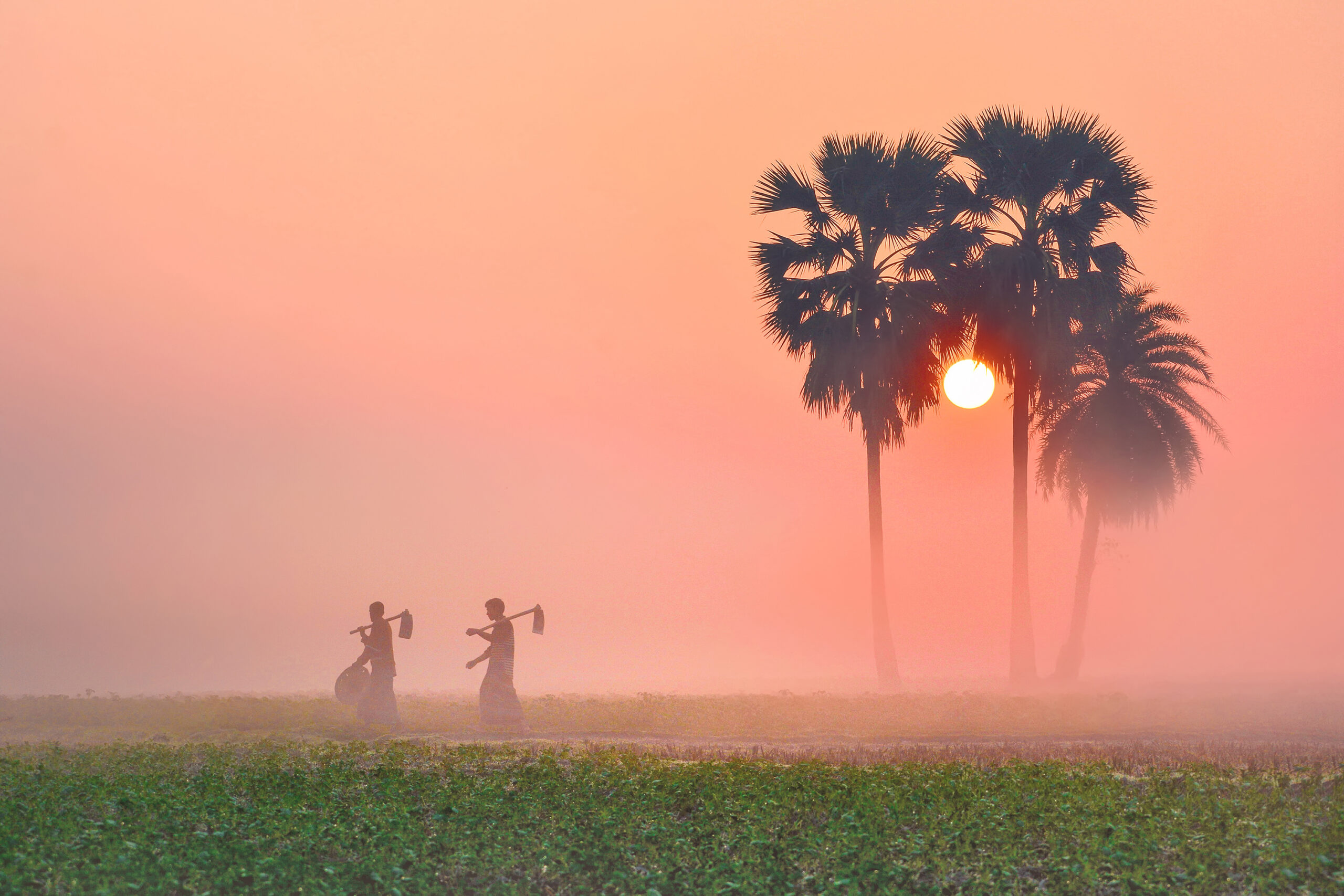
    A surprising number of the artists we revere were, in some essential way, homeless — not destitute, but unrooted, belonging to no single place and therefore, perhaps, to all of them. Displacement has been one of the great engines of art, and the idea that the journey itself can be a kind of home runs deep through the history of making.

    Consider the exiles. Vladimir Nabokov wrote his finest English prose as a stateless émigré, carrying a vanished Russia inside him like a sealed room. James Baldwin found in Paris the distance he needed to see America clearly. The painter Marc Chagall floated his native Vitebsk across every canvas he made in France, a home reconstructed in pigment because it could no longer be reached in fact. For these artists, the loss of a fixed place did not silence the work; it became the work. Memory, longing and the strangeness of being everywhere a foreigner sharpened their vision.

    There is a practical dimension to this too. To travel is to have one’s assumptions interrupted. The familiar, seen daily, becomes invisible; the unfamiliar forces attention. Artists have long understood the studio value of dislocation — Gauguin to Tahiti, the Romantics to the Alps, generations of painters to the particular light of the Mediterranean. Movement defamiliarises the world, and a defamiliarised world is one you can finally see well enough to depict.

    But “the journey is my home” is not only about literal travel. It describes a temperament — the refusal to let any achieved style become a permanent address. The artists who keep growing are the ones who treat each finished body of work as a place they are passing through rather than settling in. The moment a manner becomes comfortable, they pack up and move on, choosing the productive unease of the road over the stagnation of arrival. Picasso changed register so often that critics struggled to keep up; the changing was the point.

    This restlessness carries a cost. There is loneliness in belonging nowhere, and not every artist romanticises it — many would have traded their wandering for a stable place to stand. The myth of the rootless genius can also excuse real hardship. It is worth remembering that displacement is frequently imposed, not chosen, and that the art made from it is often made despite the journey, not because of it.

    And yet the phrase persists because it names something real about the creative life: that the work happens in the moving, not the arriving. The home an artist builds is rarely a house. It is a practice — portable, internal, carried from place to place — and as long as the practice continues, the maker is, in the only sense that matters, never quite lost. The journey is the home. The making is the address.

  • It Feels Good to Be Lost in the Right Direction

    It Feels Good to Be Lost in the Right Direction

    Every artist’s biography contains a stretch that looks, in summary, like failure: the years of false starts, abandoned series, work that went nowhere. We tend to read past these passages quickly, impatient for the breakthrough. But ask the artists themselves and they will often describe those years as the most important — the period when they were lost, and learning, in the right direction.

    There is a difference between being lost and being adrift. Adrift is passive; you go where the current takes you. Lost in the right direction is active — you are moving, testing, eliminating, even if you cannot yet name the destination. The novelist E.L. Doctorow described writing as “driving at night in the fog. You can only see as far as your headlights, but you can make the whole trip that way.” The fog is not an obstacle to the journey. It is the condition of the journey.

    This is uncomfortable advice in a culture that prizes the clear plan and the measurable milestone. We are encouraged to set goals, define outcomes, work backward from a known result. But genuine creative work rarely cooperates. The painter does not know what the painting wants to be until it is half-finished and arguing back. The most a serious maker can do is choose a direction that feels true and trust the process to clarify it — to be lost, but lost toward something.

    What distinguishes productive lostness from mere confusion is attention. The wanderer who notices — who keeps a sketchbook, who pays attention to what excites and what bores them, who treats every dead end as information — is quietly building a map even while feeling map-less. The work of those years is not wasted motion; it is the slow accumulation of a sensibility. By the time the direction becomes clear, the artist has already become the person capable of going there.

    There is even a kind of pleasure in it, once the fear subsides. Certainty closes doors; being lost keeps them open. The period before you know what you are doing is the only period in which anything is still possible. Some artists chase that feeling for their whole lives, abandoning each style the moment it hardens into a formula, choosing the discomfort of the unknown over the safety of the mastered.

    The phrase is worth keeping close on the difficult days. Not every wrong turn is a mistake. Sometimes the disorientation is the sign that you have left the well-trodden path — which is, after all, the only place the new thing could possibly be. It feels good to be lost, when you are lost in the right direction.

  • Carys Davies’ Novel ‘Clear’ Wins Wales Book of the Year

    Carys Davies’ Novel ‘Clear’ Wins Wales Book of the Year

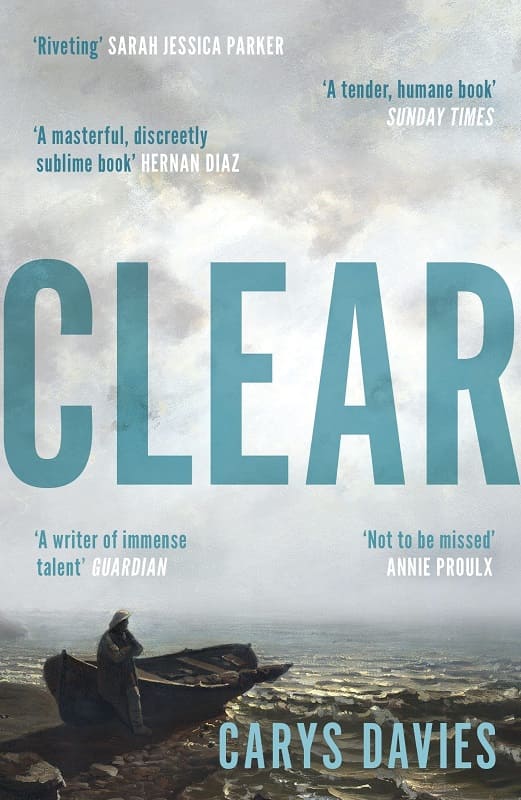
    Carys Davies has won the 2025 Wales Book of the Year award for her novel, Clear. The winner was revealed at a ceremony at Cardiff’s Sherman Theatre, hosted by Literature Wales.

    Davies receives a £4,000 prize and a trophy designed by the artist Angharad Pearce Jones. The book first won the Fiction Award before being named the overall English-language winner.

    A Story of Two Strangers

    Clear is set on a remote Scottish island in 1843. It tells the story of Ivar, the island’s only resident, who discovers a man washed up unconscious on the shore.

    The stranger is John Ferguson, a minister sent to evict Ivar and prepare the land for sheep grazing. Unaware of his guest’s purpose, Ivar cares for him, and the two men form a bond without a shared language.

    Carole Burns, speaking for the judges, explained their choice. “We all loved this book, for its story, for its ambition, for its sentences, for its relevance to our world today.” She added, “Excellence is always the only criteria, in the end, for a prize, and that’s true for this winning book.”

    Welsh-Language Prize Awarded for Memoir

    The overall Welsh-language Book of the Year was awarded to Iola Ynyr for Camu. Her book is a memoir told through a series of personal essays.

    In Camu, Ynyr writes about reclaiming her memories after losing periods of her life to alcoholism and trauma. It is described as her attempt to trust that she is safe by telling her own story.

    Category Winners for 2025

    The Wales Book of the Year award is given in four categories for both English and Welsh-language titles. Each category winner receives £1,000.

    English-Language Winners:

    • Poetry Award: Girls etc by Rhian Elizabeth
    • Creative Non-Fiction Award: Nightshade Mother: A Disentangling by Gwyneth Lewis
    • Children & Young People Award: A History of My Weird by Chloe Heuch
    • People’s Choice Award: Girls etc by Rhian Elizabeth

    Welsh-Language Winners:

    • Poetry Award: Rhuo ei distawrwydd hi by Meleri Davies
    • Fiction Award: V + Fo by Gwenno Gwilym
    • Children & Young People Award: Arwana Swtan a’r Sgodyn Od by Angie and Dyfan Roberts
    • People’s Choice Prize: V + Fo by Gwenno Gwilym
  • Maria Bregman: Visionary Art Critic and Curator

    Maria Bregman: Visionary Art Critic and Curator

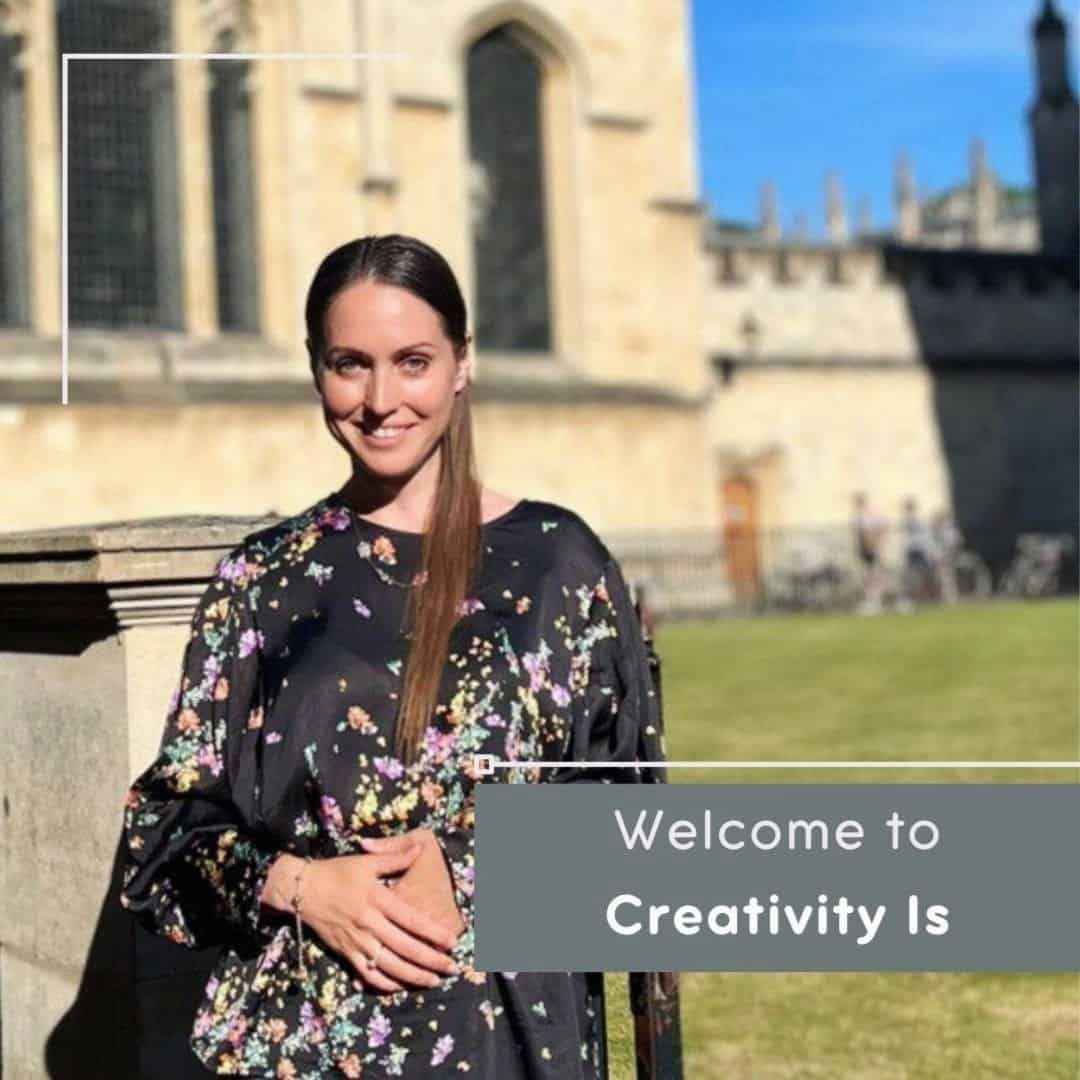
    Maria Bregman is a writer, art historian, music, literary, and art critic, producer, and curator. She is widely recognised for her in-depth research into contemporary and classical art, literature, and music, as well as her contributions to fostering cultural exchange. Her curatorial work spans exhibitions and events across the international cultural scene, encompassing art, literature, music, ballet, and other art forms.

    With over a decade of experience in critical writing, Bregman has authored analytical and critical articles for leading publications, including Life Magazines (London North editions), ArtCulture UK, Creativitys.UK, Afisha London, BLUR Art Magazine, London Post, Cultural Initiative UK, and It’s Book Magazine. As a presenter of a programme on CultFM and the creator of a project on the Cultura TV channel, Bregman has played a pivotal role in bringing art to a wider audience. Her work focuses on the intersection of emotional resonance and artistic innovation, while also highlighting underrepresented voices in the creative sphere.

    Throughout her career, Maria has actively participated in organising and curating major cultural events. She has supported numerous ballet and music projects, working with the State Classical Ballet Theatre of Vasiliev and Kasatkina and the Sretensky Monastery Choir, where she managed public relations and performance organisation. She served as the curator of the Visionary Art exhibition in Ruthin, Wales, and organised international art exhibitions for the Museum of Modern Art and the Creative Union of Artists of Russia.

    Maria has also curated solo exhibitions for renowned artists, including Zurab Tsereteli, and group exhibitions under the auspices of the International Federation of Artists (IFA). In the 2010s, she initiated international cultural exchanges and contemporary art exhibitions, fostering dialogue between artists and audiences. Her efforts extended to organising numerous music and cultural festivals in the UK, Tunisia, Israel, and Russia, as well as creative receptions under the patronage of UNESCO and the Russian Academy of Arts.

    Her contributions to the arts include serving on the jury of prestigious awards, such as the Vasily Kandinsky Art Prize, the Creativitys UK Award, and as a member of the organising committee for the SIFFA Award.

    Maria holds a distinguished academic background, having studied at the Presidential Academy of National Economy and Public Administration (RANEPA, Faculty of Television and Journalism), the Maxim Gorky Literary Institute, and its Higher Literary Courses. Her education laid the foundation for her expertise in critical analysis and creative storytelling.

    As a member of the Union of Russian Writers, the Union of Artists and Musicians under the UN Foundation, and the Union of Journalists, Maria Bregman holds a significant position in the international cultural landscape.

  • Celebrating Literary Week in London: A Journey Through Words and Stories

    Celebrating Literary Week in London: A Journey Through Words and Stories

    Maria Bregman, a journalist, writer and contemporary art researcher

    In a grand showcase of the richness and diversity of contemporary literature, the prestigious London Salon set the stage for an enchanting Literary Week. The event, held in June, brought together literary enthusiasts, poets, writers, and folklore aficionados in a vibrant celebration of the written word. As attendees stepped into this immersive literary experience, they embarked on a captivating journey that transcended borders and cultural boundaries, weaving together stories that spoke to the universal human experience.

    At the heart of Literary Week was the exploration of the influential group known as the “New Amazons.” Nadezhda Azhgikhina, the compiler of the collection “The Girl on the Ball, or Letters from Childhood,” shed light on the history and significance of this group. The collection was published by the Union of Russian Writers with the participation of Svetlana Vasilenko, a well-known writer and co-founder of the literary group of women writers New Amazons. The Union of Russian Writers has been at the forefront of promoting women’s prose, publishing several impactful collections such as “I Have Taught Women to Speak” in two volumes, “Daughter-Mothers,” “Russian Women’s Decameron,” and “Women’s World News.” Currently, the Union is preparing for the publication of “Memory of a Woman’s Kind,” a collection dedicated to the fate of women against the backdrop of history. Through their powerful narratives, the “New Amazons” comprising talented female writers have actively shaped contemporary literary landscapes by challenging societal norms and offering compelling perspectives that deeply resonate with readers.

    The presentation of the collection served as a collaborative platform, bringing together a myriad of creative minds, including poets, artists, critics, and journalists. This collective effort enriched “The Girl on the Ball, or Letters from Childhood,” offering readers a multidimensional exploration of the complexities of childhood. Through the curated selection of stories, readers were transported back to the innocence and wonder of youth, prompting reflections on their own personal experiences and the intricacies of human existence.

    Bijan Badi, an accomplished performer and a beacon of cultural expression, presented new books dedicated to his mother’s remarkable poetic legacy. Jale Khanum, the celebrated Iranian poet, found her voice immortalized through Badi’s writings, ensuring that her contributions to literature continued to inspire and captivate readers. Badi’s tribute to his mother served as a testament to the enduring power of literary heritage and the profound impact it can have on future generations.

    The audience was spellbound by the evocative readings of poets Boris Fabrikant and Margarita Markova. With words that flowed like a river, they crafted verses that intimately reflected the human experience with raw honesty and delicate vulnerability. Through their performances, poetry transcended linguistic barriers, touching the hearts and souls of listeners, and reminding us of the universal language that lies within the written word.

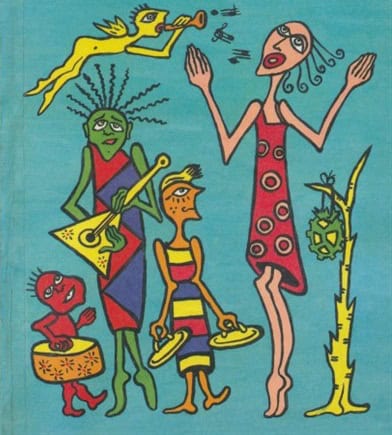
    Lidia Grigorieva unveiled new texts from the groundbreaking literary project called “Termitary.” This bold endeavor defied categorization, merging prose, poetry, philosophical essays, and sketches into a symphony of artistic expression. Grigorieva’s readings challenged conventional norms, expanding the horizons of creativity and pushing the boundaries of literary form. Within the sanctuary of the salon, attendees witnessed the birth of a new wave of artistic exploration that blurred the lines between genres and embraced the limitless possibilities of storytelling.

    Adding an element of cultural heritage to the Literary Week, Zinaida Petrucheniya enraptured the audience with enchanting performances of Russian and Ukrainian folk songs. Her melodious voice carried the richness of centuries-old traditions, reminding all present of the enduring power of oral storytelling and the deep connection we share with our collective past. Petrucheniya’s performances were a poignant reminder of the intrinsic link between literature, culture, and the preservation of our shared heritage.

    As the week unfolded, the international spirit of Literary Week became increasingly evident. Attendees from diverse backgrounds and nationalities filled the salon, forming a vibrant tapestry of cultures and perspectives. Prominent figures such as Milica Pesic, Director of the Media Diversity Institute, and Berkeley University Professor David Tuller highlighted the global significance of the event. They emphasized the role of literature as a bridge that transcends geographical and cultural boundaries, fostering understanding and unity among people. Journalists, readers, and literary enthusiasts from various corners of the world converged in London, proving that the love for words knows no borders.

    As Literary Week in London drew to a close, its impact reverberated within the hearts of those who had experienced this exceptional celebration. The event had left an indelible mark on the literary landscape of London and beyond, serving as a reminder of the transformative power of words, the resilience of literary heritage, and the ability of literature to connect people from all walks of life. Literary Week had provided a platform for the convergence of diverse voices, amplifying the importance of storytelling and its capacity to inspire, provoke, and unite us all. It had been an immersive journey through the realms of imagination, reaffirming that the written word remains an unparalleled force in shaping our world.