Category: Film

  • Eleven Days of Cinema Outside London – A Visitor’s Guide to the Cambridge Film Festival 2026

    Eleven Days of Cinema Outside London – A Visitor’s Guide to the Cambridge Film Festival 2026

    By Sarah Johnson

    By Sarah Johnson

    Every autumn the BFI London Film Festival gathers most of the attention in British cinema. About an hour north of London by train, another festival with a longer history than most people realise takes over a much smaller city. The 45th Cambridge Film Festival runs from 22 October to 1 November 2026, eleven days of international cinema in a city where you can walk from the station to the screen.

    This guide is for the visitor: what the festival is, where it happens and how to plan a few days of it.

    A festival in a small city

    The Cambridge Film Festival was founded in 1977, which makes it one of the UK’s longest-running film festivals. It is run by the Cambridge Film Trust, a registered charity, and it is a BAFTA- and BIFA-qualifying event, so the films carry weight in the British industry.

    What changes when a festival sits in a small city is scale and distance. In London, festival screenings are scattered across the capital and the evening is shaped by travel. In Cambridge the main venue is in the centre, the programme is concentrated, and it is realistic to see two or three films in a day and still have dinner in between. Filmmakers who come for Q&As stay in the same few streets as the audience, and conversations after screenings spill into the foyer rather than onto a platform.

    Where it happens

    The festival’s home is the Cambridge Arts Picturehouse at 38-39 St Andrew’s Street. The cinema occupies the upper floors of a building that opened as the Regal cinema in 1937; the ground floor is now a pub. From the railway station it is a walk of around twenty minutes through the town centre.

    It was not always here. The festival began in the old Arts Cinema in Market Passage, and over the years it has spread to other venues: the Light Cinema, the arts centre The Junction, Sawston Cinema outside the city, local churches and even pedestrianised streets. Until 2019 it held open-air “Movies on the Meadows” screenings on inflatable screens at Grantchester Meadows. Venues beyond the Picturehouse change from year to year, so check the location of each screening when you book.

    What is on

    The full programme will be published on 30 September on the festival’s website, and tickets are sold there. The organisers have already described its shape: nearly 100 titles from more than 25 countries, including Palme d’Or and Cannes prize-winners, new British films, documentaries and films for younger audiences. More than half of the films are directed by women.

    Last year gives a sense of the texture. The 2025 festival opened with Yorgos Lanthimos’s Bugonia, with Emma Stone and Jesse Plemons. It included a live event with the film critic Mark Kermode and a “Cambridge Connections” strand of films with local ties, among them Lost for Words, filmed in Ely. Its audience voted Beautiful Evening, Beautiful Day by Ivona Juka the best fiction feature.

    Planning a visit

    Choose a weekend, or both. Since 2025 the festival has run across two weekends, a format it had not used since 2015. That makes a long weekend visit easy: the opening weekend of 24-25 October or the closing weekend of 31 October – 1 November, each with the weekdays around them.

    Book premieres and Q&As early. Screenings with filmmakers present and UK premieres sell out first. Only films having their UK premiere at the festival can win its audience awards, so the ballot you fill in after those screenings actually counts.

    Leave room for the unknown. The festival’s jury prize, the Golden Punt, goes to a discovery feature: in 2025 it was Guillermo Galoe’s Sleepless City. The most memorable film of a festival visit is often one you chose because the time slot suited you.

    Look at the older films too. Retrospectives are one of the festival’s oldest traditions. In 1978 it ran a Satyajit Ray retrospective, and in 1994 it showed the Three Colours trilogy with a full Kieślowski season. Whatever the 2026 programme revisits, a restored classic on a cinema screen is something streaming cannot give you.

    With children

    The festival overlaps with the October half-term in most English schools, and it traditionally includes a family programme. In 2025 there were free family screenings during the half-term week, and the 2026 programme again promises films for younger audiences. Teenagers with a serious interest in film should know about the festival’s Youth Lab, for 16 to 24-year-olds, whose members judge one of the festival’s awards.

    Why it is worth the train

    A festival in a smaller city is not a smaller version of London. It is a different experience: fewer choices at any given hour, more time with each film, and an audience that is local, loyal and curious. The Cambridge festival has been doing this for almost half a century, through a break of several years after 1996, a return in 2001 and a change from a single long-serving director to a programming panel. It has earned its place in the autumn calendar.

    The 45th Cambridge Film Festival runs from 22 October to 1 November 2026. The programme is published on 30 September.

    Dates and details are from the Cambridge Film Festival website, checked 11 September 2026. Always check the official site for the final programme and venues.

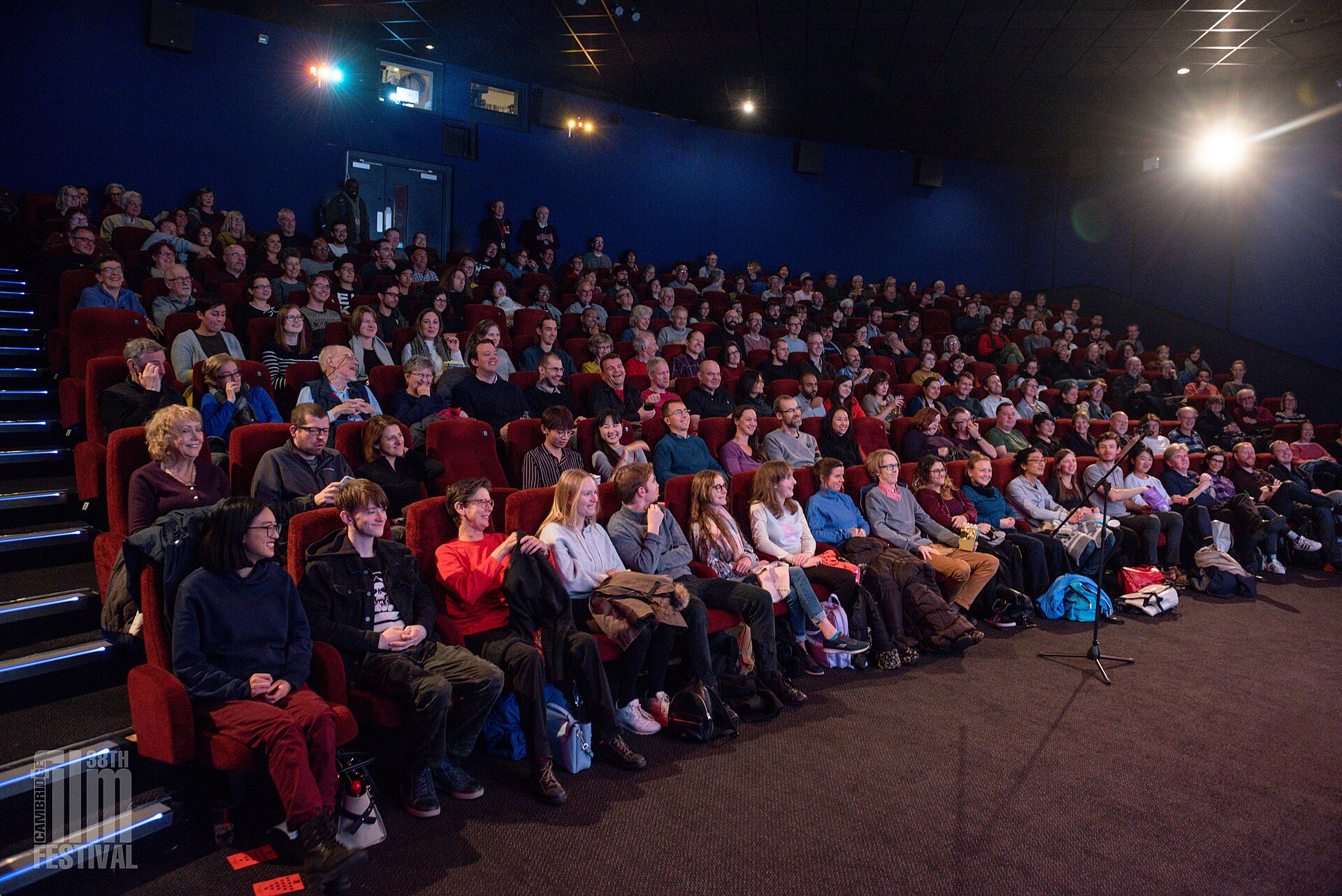
    Image: the audience at the Cambridge Film Festival, October 2018. Photo: Kitsonian / Wikimedia Commons, CC BY-SA 4.0.

  • David Lynch: The Visionary Who Transformed Cinema Forever

    David Lynch: The Visionary Who Transformed Cinema Forever

    On 16 January, the world bid farewell to David Lynch, the iconic American filmmaker who passed away at the age of 78. Renowned for his profound influence on modern cinema, Lynch’s death leaves an indelible void in the creative landscape. Known as a surrealist auteur, he redefined storytelling with a blend of haunting imagery, psychological depth, and enigmatic narratives. To understand the legacy of Lynch is to delve into the mind of a director who blurred the lines between dreams and reality.

    The Legacy of Experimentation

    David Lynch’s journey began with experimental short films in the 1970s. Works like Six Figures Getting Sick and The Grandmother hinted at his penchant for surrealism. These early projects, created on modest budgets, laid the foundation for what would become a career defined by pushing boundaries. In 1976, his debut feature film Eraserhead introduced audiences to a nightmarish, industrial world filled with bizarre characters and unsettling themes.

    The critical acclaim of Eraserhead caught the attention of Stanley Kubrick, who considered it a masterpiece. This endorsement propelled Lynch into mainstream filmmaking, and soon he was entrusted with larger projects. His second film, The Elephant Man (1980), showcased his ability to blend commercial appeal with artistic depth. The film earned eight Academy Award nominations, establishing Lynch as a force to be reckoned with in Hollywood.

    Cult Status Through Psychedelic Narratives

    By the 1980s, David Lynch had carved a niche for himself as a filmmaker unafraid to challenge convention. Films like Blue Velvet (1986) and Wild at Heart (1990) explored the dark undercurrents of small-town America. Blue Velvet juxtaposed idyllic suburban life with sinister secrets, a theme that would recur throughout his work. Wild at Heart, a psychosexual road movie, won the Palme d’Or at the Cannes Film Festival, cementing Lynch’s reputation as a master of the avant-garde.

    But it was Twin Peaks (1990) that catapulted Lynch into global fame. The television series, which combined murder mystery with supernatural elements, became a cultural phenomenon. Its eccentric characters, eerie score, and open-ended narrative left viewers entranced. Although the show’s ratings waned, its impact on television storytelling was monumental, influencing shows like The X-Files and Stranger Things.

    A Soundtrack of Innovation

    Music played an integral role in David Lynch’s films. Collaborating with composer Angelo Badalamenti, Lynch crafted soundscapes that were as unsettling as his visuals. The haunting Twin Peaks theme remains one of the most recognisable scores in television history. Lynch’s musical ventures extended beyond film, as he recorded industrial blues albums such as BlueBob (2001) and the experimental Crazy Clown Time (2011).

    Lynch’s soundtracks were more than background music—they were emotional conduits that amplified the surreal atmosphere of his films. His collaboration with artists like David Bowie and Julee Cruise added a layer of cultural depth to his projects, making them immersive experiences.

    The Revival of ‘Twin Peaks’ and Final Contributions

    The turn of the millennium marked a new chapter for Lynch. After the experimental masterpiece Mulholland Drive (2001), which won him the Best Director award at Cannes, Lynch took a step back from traditional filmmaking. His 2006 feature Inland Empire was a deeply personal and abstract work, leaving audiences divided but reaffirming his commitment to artistic authenticity.

    In 2017, Lynch stunned fans with the revival of Twin Peaks. Premiering at the Cannes Film Festival, the series was both a nostalgic return and an audacious reimagining. Its 18 episodes defied conventional narrative structures, offering a meditation on time, memory, and the nature of storytelling.

    Beyond filmmaking, Lynch explored new creative avenues. His YouTube channel, where he shared daily weather reports and short films, became a cult sensation. Collaborations with singer Chrysta Bell resulted in two albums, the last of which, Cellophane Memories, was released in 2024.

    The Man Behind the Camera

    David Lynch was more than his work. His personal life reflected the same paradoxes and complexities seen in his films. Diagnosed with emphysema in 2020, Lynch faced health challenges with resilience. He remained tied to his iconic cigarette habit, acknowledging it as an inseparable part of his life and public image.

    Despite his struggles, Lynch never lost his creative spark. Until his final days, he championed transcendental meditation, crediting it as a source of inspiration and calm amidst his chaotic artistic pursuits.

    An Unparalleled Impact

    The death of David Lynch marks the end of an era, but his influence will endure. Filmmakers like Christopher Nolan, Denis Villeneuve, and Ari Aster continue to draw inspiration from Lynch’s pioneering work. His films remain subjects of academic study, celebrated for their complexity and innovation.

    Lynch’s ability to evoke emotion, challenge perception, and redefine storytelling ensured his place as one of the greatest auteurs in cinematic history. His work serves as a reminder that art is not bound by rules but thrives in exploration and audacity.

    David Lynch may no longer be with us, but his legacy will continue to haunt and inspire. To borrow his own words, “Keep your eye on the doughnut, not on the hole.” In Lynch’s absence, the world feels the void, but his vision will forever illuminate the shadows.