Category: Visual arts

  • North Wales cultural landmark  receives funding

    North Wales cultural landmark receives funding

    By Sarah Johnson

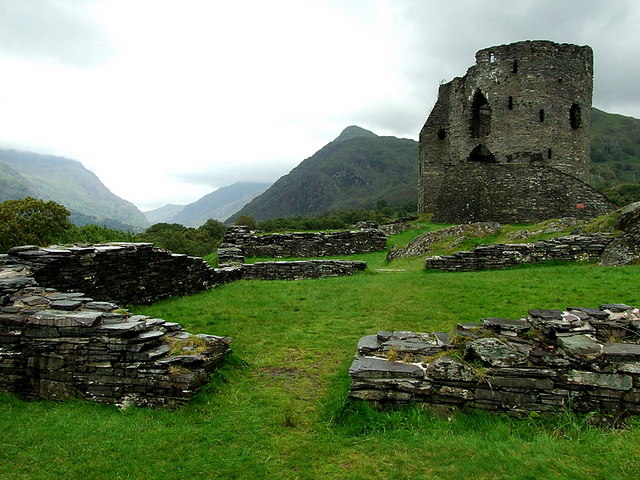
    There is a particular silence that hangs over the slate quarries of North Wales. It is not the gentle quiet of an untouched wilderness. It is a heavy, deep silence, weighted with the ghosts of noise: the sharp crack of splitting rock, the rumble of wagons on iron rails, the distant shouts of men, and the relentless, percussive tapping of a thousand hammers and chisels. Stand on the edge of the great, man-made canyon of Dinorwic, and you are standing on the edge of a void, both physical and historical. This landscape was not born; it was violently made. And for generations, it unmade the men who worked it.

    Into this silence, the Welsh Government has spoken. An investment of £3.3 million has been directed to the National Slate Museum in Llanberis, the institution charged with keeping this story alive. The funding is earmarked for redevelopment: a new learning centre, better access, refreshed exhibitions. On the surface, it is a piece of practical, administrative news. But its real significance is profound. This is more than an upgrade to a tourist facility. It is a down payment on a debt of memory, a crucial act of cultural preservation for an industry that roofed the nineteenth-century world and, in doing so, forged a defining, brutal, and beautiful part of the Welsh identity.

    An Industry Etched in Grey

    To understand why this matters, one must understand slate. Not as a building material, but as a geological destiny. The Cambrian slate belt that runs through this part of Wales is a seam of compressed, fine-grained mudstone, possessing a unique quality: it cleaves, perfectly, into thin, durable sheets. For centuries, this “grey gold” was hacked from the hillsides on a small scale. Then the Industrial Revolution arrived, and the demand for roofing material exploded. Welsh slate became the default. It covered the factories of Manchester, the terrace houses of London, and the municipal buildings of the British Empire, from Melbourne to Montreal.

    The scale of the extraction was almost geological in itself. Mountains were hollowed out, terraced into vast, inverted ziggurats. Villages like Llanberis, Bethesda, and Blaenau Ffestiniog became company towns, their existence dictated by the rhythms of the quarry horn. The work was breathtakingly dangerous. Men and boys worked on narrow ledges, hundreds of feet in the air, in all weathers. Rockfalls were common. The air was thick with a fine, grey dust that settled in the lungs, leading to silicosis, the slow, suffocating quarryman’s disease.

    This brutal reality forged a unique and resilient culture. The quarrymen were not an amorphous labour force; they were a highly politicised, literate, and non-conformist community. Inside the quarry, they worked in small, cooperative teams. During their lunch breaks, they gathered in stone huts known as cabans. These were not mere mess rooms. They were informal parliaments, debating chambers, and universities of the working man. Here, in the Welsh language, they discussed politics, theology, and poetry. They organised unions and chapels. They orchestrated some of the longest and most bitter industrial disputes in British history, most famously the Penrhyn Quarry strike, a three-year struggle for dignity and fair pay that tore the community apart.

    The slate industry was, in a very real sense, a crucible of modern Welsh identity. It was intensely Welsh-speaking, fiercely political, and deeply rooted in a specific, unforgiving landscape. To forget the story of slate would be to induce a form of national amnesia.

    More Than a Museum

    The National Slate Museum is the primary bulwark against this forgetting. Housed in the former Victorian engineering workshops of the Dinorwic Quarry, it is a remarkable place. It is not a sterile collection of artefacts behind glass. It is a living museum, where the air still smells of oil and steam. The great waterwheel, once the largest in Britain, still turns. Craftsmen give daily demonstrations of splitting slate, their hands moving with an inherited economy of movement, transforming a rough block into a perfect roofing slate with a few deft taps. To visit is to step directly into the world of the men who worked here.

    But time takes its toll on buildings, as it does on memory. The new funding, which brings the Welsh Government’s total contribution to £5.8 million, is designed to secure this legacy for a new generation. The planned redevelopment is about more than a new café and shop. It is about creating new spaces for learning, about offering training in the traditional heritage skills that are themselves an endangered craft, and about making the entire site more accessible, ensuring the story can be shared with everyone.

    When Culture Minister Jack Sargeant visited the site, he framed the investment as part of a wider commitment. He spoke of a “transformation journey,” connecting the work at Llanberis to the renewal of Theatr Clwyd and the creation of the new Football Museum in Wrexham. This is a crucial point. The investment is not an isolated act of generosity. It is part of a coherent strategy to strengthen Welsh culture by investing in the specific, local institutions that embody it. As the minister noted, this spending is “woven into budgets across Welsh Government,” from education to community regeneration. It is an acknowledgement that culture is not a luxury, but the very fabric of a healthy society.

    From Local Industry to Global Heritage

    The timing of this investment is significant. In 2021, the slate landscape of Northwest Wales was designated a UNESCO World Heritage site. This placed it on a par with the Pyramids of Giza and the Great Wall of China. It was a moment of global recognition for the industry’s world-changing impact and the unique culture it fostered.

    Yet there is always a danger that a UNESCO badge can become a glossy sticker, a brand for tourism that papers over the complex, often painful, reality of a place. It can embalm a landscape, turning it into a static monument. This funding does the opposite. It ensures that the UNESCO designation is a living reality. It translates global prestige into local benefit, creating jobs, providing training, and strengthening the very community whose ancestors carved out the landscape being celebrated. It ensures the World Heritage site is not just a place to be looked at, but a place to be understood, engaged with, and learned from.

    Perhaps the most striking thing is how this project aims to reanimate the past. It seeks to do for the story of slate what the quarrymen did for the rock itself: to take something dense and seemingly impenetrable, and cleave it open, revealing the intricate layers within. By creating new learning spaces and offering training in heritage skills, the museum is not just preserving history; it is trying to create a dialogue with it. It is building a bridge between the silent, imposing quarries and the generations who will never hear the noise that once filled them.

    This work is a quiet act of defiance against the entropy of time. It is a declaration that this story—of hardship, of solidarity, of a language and a culture that survived against the odds—will not be allowed to fade into the grey silence of the hills. It is a promise to the ghosts of the quarrymen that their labour, and their lives, will be remembered.
  • David Lynch: The Visionary Who Transformed Cinema Forever

    David Lynch: The Visionary Who Transformed Cinema Forever

    On 16 January, the world bid farewell to David Lynch, the iconic American filmmaker who passed away at the age of 78. Renowned for his profound influence on modern cinema, Lynch’s death leaves an indelible void in the creative landscape. Known as a surrealist auteur, he redefined storytelling with a blend of haunting imagery, psychological depth, and enigmatic narratives. To understand the legacy of Lynch is to delve into the mind of a director who blurred the lines between dreams and reality.

    The Legacy of Experimentation

    David Lynch’s journey began with experimental short films in the 1970s. Works like Six Figures Getting Sick and The Grandmother hinted at his penchant for surrealism. These early projects, created on modest budgets, laid the foundation for what would become a career defined by pushing boundaries. In 1976, his debut feature film Eraserhead introduced audiences to a nightmarish, industrial world filled with bizarre characters and unsettling themes.

    The critical acclaim of Eraserhead caught the attention of Stanley Kubrick, who considered it a masterpiece. This endorsement propelled Lynch into mainstream filmmaking, and soon he was entrusted with larger projects. His second film, The Elephant Man (1980), showcased his ability to blend commercial appeal with artistic depth. The film earned eight Academy Award nominations, establishing Lynch as a force to be reckoned with in Hollywood.

    Cult Status Through Psychedelic Narratives

    By the 1980s, David Lynch had carved a niche for himself as a filmmaker unafraid to challenge convention. Films like Blue Velvet (1986) and Wild at Heart (1990) explored the dark undercurrents of small-town America. Blue Velvet juxtaposed idyllic suburban life with sinister secrets, a theme that would recur throughout his work. Wild at Heart, a psychosexual road movie, won the Palme d’Or at the Cannes Film Festival, cementing Lynch’s reputation as a master of the avant-garde.

    But it was Twin Peaks (1990) that catapulted Lynch into global fame. The television series, which combined murder mystery with supernatural elements, became a cultural phenomenon. Its eccentric characters, eerie score, and open-ended narrative left viewers entranced. Although the show’s ratings waned, its impact on television storytelling was monumental, influencing shows like The X-Files and Stranger Things.

    A Soundtrack of Innovation

    Music played an integral role in David Lynch’s films. Collaborating with composer Angelo Badalamenti, Lynch crafted soundscapes that were as unsettling as his visuals. The haunting Twin Peaks theme remains one of the most recognisable scores in television history. Lynch’s musical ventures extended beyond film, as he recorded industrial blues albums such as BlueBob (2001) and the experimental Crazy Clown Time (2011).

    Lynch’s soundtracks were more than background music—they were emotional conduits that amplified the surreal atmosphere of his films. His collaboration with artists like David Bowie and Julee Cruise added a layer of cultural depth to his projects, making them immersive experiences.

    The Revival of ‘Twin Peaks’ and Final Contributions

    The turn of the millennium marked a new chapter for Lynch. After the experimental masterpiece Mulholland Drive (2001), which won him the Best Director award at Cannes, Lynch took a step back from traditional filmmaking. His 2006 feature Inland Empire was a deeply personal and abstract work, leaving audiences divided but reaffirming his commitment to artistic authenticity.

    In 2017, Lynch stunned fans with the revival of Twin Peaks. Premiering at the Cannes Film Festival, the series was both a nostalgic return and an audacious reimagining. Its 18 episodes defied conventional narrative structures, offering a meditation on time, memory, and the nature of storytelling.

    Beyond filmmaking, Lynch explored new creative avenues. His YouTube channel, where he shared daily weather reports and short films, became a cult sensation. Collaborations with singer Chrysta Bell resulted in two albums, the last of which, Cellophane Memories, was released in 2024.

    The Man Behind the Camera

    David Lynch was more than his work. His personal life reflected the same paradoxes and complexities seen in his films. Diagnosed with emphysema in 2020, Lynch faced health challenges with resilience. He remained tied to his iconic cigarette habit, acknowledging it as an inseparable part of his life and public image.

    Despite his struggles, Lynch never lost his creative spark. Until his final days, he championed transcendental meditation, crediting it as a source of inspiration and calm amidst his chaotic artistic pursuits.

    An Unparalleled Impact

    The death of David Lynch marks the end of an era, but his influence will endure. Filmmakers like Christopher Nolan, Denis Villeneuve, and Ari Aster continue to draw inspiration from Lynch’s pioneering work. His films remain subjects of academic study, celebrated for their complexity and innovation.

    Lynch’s ability to evoke emotion, challenge perception, and redefine storytelling ensured his place as one of the greatest auteurs in cinematic history. His work serves as a reminder that art is not bound by rules but thrives in exploration and audacity.

    David Lynch may no longer be with us, but his legacy will continue to haunt and inspire. To borrow his own words, “Keep your eye on the doughnut, not on the hole.” In Lynch’s absence, the world feels the void, but his vision will forever illuminate the shadows.

  • Visionary art

    Visionary art

    Visionary art is an artistic style based on a spontaneous depiction of what is seen in the altered state of consciousness, religious, meditative contemplation, trance, as well as flashbacks that arise after so-called “tripods” (psychedelic state) altered states of consciousness, characterized by a different perception and an intense process of awareness. English synonyms Visionary art: Visionary Art, Fantastic Realism, Imaginative Art, Mystical Art, Psychedelic Art.
    One of the creators of the theory of the noosphere and the modern theory of cosmic evolution, Pierre Teilhard de Chardin, revealed the true nature and essence of art in the style of “Visionary art”: “We are not people who experience spiritual experience, but spiritual beings who experience the experience of human existence.”

    The following sections of the exhibition are NOT Visionary art directions, but together they form close and interpenetrating currents of contemporary art.

  • Visionary Art is what merge art, myth and dreams

    Visionary Art is what merge art, myth and dreams

    According to the French artist L. Caruana (Laurence Caruana), Visionary Art is what merge art, myth and dreams. Like the ancient writings, it is a lost language, to be deciphered by everyone alone. The artist-visionary uses all means available to him to show what is beyond the boundaries of vision. In fact, he draws something that is invisible. The source of experience for the artist – dreams, a state of trance, madness, meditation. Part of the artists-visionaries consciously resorts to the use of entheogens (substances to achieve an altered state of consciousness), realizing their danger to themselves. But at the moment this practice is not generally accepted.

  • Visionary Art is a path of feelings, not of reason

    Visionary Art is a path of feelings, not of reason

    Visionary Art is a path of feelings, not of reason. Spontaneous, not controlled by the will or a certain plan an image of the author’s inner world, fantastic worlds and creatures. The development of this style goes in parallel with the spread of eastern spiritual practices (for example, yoga), a technique of penetrating into the depths of the subconscious, an interest in the pagan and pre-literate past of peoples.

  • Visionary Art – attitude to painting as an instrument

    Visionary Art – attitude to painting as an instrument

    The general idea of artists Visionary Art – attitude to painting as an instrument through which the “inner landscape” (Martin Hoffman) is reflected, thus, art becomes not a goal, but a means on the way to self-knowledge, self-improvement. Pictures are some kind of portals, “which will open up infinite possibilities for existence and self-expression. Thanks to him, we will remember and rediscover our past, who we are, where our life began and where we are going “(Amanda Sage).

  • Visionary Art

    Visionary Art

    Visionary Art attracts the attention of both creators and viewers all around the world. ts popularity is so broad that this style can rightly be considered a new worldwide phenomenon. Despite the modern-sounding name, it reflects the artist’s original interest in the inner world, where fantasy, not reality, becomes the source of creativity. Art is always an attempt to look inside yourself, to know yourself, your place, in a sense «draw a soul».

  • Mystic Symbolism

    Mystic Symbolism

    Mystical symbolism is an artistic reflection of religious teachings, philosophical works, understatement and ambiguity of plots and their interpretations. The image is not a specific image, but utterances (even screaming) of the soul, mood, experiences, impressions. The predominance of the emotional experience of both the creator of creation and the viewer.

  • Cosmism

    Cosmism

    Cosmism – man and mankind as elements, connected in a single whole with the cosmos, other worlds and dimensions, unknown states of mathematics. Interaction and coexistence of realities, the beauty of non-worlds. Abstract categories and concepts as a theme for creative self-expression: spiritual search, the flow of time, thought and its movements.

  • Fanstastic realism

    Fanstastic realism

    Fanstastic realism – as the herald of Visionary art, the combination of a realistic style of painting, content and fantastic motives, the author’s notions of phenomena beyond the limits of sensory experience.