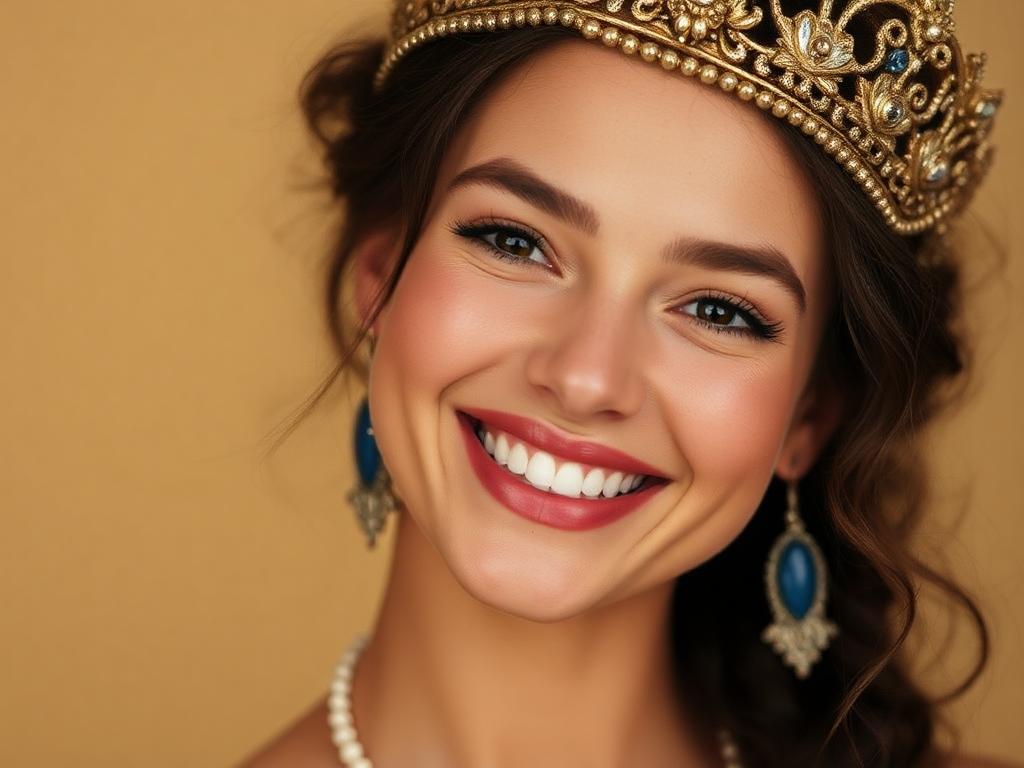
The notion that beauty constitutes a form of power is an axiom as ancient as civilisation itself, a silent language understood across cultures and epochs. It is a force that can open doors, command attention, and sway opinions, often before a single word is uttered. Yet, if beauty is the formidable arsenal, then the smile – that seemingly simple, universal expression – might just be its most finely honed, versatile, and profoundly human instrument. VisionaryArt.UK will tell you about the potent, often perilous, dance between perceived beauty and authentic expression, examining how society has historically wielded aesthetic allure as a currency of power, and whether the disarming smile remains its most potent, or perhaps most subversive, instrument in the grand theatre of human interaction.
Beauty’s Enduring Reign
Throughout history, physical attractiveness has been inextricably linked with influence and status. From the meticulously crafted visages of Egyptian pharaohs, designed to project divinity and authority, to the powdered and rouged courtiers of Versailles, where aesthetic perfection was a vital component of political manoeuvring, beauty has served as a tangible asset. It was, and in many ways remains, a form of social currency, capable of elevating an individual’s standing, securing advantageous alliances, or simply ensuring a more favourable reception. This aesthetic power was not merely superficial; it was deeply interwoven with perceptions of virtue, intelligence, and even divine favour. The art of the Renaissance, for example, often equated physical beauty with spiritual purity, creating an enduring visual lexicon that continues to subtly shape our cultural perceptions.
Fashion’s Gilded Edifice
The modern fashion industry has become the principal architect and arbiter of contemporary beauty standards. It constructs, deconstructs, and reconstructs ideals of allure with a seasonal rhythm, presenting a constantly shifting kaleidoscope of what is deemed desirable. Through glossy magazine spreads, runway spectacles, and global advertising campaigns, the industry not only reflects but actively shapes societal aspirations, transforming beauty from an inherent quality into a meticulously curated commodity. This process, while providing endless inspiration and avenues for self-expression, can also create a gilded cage, where adherence to prescribed norms becomes a prerequisite for acceptance or validation. The power beauty confers in this context is often contingent upon conformity to these external, and frequently unattainable, ideals, raising questions about true empowerment versus subtle objectification.
The Smile’s Quiet Strength
Amidst the often-exaggerated and meticulously constructed ideals of beauty promoted by commercial forces, the smile emerges as a distinct entity. It is an innate human expression, predating fashion and transcending fleeting trends. While a “perfect” smile can certainly be commodified – orthodontics and cosmetic dentistry are thriving industries – the act of smiling retains a primal, communicative power. A genuine smile can disarm, build rapport, convey warmth, and signal trustworthiness. This is where the “sword” analogy becomes particularly apt; a smile can cut through artifice, navigate social complexities, and forge connections in ways that a static, “beautiful” facade might not. The smile psychology is complex, indicating not just happiness but also confidence, approachability, and even, paradoxically, a subtle assertion of dominance in certain social contexts. It is a tool of negotiation, a balm, and a beacon.
Digital Age Distortions
The advent of the digital age beauty landscape, dominated by social media platforms like Instagram and TikTok, has profoundly altered the dynamics of beauty and power. Filters, editing apps, and the relentless pursuit of the “perfect” online persona have democratised the tools of image construction, allowing individuals to curate their aesthetic to an unprecedented degree. However, this has also led to a homogenisation of beauty ideals – the so-called “Instagram face” – and exacerbated the pressures associated with physical appearance. The aesthetic power sought in these digital realms can be ephemeral, built on likes and followers, and often detached from lived reality. The smile, in this context, can be both a genuine expression and a calculated performance, its authenticity perpetually under scrutiny in a world of curated perfection.
Aesthetic Social Capital
Beauty, in its myriad forms, continues to function as a significant form G of social currency. Studies have repeatedly shown that attractive individuals often benefit from the “halo effect,” where they are perceived as more intelligent, competent, and likeable. This can translate into tangible advantages in professional settings, romantic pursuits, and everyday social interactions. The ability to command attention and elicit positive responses based on one’s appearance is a clear manifestation of influence and allure. However, this power is not without its complexities. It can invite unwanted attention, lead to superficial judgments, and create a pressure to maintain an image that may not align with one’s internal self. The reliance on aesthetic capital can also overshadow other valuable attributes, creating a dynamic where appearance becomes the primary metric of worth.
Subverting Beauty Norms
Despite the pervasive influence of conventional beauty standards, there is a growing movement towards subverting these norms and celebrating a more inclusive and diverse understanding of attractiveness. This challenge to traditional power structures in beauty is driven by individuals and brands championing authenticity, body positivity, and the beauty of imperfection. The power here lies not in conforming to an established ideal, but in redefining it. A smile that radiates self-acceptance, regardless of whether it aligns with conventional notions of “perfection,” can be a powerful act of defiance and empowerment. This shift encourages a more nuanced appreciation of beauty, one that values character, individuality, and genuine self-expression over mere adherence to a template.
The Unseen Barricades
While beauty can undoubtedly open doors, it can also erect unseen barricades. The pressure to maintain a certain aesthetic can be mentally and emotionally taxing, contributing to anxiety, low self-esteem, and disordered eating patterns. The objectification that often accompanies being perceived primarily through the lens of physical attractiveness can be profoundly disempowering, reducing an individual to their appearance rather than acknowledging their full humanity. Furthermore, the power conferred by beauty is often conditional and fleeting, subject to the whims of fashion, the inevitable process of ageing, and the subjective gaze of the beholder. This precariousness highlights the limitations of relying solely on aesthetic appeal as a source of enduring power or self-worth. The pursuit of historical beauty ideals, if unexamined, can lead individuals down a path of constant striving for an elusive, externally defined perfection.
Authenticity’s True Gleam
Ultimately, the most enduring and perhaps most potent form of allure stems not from the flawless replication of a prescribed ideal, but from genuine authenticity. When personal identity shines through, when inner confidence illuminates outward appearance, beauty takes on a different, more resonant quality. A smile that reaches the eyes, born of genuine emotion, possesses a magnetism that no amount of cosmetic artifice can replicate. This is not to diminish the joy and creativity found in exploring different facets of image construction through fashion and cosmetics, but rather to suggest that these tools are most powerful when they serve to enhance, rather than obscure, the true self. The “sword” of the smile is sharpest when wielded with sincerity and self-assurance.
The interplay between beauty and power is a complex, multifaceted dialogue that continues to evolve with societal shifts and technological advancements. Beauty, in its various manifestations, undeniably holds a certain sway, a capacity to influence and captivate. Yet, the power it bestows is often contingent, mediated by cultural norms and individual perceptions. The smile, however, remains a uniquely compelling instrument within this arsenal. It is both a primal expression of human connection and a sophisticated tool of social navigation. Whether radiant and confident, subtly knowing, or openly defiant of convention, the smile, when rooted in authenticity, possesses a particular kind of sovereignty – a quiet, unassailable strength that can, indeed, be the most compelling facet of one’s allure. It is the human touch in the grand design of beauty, the gleam of genuine spirit that truly commands lasting attention.