Apocalypse on television now has a palette. Desaturated greens, dust in the light, a horizon interrupted by something broken. Stuart Fails to Save the Universe, the HBO Max comedy that began on 23 July, borrows that palette for a joke, and in doing so shows how completely the visual language of ruin has settled into convention.
From engraving to production design
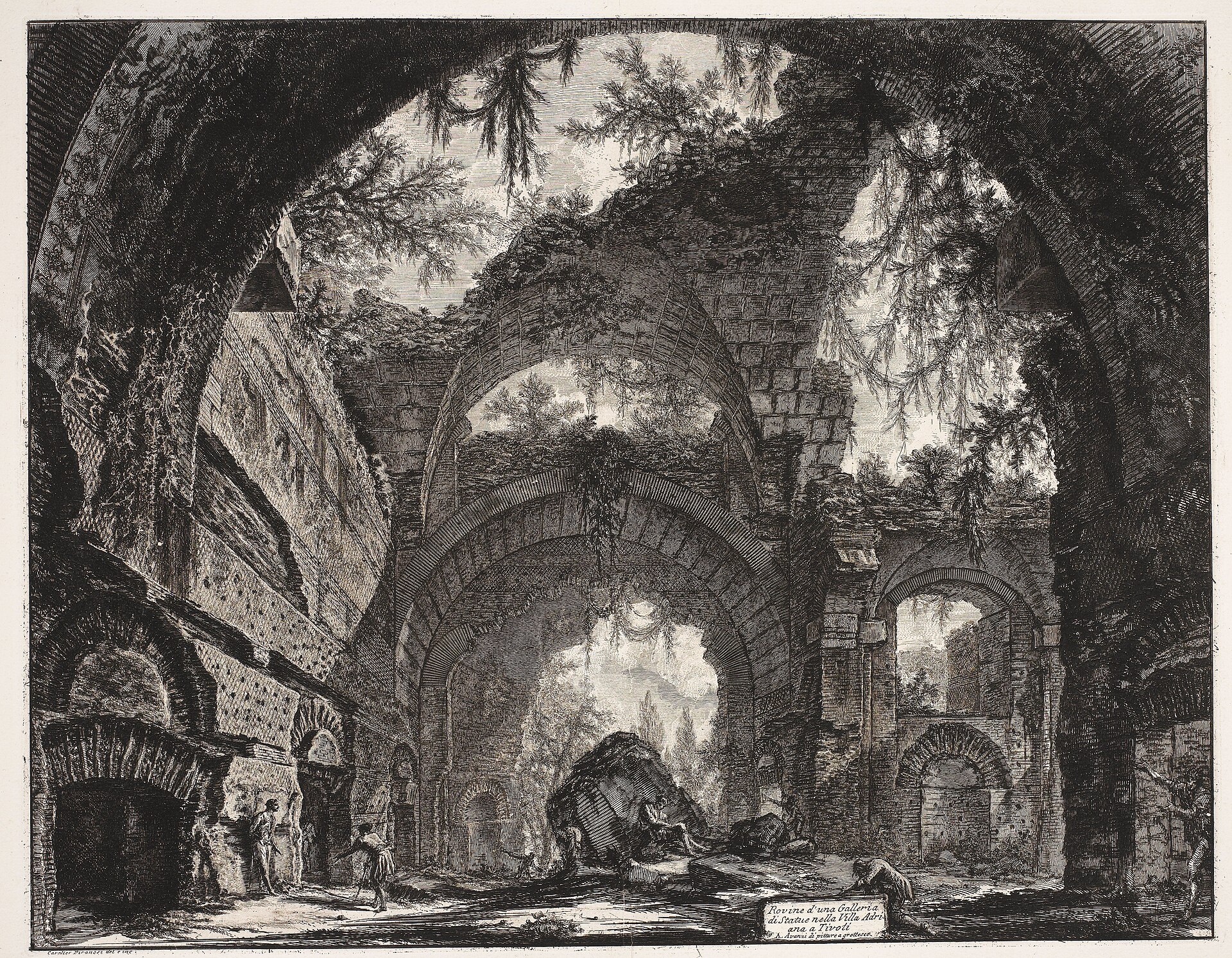
The taste for ruins is old and entirely aesthetic in origin. Eighteenth century travellers commissioned paintings of collapsed temples because a broken column was more beautiful than a whole one, and Giovanni Battista Piranesi built a career on Roman remains drawn larger and darker than they were. The point was never documentary. Ruin gave scale to human effort by showing what outlasts it.
Romanticism formalised the appetite. A ruin in a landscape painting is a piece of instruction: here is time, here is your position within it. Nineteenth century painters put figures in front of collapsed abbeys precisely to make the figures look small.
Screen design inherited the grammar without the argument. What began as a meditation on time has become a set of production instructions, and the instructions are now so standardised that a comedy can invoke them in a single establishing shot and expect the audience to read the reference.
What the new series does with it
The premise is unusually literal. Kevin Sussman plays a comic shop owner who damages a device built by his old customers, opens what the series calls a multiverse Armageddon, and travels between worlds trying to repair it. Each world needs its own look, delivered fast enough to land a joke.
Chuck Lorre, Zak Penn and Bill Prady have made choices that show how much of the effect is lighting rather than construction:
- single camera photography instead of the multi-camera sitcom stage, which allows shadow, and shadow is most of what makes a room look abandoned
- no laugh track, so the image has to establish tone unaided
- a score by Joseph LoDuca and a theme by Danny Elfman, composers whose work signals genre before a single set is shown
- worlds sketched in one or two objects rather than built out, on the assumption that viewers will fill the rest in themselves
That last point is the interesting one for anyone who looks at pictures for a living. The series is not designing apocalypses. It is triggering ones the audience already carries.
The cost of a shared visual memory
This is where the reviews start to bite. In The Hollywood Reporter, Angie Han argued that the show has no real curiosity about the universes it visits, treating each as a backdrop to be crossed rather than a place to be understood. RogerEbert.com reached a similar conclusion about a clever concept underused. The series holds 76 per cent on Rotten Tomatoes from 38 reviews and 68 out of 100 on Metacritic from 18 critics, which is the score of a show that gestures well and examines little.
A painter faces the same trap in different materials. When a motif becomes legible enough to be recognised instantly, it stops asking anything of the person looking at it. The vanitas skull worked as a memento mori for as long as viewers had to think about why it was on the table. Once the skull became shorthand, the thinking stopped and the decoration remained.
Ruin imagery has reached that stage. We can all read a collapsed motorway or an overgrown shopping centre without a moment’s effort, which means the image no longer performs the function ruins were originally painted to perform. It shows time without making anyone feel it.
Why a comedy is a fair test
Comedy is the honest place to examine a visual convention, because comedy cannot hide behind atmosphere. A drama can hold a shot of a flooded street for twenty seconds and call the mood meaning. A joke has to work in four seconds or not at all, so it exposes exactly how much of an image is doing real work and how much is inherited.
By that measure the series is instructive. The apocalyptic frames read instantly, which proves the convention is complete, and they read shallowly, which proves it has been worn smooth.
There is a version of this material that would be genuinely strange, in which each universe is designed by somebody who had looked at the world rather than at other screens. What has arrived instead is a comedy that knows the vocabulary perfectly and has nothing new to say in it.
Stuart Fails to Save the Universe runs weekly on HBO Max until 24 September.
Image: Giovanni Battista Piranesi, Rovine d’una Galleria di Statue nella Villa Adriana a Tivoli, from Vedute di Roma. Rijksmuseum, CC0.