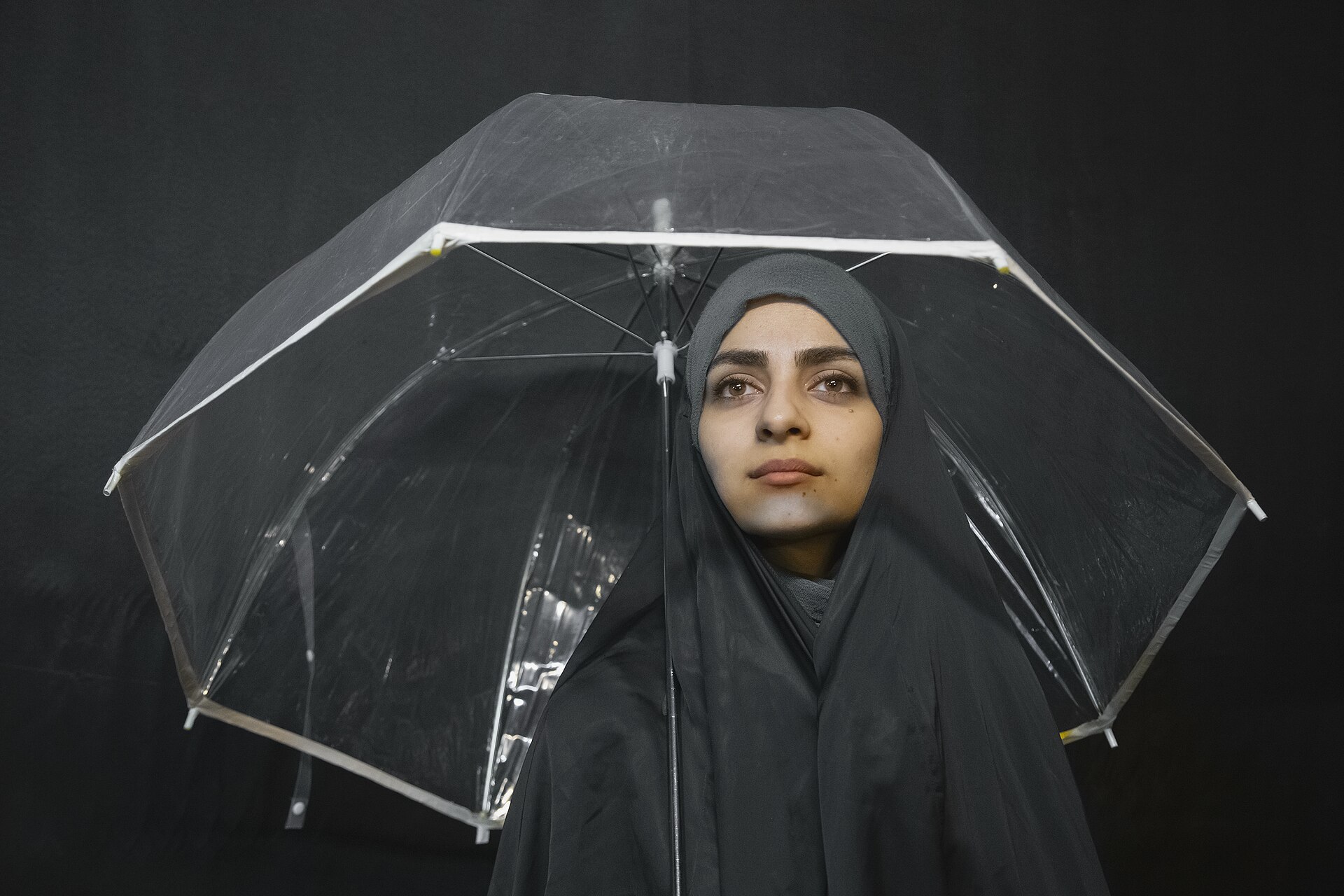
Immersive theatre changes audience behaviour by taking away the seat, the darkness and often the spoken word, then asking people to choose where to go and what to watch. Spectators walk, search, crowd, follow performers and handle objects, and many become more alert, crowd closer to performers and, according to critics and performers, sometimes less inhibited than they would be in an auditorium. The same freedom that makes the form thrilling also creates new problems around consent, crowding and responsibility, and the companies that make this work have repeatedly changed their rules in response.
What changes when the seats disappear
In a conventional theatre the rules are learned in childhood: sit down, stay quiet, clap at the end. Immersive work removes most of those cues. Writing in The Guardian in 2014, the critic Lyn Gardner put it plainly: audiences “are increasingly asked to be participants or collaborators; to take part, sometimes to follow instructions, and occasionally even to have agency.”
The behavioural shift is not simply from passive to active. Without the shared posture of a seated house, each person has to decide how close to stand, whether to follow a character or stay in a room, and whether touching a prop is allowed. That decision-making is the experience. It is also why two people leaving the same show can describe quite different evenings.
Felix Barrett, who founded Punchdrunk in 2000, has framed the discomfort as the point. In a 2013 Observer profile he said: “In the theatre, you sit there closeted and you switch off part of your brain because you’re comfortable. If you’re uncomfortable, then suddenly you’re eager to receive.”
How Punchdrunk built the template
Much of what people now mean by immersive theatre comes from Punchdrunk’s “mask” shows. The company’s about page describes a form that “places the audience at the very heart of the action”. Its first Sleep No More was staged in London in 2003, the first collaboration between Barrett and the choreographer and co-director Maxine Doyle, in a deserted school near the Thames, telling Macbeth through a film noir lens.
The scale grew quickly. The Drowned Man: A Hollywood Fable, co-directed by Barrett and Doyle, ran at Temple Studios in London from 2013 to 2014. The Observer reported in July 2013 that it had already sold 50,000 tickets and would lead 600 people a night around 200,000 square feet of a former sorting office beside Paddington station, with a cast of 34. The Burnt City, a retelling of the fall of Troy, followed at One Cartridge Place in Woolwich from 2022 to 2023. Reviewing it, Arifa Akbar counted 54 performers playing 28 characters across three Grade II-listed buildings.
The New York version of Sleep No More, at the McKittrick Hotel, became the best known of all. It began previews on 7 March 2011 and closed after the matinee on 5 January 2025, having played to more than two million people, according to Variety. In Shanghai, a co-production with SMG Live opened in 2016; Theatre Weekly reported that it had been performed 2,670 times to more than 700,000 visitors and would close on 30 August 2026 ahead of a new production in Shenzhen.
Masks, anonymity and the limits of freedom
The mask is the single biggest behavioural device in this tradition. The MIT Media Lab, which worked with Punchdrunk on an online extension of the New York show in 2012, summarised the rules: audience members “are masked upon entering the experience and instructed to explore but not to speak”, wandering through more than 100 rooms over a seven-storey building.
Masks turn spectators into a uniform, silent chorus, which helps performers distinguish audience from cast and lets visitors watch without self-consciousness. Akbar noted the side effect at The Burnt City: in beaked masks crowding round actors, “we appear like rampaging voyeurs”.
Anonymity can also push behaviour past acceptable limits. In February 2018 BuzzFeed News reporter Amber Jamieson confirmed 17 incidents of groping or sexual misconduct by patrons at the New York production between 2011 and 2017, of which the producer acknowledged seven and contested the rest. One former steward told the publication: “Once you gave people a mask, it was carte blanche to let them do whatever they wanted.” The producer said it had written safety policies and training, including role play for handling unruly guests.
Responding in The Guardian, the critic Alexis Soloski noted that a line had only recently been added asking audiences to “keep a respectful distance” from performers. She contrasted another New York show, Then She Fell by Third Rail, where Jennine Willett, one of the company’s artistic directors, said its performers had “full support to walk out of any scene” if an audience member behaved inappropriately, and that the lack of masks made a difference.
Fear of doing the wrong thing
For every audience member who pushes too far, many more hold back. Gardner’s 2014 piece was prompted by Bordergame, a National Theatre of Wales production in which audiences were cast as people trying to travel from Bristol to Newport. Herded into a holding area, she considered organising a rebellion but stayed put because she worried about disrupting the show. Her conclusion: “our fear of doing the wrong thing – of behaving in a way that potentially destroys the intended performance – remains very strong.”
This tension, between an invitation to act and a strong social instinct to conform, is the subject of serious academic study. Gareth White’s Audience Participation in Theatre, subtitled Aesthetics of the Invitation (Palgrave Macmillan, 2013), takes the artist’s invitation as its central subject, and Adam Alston’s Beyond Immersive Theatre, subtitled Aesthetics, Politics and Productive Participation (Palgrave Macmillan, 2016), questions what productive participation asks of audiences.
In practice, the most comfortable immersive shows make the rules unusually explicit at the door. The least comfortable leave them deliberately vague, which some visitors find exciting and others find stressful.
Space, objects and the hunt for story
Because the narrative is scattered, visitors start behaving like investigators. Akbar described the abandoned domestic details at The Burnt City, “unfinished jigsaws, washing left to dry, feasts laid out”, and added: “We touch these abandoned things as we go by.” Handling props, reading letters and opening drawers becomes a way of assembling meaning that a seated audience would receive from dialogue.
Rose Biggin’s Immersive Theatre and Audience Experience (Springer, 2017) includes a chapter on interactivity and immersion in The Drowned Man and others on narrative, site and fan interactivity, reflecting how much of the experience is built by audiences moving through space and then talking about it.
The space also produces less flattering behaviour. Soloski called the New York Sleep No More “easily the most congested Punchdrunk production I’ve ever attended”, which made it easy to disappear into a throng. Critics have long noted that the first visit can be overwhelming; the Observer quoted the critic David Benedict warning that the form risks becoming “posh haunted house, with people rushing at you in corridors” unless it is done “with theatrical rigour”.
Audiences talking to each other
Silence inside the building tends to produce a flood of conversation outside it. Because no one can see everything, visitors compare notes, return to fill gaps and, in the case of long runs, build communities of repeat attendees. The MIT project in 2012 tried to formalise this, pairing online participants with live audience members who wore sensor-equipped masks and followed narrative threads together.
The academic work reflects it too. Biggin’s book includes a chapter titled “Fan Interactivity: Communicating Immersive Experience”, recognising that for many attendees the show continues in online discussion long after the performance.
Producers adjusting to how people actually behave
Companies have learned that not everyone wants maximum freedom. Secret Cinema, the London company that stages immersive film events, changed its model after its 2022 sale. Variety reported in 2026 that for its staging of Grease at Evolution in Battersea it dropped the requirement for audiences to follow pre-assigned storylines, letting them “dip in and out of the action”, and introduced some seated tickets “for those who may not – yet – feel brave enough to get involved”. Merritt Baer, who now leads the company, said the planned Pirates of the Caribbean production at a new Greenwich Peninsula venue would work similarly.
The economics are fragile, too. Coney, a company known for interactive, play-based work, closed in April 2025, citing changes to its funding structure and mounting pressure on arts funding, and now maintains an online archive (checked October 2026).
What to expect and how to take part well
If you are planning your first immersive show, a few habits make it better for you and for everyone else.
- Read the house rules before you go. In the mask shows, silence and keeping a respectful distance from performers are standard conditions.
- Expect to be separated from friends. BuzzFeed News reported that the New York Sleep No More intentionally separated guests from the people they arrived with.
- Wear comfortable shoes and expect stairs, low light and up to three hours on your feet.
- Follow a performer for a while, then try staying put in an empty room. Both produce different stories.
- Respect performers’ space. If a show allows contact, it will be offered by the cast, not taken by the audience.
- Ask about seated or quieter options if crowds are a concern, as some producers now provide them.
Visionary Art is an independent cultural title with a gallery in Ruthin, and more of our coverage can be found on our homepage. The behaviours immersive theatre encourages, from slow looking to handling objects and moving freely through a space, have a lot in common with how people experience installation art in a gallery.
Photo: Mostafameraji, CC0, via Wikimedia Commons