Category: Culture

  • The Anatomy of an Award: A Look Inside The Creativity’s Prize

    The Anatomy of an Award: A Look Inside The Creativity’s Prize

    By Sarah Johnson

    For any artist, the decision to enter a competition is a strategic one. It’s an investment of time, energy, and hope. But beyond the prestige, what does a modern, digitally-savvy award actually offer? How does it work? To answer this, we’re taking a forensic look under the hood of one of the most talked-about new accolades: the international Creativity’s Prize (also known as Creativitys UK Award).

    This isn’t an analysis of its cultural impact—for that, you can read our deep dive, Is the Creativity’s Prize Writing Art’s New Code?. This is a practical breakdown for the working artist. What is the architecture of the prize, and what is the tangible return on investment?

    The Judging Matrix: A Multi-Stage Gauntlet

    The path to recognition here is not a lottery; it’s a rigorous, four-stage process designed to identify substantive talent. It begins with a simple Administrative Review to ensure all submissions are complete and eligible. This weeds out applications that don’t meet the basic criteria.

    From there, an Internal Committee of arts professionals from the Creativitys.UK team creates a longlist. This is the first critical filter, where originality and technical proficiency are assessed. The longlist then moves to Specialist & Jury Review, where members of the main panel and external experts conduct a more granular analysis, resulting in a final shortlist. It’s at this stage that some artists might be invited for a brief online interview, offering a chance to articulate their vision directly.

    The final stage is a Consensus Deliberation by the full judging panel, a formidable assembly of industry leaders chaired by critic and producer Maria Bregman. This is where a winner is chosen, not by simple votes, but through structured debate and analysis. Understanding this gauntlet is key: the prize values not just a brilliant final piece, but a coherent and professional presentation from start to finish.

    The Prize Package: Beyond the Cash

    This is where the prize truly differentiates itself. The value proposition is heavily weighted towards tangible career assets, not just a cheque.

    The First Place laureate receives a “Career Development & Promotion Package” valued at a significant £1,500. This is a toolkit for building a public profile, and it includes:

    • A Major Online Showcase: An in-depth, 1500-2000 word feature article with a professional interview, prominently displayed on the Creativitys.UK homepage for a full month.
    • Professional Media Production: The commissioning of professional photography or a short artist profile video. For artists without a high-quality portfolio, this asset alone is invaluable.
    • Targeted Press Outreach: A bespoke press release distributed to a curated list of 100 UK and international arts media, galleries, and curators.
    • Strategic Mentorship: A 90-minute one-on-one session with an established professional—a curator, gallerist, or senior artist—to discuss career strategy.

    The Application Process: A Checklist for Success

    For artists considering applying, the process is international, open to those over 18, and covers a wide range of disciplines. The monthly deadline (the 25th of each month) allows for a continuous cycle of opportunity.

    Here’s what a successful application requires:

    • A concise portfolio of up to five recent works.
    • A 500-word statement of intent, articulating your vision.
    • A professional artist bio.
    • Adherence to the current theme, “Innovation in Art”.

    The submission fee is a nominal £25, positioned to cover administrative costs rather than to act as a significant barrier. The key takeaway for applicants is the need for professionalism at every step. Clear, high-quality images, well-written supporting texts, and a clear articulation of one’s unique vision are what will pass the initial filters and capture the attention of the jury.

    Ultimately, The Creativity’s Prize presents itself as an ecosystem, not just a competition. It’s an infrastructure designed to identify talent and then actively work to amplify it. For the ambitious artist, understanding this anatomy is the first step toward leveraging it.
  • Is the Creativity’s Prize Writing Art’s New Code?

    Is the Creativity’s Prize Writing Art’s New Code?

    By Sarah Johnson

    Forget the long-term forecasts. If you want to know where culture is headed, look at who is getting the awards right now. An award isn’t just a retrospective pat on the back; it’s a bet on the future. It’s a signal. And looking at the recent slate of laureates from the international Creativity’s Prize (also known Creativitys UK Award), the signals are coming through loud and clear. A new code is being written for what it means to be a creative force in 2025.

    The first signal is a return to pure, almost defiant, narrative craft. We’re seeing painters like Evgenii Gruzdev and Vasili Smirnov move beyond mere hyperrealism into something closer to cinematic portraiture. Their canvases don’t just depict a face; they hold a scene, a moment of psychological tension frozen in time. This isn’t just masterful technique; it’s storytelling that grabs you by the collar, a clear rejection of empty abstraction in favour of dense, character-driven art.

    At the same time, this hunger for narrative is colliding with our digital reality. Heritage is no longer something locked away in a museum; it’s becoming a medium in its own right. Look at filmmaker Luba Balagova-Kandour. She isn’t just preserving Circassian culture; she’s actively translating it, recoding ancient traditions into a visual language that can thrive on global screens. It’s a powerful statement: the most vital histories are not the ones we archive, but the ones we remix.

    This remix culture is breeding a new type of creator. The age of the hyper-specialist is fading. The most interesting work is happening at the frayed edges between disciplines, made by what you might call the “post-genre” artist. Figures like Marat Akhmedjanov, celebrated for work that bleeds across cinema and literature, or the music producer Viktor Drobysh, whose vision shapes entire multimedia ecosystems, are the new archetypes. They aren’t just masters of a single craft; they are architects of entire worlds.

    We see this same boundary-dissolving energy in fashion. The line between runway and gallery has been erased. For designers like Maria Babina or Tes Berge, a garment is a mobile sculpture, a piece of performance art activated by the body. Their work asks critical questions, using fabric and form to explore identity and challenge conventions. This isn’t about selling clothes; it’s about pushing a discipline into the territory of critical practice.

    And perhaps the most potent signal of all is the renewed currency of authenticity. In an era saturated with synthetic imagery and AI-generated text, there’s a powerful gravitational pull towards real, lived history. When a prize honours a writer like Irina Rekshan, whose own life is a chapter in the epic of the Leningrad rock scene, it’s a deliberate choice. It’s a bet on the irreplaceable value of a story that could only be told by one person, in one lifetime. It suggests that in the face of infinite digital replication, the deeply, messily human story has become the ultimate scarce resource.

    So what’s the new code? It’s narrative-rich, technologically fluid, defiantly interdisciplinary, and grounded in unshakeable authenticity. The work being celebrated today isn’t just a reflection of our times; it’s a blueprint for what’s next.

  • Ruthin’s Hidden Cultural Tapestry

    Ruthin’s Hidden Cultural Tapestry

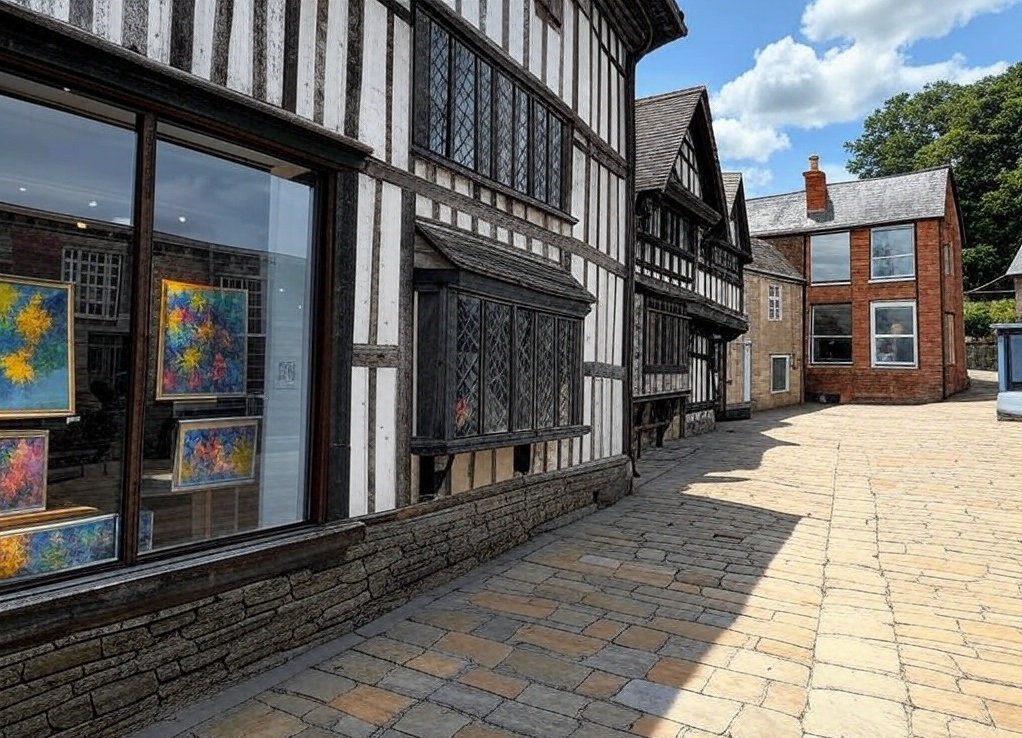
    Nestled in the lush valleys of Denbighshire, Ruthin (Rhuthun in Welsh) emerges as an unassuming yet profound custodian of Welsh heritage. Beyond its cobbled streets and timber-framed façades lies a vibrant nexus where medieval history collides with avant-garde creativity. This market town, often overshadowed by its flashier neighbours, quietly thrives as a sanctuary for art lovers and cultural pilgrims. From restored Tudor mansions to cutting-edge craft studios, Ruthin’s duality—rooted in tradition yet unafraid of reinvention—offers a narrative ripe for exploration.

    Ruthin Craft Centre’s Creative Pulse
    At the heart of Ruthin’s artistic renaissance sits the Ruthin Craft Centre, a beacon for contemporary crafts Wales champions. Housed in a sleek, modern structure that contrasts poetically with the town’s medieval skyline, the centre is more than a gallery—it’s a living laboratory. Here, glassblowers, ceramicists, and textile artists converge, their workshops visible through floor-to-ceiling windows. Recent exhibitions have showcased everything from kinetic sculptures crafted from reclaimed slate to installations questioning Welsh identity post-Brexit. The centre’s café, with its locally sourced menu, mirrors this ethos: tradition reimagined through a modern lens.

    Nantclwyd y Dre’s Timeless Tales
    Step into Nantclwyd y Dre, Wales’ oldest dated townhouse, and time folds in on itself. Restored to reflect seven centuries of domestic life, its rooms whisper stories of Tudor merchants, Georgian gentry, and Victorian reformers. The walled garden, a riot of heritage roses and medicinal herbs, is a living ode to historic architecture Wales. Yet what truly captivates is the house’s refusal to be a static relic. Seasonal exhibitions—like last autumn’s display of 18th-century love letters discovered in the attic—bridge past and present, proving history’s pulse still beats fiercely in Ruthin.

    St. Peter’s Square: Medieval Majesty
    Ruthin’s medieval soul crystallises in St. Peter’s Square, where the 13th-century church tower looms like a stone sentinel. Inside, a 15th-century Jesse Tree fresco—a rare survivor of Cromwell’s iconoclasm—unfolds in vivid blues and golds, its branches heavy with biblical figures. Yet the square is no open-air museum. Every summer, it transforms into a stage for cultural tourism Denbighshire at its finest: the Ruthin Festival. Here, Shakespearean soliloquies echo against street art murals, and harpists duel with indie folk bands—a harmonious clash of epochs.

    Ruthin Gaol’s Cultural Rebirth
    Few sites encapsulate Ruthin’s metamorphosis like its Victorian gaol. Once a symbol of punitive severity, its iron doors now swing open to galleries and performance spaces. The former exercise yard hosts sculpture gardens, where twisted metalworks by local artists dialogue with the bleak brickwork. A recent highlight was Voices from the Cells, an audio-visual project where inmates’ diaries (meticulously archived by the town) were paired with ambient soundscapes. It’s a stark, stirring reminder that even spaces of confinement can become catalysts for Welsh art exhibitions that challenge and inspire.

    Local Festivals and Living Traditions
    Ruthin’s calendar thrums with events that blend pagan roots with contemporary verve. The annual Food Festival, held in the shadow of the castle ruins, sees Michelin-starred chefs riff on recipes from The First Welsh Recipe Book (1520). Meanwhile, the Winter Solstice Parade—a swirl of fire dancers and giant puppets—draws direct lineage from Druidic rites. These aren’t mere tourist spectacles; they’re communal acts of preservation. As local baker Enid Jones remarks while shaping bara brith loaves for the festival, “Every recipe, every dance step—it’s a letter to the future.”

    Artisan Workshops and Welsh Craft
    Beyond the galleries, Ruthin’s artisan workshops Wales thrive in unassuming nooks. On Clwyd Street, Einir Wyn’s pottery studio offers masterclasses where students mould clay beside a 17th-century inglenook. A stone’s throw away, woodturner Gareth Hughes crafts Welsh love spoons—not as trinkets, but as narrative objects engraved with clients’ personal sagas. These craftsmen aren’t mere traditionalists; they’re alchemists, transmuting local materials (Denbighshire oak, River Clwyd silt) into works that straddle function and philosophy.

    Ruthin’s cultural landscape defies easy categorisation. It’s a place where a 14th-century castle hosts digital art projections, where the scent of molten iron from a blacksmith’s forge mingles with espresso from a vegan café. This isn’t stagnation dressed as heritage; it’s a dynamic, sometimes uneasy, dialogue between then and now. For the discerning traveller, Ruthin offers not a postcard, but a palimpsest—a town perpetually rewriting itself while staying indelibly Welsh. To wander its lanes is to witness culture not as a monument, but as a verb: alive, evolving, and defiantly unbroken.

  • It’s the possibility of having a dream

    It’s the possibility of having a dream

    With many options comes many decisions, and it is easy to drown in all the many benefits of headless CMS. Graduating from a top accelerator or incubator can be as career-defining for a startup founder as an elite university diploma. The intensive programmers, which are often just a few months long, help startups refine and grow before a “pitch day” to potential investors and press. Such schemes provide mentorship, money and networking, often in exchange for equity in the company

    Such schemes provide mentorship, money and networking, often in exchange for equity in the company. Graduating from a top accelerator or incubator can be as career-defining for a startup founder as an elite university diploma. The intensive programmers, which are often just a few months long, help startups refine and grow before a “pitch day” to potential investors and press.

  • Maria Bregman: Visionary Art Critic and Curator

    Maria Bregman: Visionary Art Critic and Curator

    Maria Bregman is a writer, art historian, music, literary, and art critic, producer, and curator. She is widely recognised for her in-depth research into contemporary and classical art, literature, and music, as well as her contributions to fostering cultural exchange. Her curatorial work spans exhibitions and events across the international cultural scene, encompassing art, literature, music, ballet, and other art forms.

    With over a decade of experience in critical writing, Bregman has authored analytical and critical articles for leading publications, including Life Magazines (London North editions), ArtCulture UK, Creativitys.UK, Afisha London, BLUR Art Magazine, London Post, Cultural Initiative UK, and It’s Book Magazine. As a presenter of a programme on CultFM and the creator of a project on the Cultura TV channel, Bregman has played a pivotal role in bringing art to a wider audience. Her work focuses on the intersection of emotional resonance and artistic innovation, while also highlighting underrepresented voices in the creative sphere.

    Throughout her career, Maria has actively participated in organising and curating major cultural events. She has supported numerous ballet and music projects, working with the State Classical Ballet Theatre of Vasiliev and Kasatkina and the Sretensky Monastery Choir, where she managed public relations and performance organisation. She served as the curator of the Visionary Art exhibition in Ruthin, Wales, and organised international art exhibitions for the Museum of Modern Art and the Creative Union of Artists of Russia.

    Maria has also curated solo exhibitions for renowned artists, including Zurab Tsereteli, and group exhibitions under the auspices of the International Federation of Artists (IFA). In the 2010s, she initiated international cultural exchanges and contemporary art exhibitions, fostering dialogue between artists and audiences. Her efforts extended to organising numerous music and cultural festivals in the UK, Tunisia, Israel, and Russia, as well as creative receptions under the patronage of UNESCO and the Russian Academy of Arts.

    Her contributions to the arts include serving on the jury of prestigious awards, such as the Vasily Kandinsky Art Prize, the Creativitys UK Award, and as a member of the organising committee for the SIFFA Award.

    Maria holds a distinguished academic background, having studied at the Presidential Academy of National Economy and Public Administration (RANEPA, Faculty of Television and Journalism), the Maxim Gorky Literary Institute, and its Higher Literary Courses. Her education laid the foundation for her expertise in critical analysis and creative storytelling.

    As a member of the Union of Russian Writers, the Union of Artists and Musicians under the UN Foundation, and the Union of Journalists, Maria Bregman holds a significant position in the international cultural landscape.

  • Desire Avenue Ignites London with Watch Me Burn Cultural Show

    Desire Avenue Ignites London with Watch Me Burn Cultural Show

    By Michel Mittelman, music and dance researcher

    London – On a cold winter night of September 24, 2022, London was lit up by a fiery display of culture, as Desire Avenue, a luxury couture brand, sponsored the exclusive Watch Me Burn Cultural Show at the prestigious Romanian Cultural Institute, located at 1 Belgrave Square, London. The show was part of the Watch Me Burn Culture Festival, a series of events organized by the Romanian Cultural Institute, to celebrate the richness and diversity of Romanian culture.

    The culture show was inspired by the Romanian folk tale of the Phoenix, a mythical bird that rises from the ashes after burning itself. The models wore stunning red dresses, designed by Desire Avenue’s founder and creative director, Maria Popescu, who is of Romanian origin. The dresses were made of silk, velvet, lace, and feathers, and featured intricate embroidery and embellishments. The dresses reflected the themes of rebirth, transformation, and resilience, as well as the beauty and elegance of Romanian craftsmanship.

    The first part of the event featured a musical performance by the contemporary classical composer, actor, and pianist David Balica and the opera singer soprano Zoltan Adrien Vivien. They interpreted the romance “Din vise dragi, poeme” by Sabin Păutza, with lyrics by Constantin Paiu, and Bertha’s aria “Tu” from the two-act operetta “Let me sing” by Gherase Dendrino.

    The show also featured a dance performance by Riccardo Fruttaldo and Evgenia Erofeeva, two professional dancers and choreographers, who interpreted the story of the Phoenix through contemporary movements. The dancers expressed the emotions of love, pain, and hope, as they moved across the stage, accompanied by a live orchestra. The audience was captivated by their grace and skill, and gave them a standing ovation.

    The talented Romanian singer Victoria Beregoi closed the live show and kicked off the second culture runway, singing “The Show Must Go On” and “Simply the Best”.

    Guests enjoyed the good music and atmosphere with a glass of wine.

    The Watch Me Burn Cultural Show was a success, artistically, as it attracted a lot of attention and praise from the media, the public, and the culture and fashion industry. The show also raised awareness and appreciation for Romanian culture and its contribution to the global art scene. The show was a testament to the vision and talent of Desire Avenue, and its founder, Maria Popescu, who said: “I wanted to create something that would honor my roots, and inspire people to embrace their own identity and uniqueness. I believe that fashion is not only about clothes, but also about stories, emotions, and values. I hope that through this show, I was able to share a part of my story, and the story of Romania, with the world.”

  • 17 Books You Should Read Before (or at) University

    17 Books You Should Read Before (or at) University

    With many options comes many decisions, and it is easy to drown in all the many benefits of headless CMS. Graduating from a top accelerator or incubator can be as career-defining for a startup founder as an elite university diploma. The intensive programmers, which are often just a few months long, help startups refine and grow before a “pitch day” to potential investors and press. Such schemes provide mentorship, money and networking, often in exchange for equity in the company

    Such schemes provide mentorship, money and networking, often in exchange for equity in the company. Graduating from a top accelerator or incubator can be as career-defining for a startup founder as an elite university diploma. The intensive programmers, which are often just a few months long, help startups refine and grow before a “pitch day” to potential investors and press.