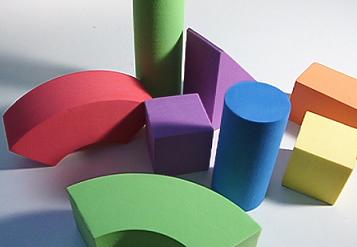
Children learn to play without a syllabus. Nobody teaches a four-year-old how to build a world out of cardboard and conviction; the rules emerge from the doing, revised on the spot whenever they stop being fun. The psychologist Donald Winnicott argued that this kind of free play is not a rehearsal for creativity but creativity itself — the place where the self first discovers it can make something that did not exist before.
Artists have always known this, even when the art world forgot it. The Surrealists built entire methods out of play: exquisite corpse, automatic drawing, games designed to outwit the controlling mind. Paul Klee described drawing as “taking a line for a walk.” Bauhaus students spent their first months not on technique but on experiment — touching materials, testing what paper and wire and light would do, before anyone told them what they were supposed to make. The instruction came later, once curiosity had done the foundational work.
The phrase “for a game, you don’t need a teacher” is not an argument against teaching. It is an argument about sequence. Skill can be taught; the appetite to use it cannot. A student handed technique before desire produces competent, lifeless work — the visual equivalent of grammar with nothing to say. A student who has first played, failed, and become genuinely curious will absorb technique hungrily, because now it answers a question they actually have.
This has practical consequences for anyone trying to make things. The blank canvas is intimidating precisely because it feels like an exam. Reframed as a game — low stakes, no grade, permission to be ridiculous — it becomes approachable again. Many working artists protect a corner of their practice that stays deliberately unserious: sketchbooks no one will see, experiments with no commercial purpose, materials used wrongly on purpose. That corner is where the next real idea usually arrives, smuggled in under the cover of play.
The teacher, when they come, is best understood as someone who clears obstacles and points at doors — not someone who hands over a map. The territory still has to be explored on foot, and the explorer has to want to go. Mastery is downstream of motivation, and motivation, more often than not, begins as a game.
So before the lessons, before the rules, before the anxious question of whether you are doing it correctly: play. The work that matters tends to start there, in the place that needs no teacher at all.