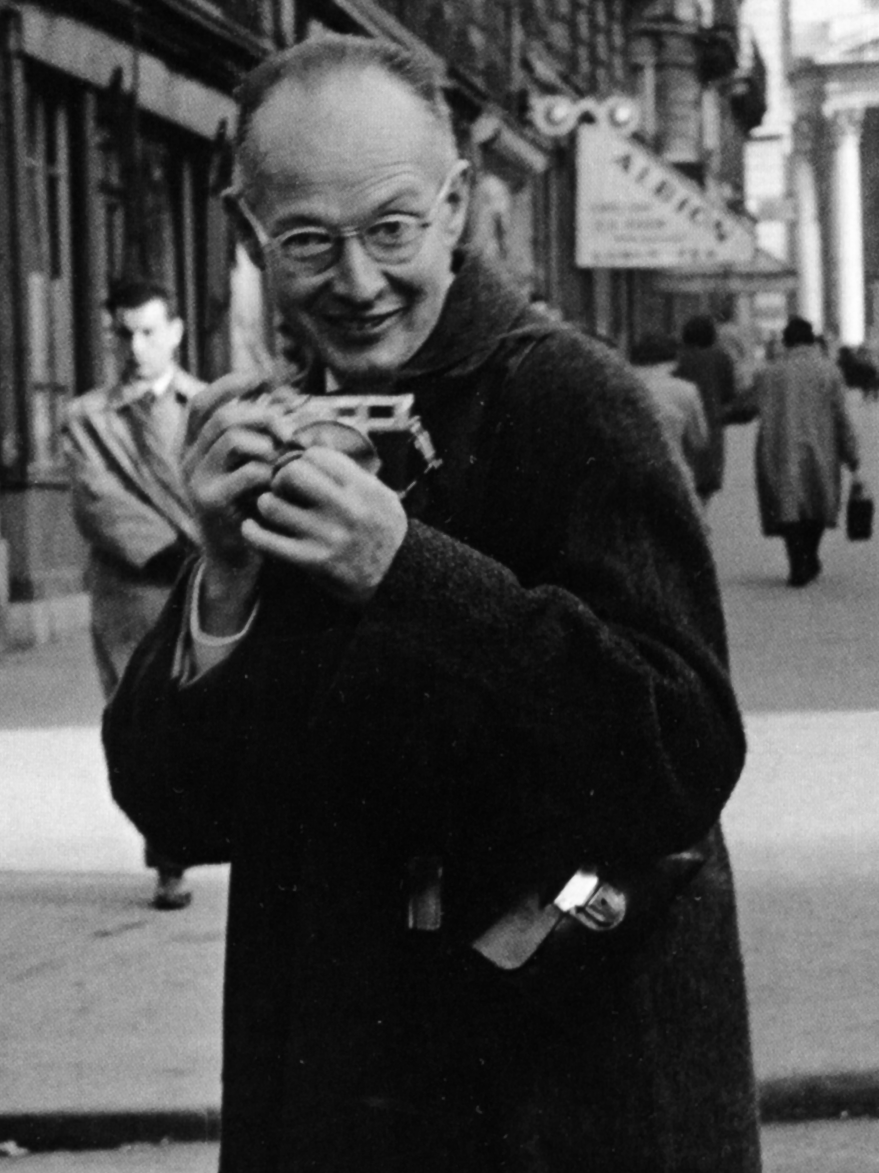
The line is usually attributed to Henri Cartier-Bresson: “Your first 10,000 photographs are your worst.” Whether he said it exactly that way is disputed — the sentiment has been claimed for several photographers — but its endurance suggests it touches something true. Mastery in photography is not won at the moment of purchase. It is accumulated, frame by mediocre frame, over years.
What makes the early thousands so poor is rarely the equipment. It is the eye. A beginner photographs the thing that excited them — a sunset, a face, a street — and is disappointed to find the picture flat, because the camera recorded the scene but not the feeling. The feeling lived in context: the temperature of the air, the sound, the anticipation. Photography’s hardest lesson is that none of that transmits automatically. It must be built into the frame deliberately, through composition, timing, light and exclusion.
Cartier-Bresson’s own answer was the “decisive moment” — the instant when form and content align, when the geometry of a scene and its human meaning lock into place for a fraction of a second. He waited for it with a patience that looks, in retrospect, almost devotional. He shot far less than people assume; his genius was in seeing, and the camera merely confirmed what the eye had already chosen.
This is why the digital era, for all its gifts, complicates the apprenticeship. When film cost money and frames were finite, every exposure carried a small tax that forced deliberation. Now we shoot freely, and the 10,000 bad photographs arrive in a weekend rather than a decade. The volume is not the problem; the absence of consequence is. Photographers who improve fastest tend to impose their own scarcity — a single lens, a fixed focal length, a self-imposed limit of thirty-six frames a day — recreating the friction that teaches.
The encouraging part of the maxim is its second clause, usually left unspoken: after the first 10,000, something shifts. The eye begins to anticipate. You stop photographing what is in front of you and start photographing what a picture of it could become. The failures were not wasted; they were the curriculum.
So the advice to any beginner is unromantic but liberating: make the bad pictures, all of them, as quickly and as attentively as you can. Look hard at why they fail. The worst photographs you will ever take are the ones standing between you and the ones worth keeping — and the only way past them is through.