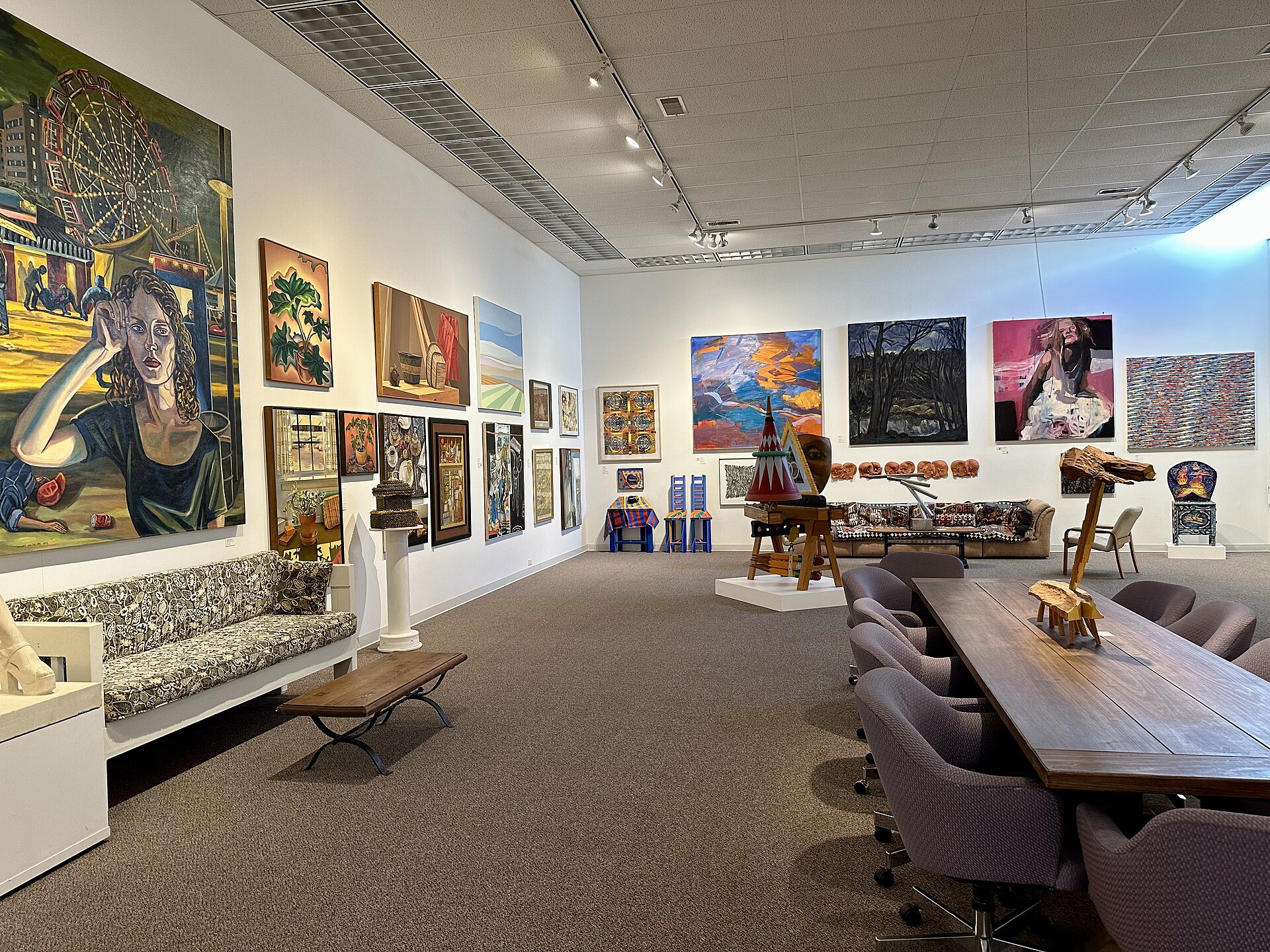
To start an artist-run gallery, gather a small group of artists, agree in writing what the space is for and how decisions are made, then pick a legal structure that matches your ambitions, from a free unincorporated association to a community interest company or a charity. After that come the practical layers: a space you can afford, insurance and any licences for opening nights, a fair way of paying the artists you show, and a funding mix that does not depend on one source. The UK’s longest-running artist-run spaces show that all of this can be done on modest means, provided the work is shared and the rules are clear from the start.
What an artist-run gallery looks like in practice
An artist-run gallery is a space where artists, rather than a dealer or a public institution, choose the programme and do the running. Some of the UK’s best-known examples have lasted for decades. Transmission Gallery in Glasgow describes itself as Scotland’s longest-standing artist-run gallery, established in 1983. Generator Projects in Dundee was founded in 1996 and calls itself the second-oldest artist-run space in Scotland; it marks its 30th birthday in 2026 with a week of events drawn from its archive. In Belfast, Catalyst Arts was formed in 1993 as a voluntary, artist-led, members-based organisation.
Wales has its own model. g39 in Cardiff is an artist-run gallery, resource and creative community that began as an idea in 1997, opened in July 1998 on a small budget and became a charity in 2019. Its annual Pam Open grew out of the madeinroath festival in 2009, when it took place in empty shops and pop-up spaces around Roath, which is a useful reminder that many permanent spaces start as temporary ones.
Agree a purpose and a way of making decisions
Before you sign anything, write a short statement of what the gallery exists to do and who it serves. Generator Projects, for instance, says it focuses on early to mid-career practitioners, particularly those living in the Dundee area and outside the central belt, and that all its exhibitions and events are free to attend. A statement that specific helps you turn down offers that do not fit and explain yourselves to landlords, funders and neighbours.
Decide just as early how the group governs itself. Generator’s committee members run the space day to day in a voluntary capacity for a maximum of two years, which keeps energy fresh and stops the same few people burning out. It also runs “Takeovers”, where any member can apply to use the space for their own project alongside a funded programme of around six exhibitions a year. Fixed terms, a members’ route into the programme and a written record of who is responsible for what will save arguments later.
Choose a legal structure
The structure you choose decides who is liable for debts, whether the gallery can sign a lease in its own name and which funders will consider you. GOV.UK’s guide to setting up a social enterprise lists the main options for organisations with social or community aims: a limited company, a charity or charitable incorporated organisation (CIO), a co-operative, a community interest company (CIC), or a sole trader or partnership.
Unincorporated association
The simplest route for a voluntary group is an unincorporated association. There is nothing to register and it costs nothing to set up, but individual members are personally responsible for any debts and contracts. That is a real risk once you take on a lease.
Community interest company
A CIC is a limited company that exists to benefit the community rather than private shareholders. You need a community interest statement and an “asset lock”, a legal promise that the company’s assets will only be used for its social objectives. Registering a CIC online with Companies House costs £115 (checked October 2026). The CIC regulator’s guidance explains the asset lock, the dividend cap and the annual CIC34 report.
Charity or charitable company
If your aims are charitable, the Charity Commission’s guide to choosing a charity structure (CC22a) sets out four types: a CIO, a charitable company limited by guarantee, an unincorporated association and a trust. A CIO must register with the Commission to exist at all. Under GOV.UK’s step-by-step guide to setting up a charity you usually need at least three trustees, and you must register if annual income will be at least £5,000 or if you choose the CIO form (checked October 2026). g39 shows how one gallery combined routes: it is a non-profit company limited by guarantee, managed by a board of member trustees, and a registered charity (number 1181492).
If you choose an ordinary company, registering a limited company costs £100, and you may need the personal code Companies House issues after identity verification (checked October 2026). For anything beyond a simple association, take independent legal or accountancy advice before you commit.
Find a space and understand the running costs
Many artist-run galleries begin in empty shops, community buildings or members’ studios, and only take on a lease once a programme has proved itself. When you do take on premises, check who pays utilities, whether you can drill walls or hold evening events, and what happens at the end of the term, and get every agreement in writing.
Business rates can be the largest hidden cost. In England, small business rate relief means no rates on a single property with a rateable value of £12,000 or less, tapering to nothing at £15,000 (checked October 2026). A registered charity using a property mainly for charitable purposes can instead apply for charitable rate relief of up to 80%, which the council may top up, but you cannot have both reliefs at once. Rules differ in Wales, Scotland and Northern Ireland, so confirm the position with the local council before budgeting.
Insurance, licences and safety
Visitors will be walking round work you have installed, so public liability cover matters from the first show. The artists’ membership body formerly called a-n became Artists Now in July 2026. Its insurance for members page lists £10 million public and products liability and £5 million professional indemnity within Artist and Arts Organiser memberships, subject to the policy terms (checked October 2026). Read the policy wording to see whether it covers a group-run venue or only individual practice.
Once you employ anyone, including paid invigilators, GOV.UK says you need employers’ liability insurance of at least £5 million from an authorised insurer, with fines of £2,500 for every day you are not properly insured.
If you plan to sell drinks at a private view in a building without a premises licence, England and Wales use a Temporary Event Notice. It costs £21, must be served at least 10 clear working days before the event, covers fewer than 500 people at any time, and can only be applied for by an individual, not an organisation (checked October 2026).
Pay artists fairly and plan a programme
Fair pay is now a standard question from artists and funders. Artists Now’s exhibition payment guide, developed with Arts Council England, Creative Scotland and Arts Council of Wales, says exhibition fees should be paid in addition to production costs. Its fee categories start at organisations with annual budgets over £50,000, where it suggests £1,500 for new work and £750 for existing work in Category A. For artist-led and project-funded organisations running on under £50,000 a year, it accepts that the categories may not fit and asks that the general principles be applied where possible (last updated April 2026).
In practice that means budgeting a fee line for every show, even a small one, and putting the agreement in writing: dates, what the gallery pays for, who handles transport and installation, and any commission on sales. Plan fewer, better-resourced exhibitions rather than a crowded calendar your volunteers cannot staff, and publish predictable opening hours.
Fund the gallery from more than one source
Most long-running artist-run spaces combine public grants, membership, earned income and donated time. g39 says that around 57 to 60% of its costs are met through the Arts Council of Wales, with the rest raised from trusts, partners, earned income, donations and volunteers, and that it is one of only two artist-run organisations with revenue status from the Arts Council of Wales.
For project funding in Wales, the Arts Council of Wales Create and Engage fund is open to organisations and individuals, with small awards up to £10,000 and large awards up to £60,000 (checked October 2026). Proposals must support at least one of the Council’s principles, which include creativity, equalities and engagement, the Welsh language and climate justice. Its funding for organisations page lists the other current programmes and deadlines. In England, Scotland and Northern Ireland, the national arts councils run their own schemes, so check their current guidance before you apply.
What long-running spaces do differently
The oldest spaces share some habits. They treat artists as the centre of the organisation: g39 runs Warp, the Wales Artist Resource Programme, offering advice, training and networking, and says it does not represent artists commercially but encourages their self-management. They keep a public archive of what they have shown. And they build a membership that gives people a reason to return between exhibitions.
Generator’s 30th birthday programme is candid about the pressures, describing reflection on “labour, institutional memory and the precarious running of an artist-run initiative”. Building handover notes, a shared calendar and an archive into the routine from the first year makes it far easier for the next committee to carry on.
A checklist before you open
- A one-paragraph purpose statement and written decision-making rules, including term limits
- A legal structure chosen with advice, and a bank account in the organisation’s name
- A written agreement for the space, with rates relief checked with the council
- Public liability cover in place, and employers’ liability if anyone is paid
- A Temporary Event Notice served in time if alcohol will be sold
- A budget line for artist fees and written agreements with every exhibitor
- At least two possible funding sources, and a plan for membership or earned income
- Regular, published opening hours and a simple way to collect visitor feedback
At visionaryart.uk we cover contemporary art and run our own gallery in Ruthin, and we follow new artist-run projects across Wales with interest. The spaces above began small; the ones that last tend to be the ones that wrote their rules down early.
Photo: Myotus, CC BY 4.0, via Wikimedia Commons