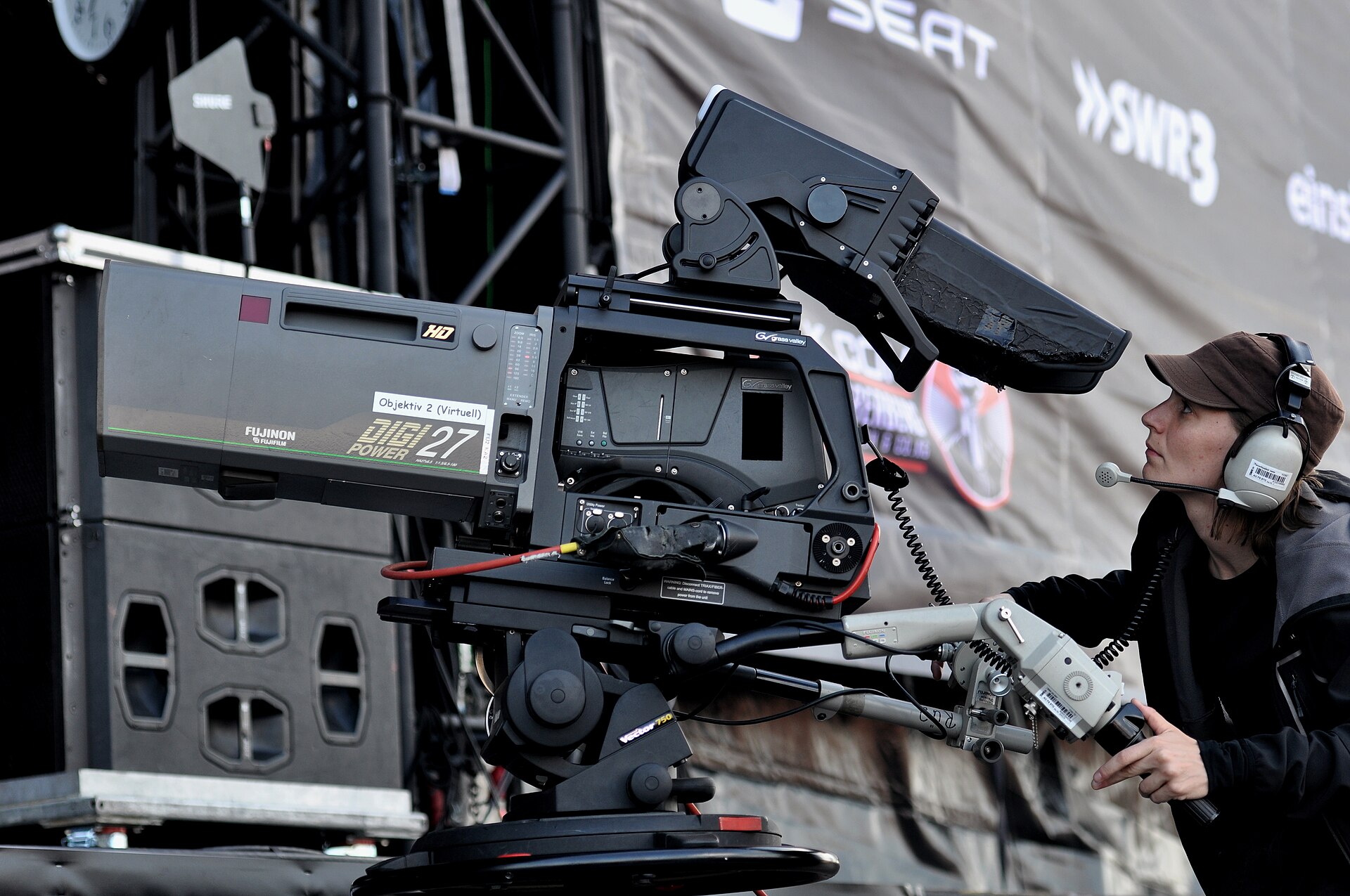
Documentary is not automatically more truthful than fiction: both are constructed, and the difference lies in the promise each makes to the viewer. A documentary promises that its material is not invented, which is why broadcasters such as the BBC treat any fabrication presented as fact as a breach of trust. Fiction makes no such promise, so its truth is judged by insight, coherence and honesty of feeling rather than by evidence. The most interesting films of the past century sit on the line between the two and make the viewer think hard about which promise is being made.
Where the word documentary comes from
The term itself was born inside an argument about truth. According to the history of documentary film, the Scottish filmmaker John Grierson coined “documentary” in a review of Robert Flaherty’s Moana, published in the New York Sun on 8 February 1926 under the pen name “The Moviegoer”. Grierson defined the form as the “creative treatment of actuality”, a phrase that admits openly that shaping, selecting and arranging are part of the job.
Grierson was more than a theorist. The University of Stirling, which holds his archive, records that he was born in Deanston in 1898, directed Drifters (1929) about the British herring fishing industry, ran the film units of the Empire Marketing Board and the General Post Office in the 1930s, and became the first head of the National Film Board of Canada in 1939. His name lives on in the UK through the Grierson Trust, which runs the Grierson Awards for documentary and factual filmmaking.
The documentary promise and its limits
Flaherty’s own Nanook of the North (1922) shows how early the compromises began. The film’s central figure was played by the hunter Allakariallak, and the interior igloo scenes were shot in a specially built three-walled structure because a real igloo was too small and too dark for Flaherty’s bulky camera, as the production history of Nanook of the North records. Although Allakariallak normally hunted with a gun, Flaherty encouraged him to hunt in the manner of his ancestors. None of this stopped the Library of Congress selecting the film in 1989 for the first group of 25 titles in the US National Film Registry.
The lesson is not that documentary lies, but that every documentary is made. The camera changes behaviour, the edit selects, music guides emotion and a narrator frames meaning. What separates honest work from deception is whether those choices distort what actually happened.
That is exactly where modern broadcasting rules draw the line. The BBC Editorial Guidelines on accuracy state, at section 3.2.3: “The BBC must not knowingly and materially mislead its audiences. Content producers should not distort known facts, present invented material as fact or otherwise undermine audiences’ trust in the BBC’s content.” The key phrase is “present invented material as fact”. Reconstruction, stylisation and selection are allowed; passing off invention as record is not.
How fiction tells the truth
Fiction starts from the opposite agreement. Nobody believes the characters existed exactly as shown, so a drama is free to compress years into minutes, merge several real people into one, or imagine a scene no camera could have witnessed. What it owes the audience is plausibility of behaviour and honesty about human experience.
The clearest British example is Cathy Come Home, the BBC television drama directed by Ken Loach in 1966. The BBC World Service programme Witness History describes it as a hard-hitting film that “changed British ideas about homelessness”, telling the story of a young woman who lost her home, her husband and then her children. It used a documentary look, yet its force came from a constructed story that made a statistical problem feel personal.
Fiction can also carry factual weight that institutions find uncomfortable. Peter Watkins made The War Game for the BBC in 1965, a dramatised documentary imagining the effects of a nuclear strike on Britain. Writing for The Conversation, the researcher John Cook describes how declassified Cabinet Office papers show Whitehall’s involvement in the decision not to broadcast it. The film went on to win the Oscar for Best Documentary Feature and was not shown on television until 1985. A work built from staged scenes was judged by the Academy as documentary truth.
Herzog and the case for ecstatic truth
No filmmaker has argued the point more provocatively than Werner Herzog. His “Minnesota Declaration”, first read at the Walker Art Center in Minneapolis on 30 April 1999 and published on his official site, opens with a challenge to cinéma vérité: “It reaches a merely superficial truth, the truth of accountants.” Point five follows: “There are deeper strata of truth in cinema, and there is such a thing as poetic, ecstatic truth. It is mysterious and elusive, and can be reached only through fabrication and imagination and stylization.”
In another essay, also reproduced among his published texts, Herzog adds a memorable warning against confusing information with understanding: if only the factual mattered, the truth “at its most concentrated must reside in the telephone book”.
Herzog’s position is a useful provocation rather than a rulebook. Broadcasters and journalists still need the factual floor he dismisses, and a viewer has a right to know when a documentary has invented something. His argument is strongest as a reminder that facts alone do not produce meaning.
Films that blur the line on purpose
Some of the most admired films in cinema history live in the border zone, and they are worth watching precisely because they make the contract visible.
- Close-Up (1990), by the Iranian director Abbas Kiarostami, retells the true case of Hossein Sabzian, who impersonated the filmmaker Mohsen Makhmalbaf. The BFI’s entry on Close-Up notes that it mixes 16mm footage of the real trial with re-enactments performed by the family, Sabzian and others playing themselves. It was placed 17th in the 2022 Sight and Sound greatest films poll, which drew ballots from 1,639 critics, programmers, curators, archivists and academics. Dziga Vertov’s Man with a Movie Camera (1929), a non-fiction “city symphony”, came ninth.
- The Thin Blue Line (1988), by Errol Morris, uses what Morris’s own site calls “expressionistic reenactments” alongside interviews and a Philip Glass score. It is credited with overturning the conviction of Randall Dale Adams for the 1976 murder of a Dallas police officer. Stylised, staged images served the pursuit of a factual truth.
- The Act of Killing (2012), directed by Joshua Oppenheimer, invited men who took part in mass killings in Indonesia to dramatise their own past in film genres of their choosing. The film’s official site lists Herzog and Morris as executive producers and quotes Herzog calling it “unprecedented in the history of cinema”. Here fiction became a method of documentary inquiry.
When fiction is mistaken for fact
The opposite risk is drama that audiences read as history. Netflix’s The Crown became the British test case. In November 2020 the then Culture Secretary Oliver Dowden said, as reported by NBC News, that the series was “a beautifully produced work of fiction” and that Netflix should be clear about this at the start, adding: “Without this, I fear a generation of viewers who did not live through these events may mistake fiction for fact.”
The episode shows that the problem is rarely invention itself. Every historical drama invents dialogue. The difficulty arises when a production borrows the authority of record, such as real names, real dates and archive-style imagery, while its scenes are imagined. The more a drama looks like documentary, the more viewers expect documentary standards.
How to judge truth in any film
A few questions work for both forms and help a viewer decide what kind of trust a film has earned.
- What promise does the film make? Check the credits, the publicity and any opening caption. A “based on true events” line is a very different claim from a documentary label.
- Are reconstructions signposted? Morris and Kiarostami make their staging obvious; deceptive work hides it.
- Who is heard and who is absent? Selection is unavoidable, but a fair film shows awareness of the voices it leaves out.
- Does the emotion fit the evidence? Music and editing can make a thin case feel overwhelming, in fiction and documentary alike.
- What happens when you check? Read beyond the film. Festival programmes such as Sheffield DocFest and critical writing often discuss method openly.
For a gallery audience, the same questions apply to photography, painting from life and video installation, where the line between record and interpretation is equally unstable. Readers who want more on art and moving image can browse the wider coverage at Visionary Art, and for criticism focused on film the writing of film critic and documentary director Maria Bregman is a further resource.
The real difference
The useful distinction is not true against false but evidence against invention, and honest against dishonest. Documentary earns trust by not fabricating what it presents as record, even while it shapes, stages and selects. Fiction earns trust by being faithful to how people think and behave, even while every event is made up. Grierson’s “creative treatment of actuality”, the BBC’s ban on presenting “invented material as fact” and Herzog’s “ecstatic truth” are three answers to the same problem, and a thoughtful viewer can hold all three at once.
Photo: Achim Raschka, CC BY-SA 3.0, via Wikimedia Commons