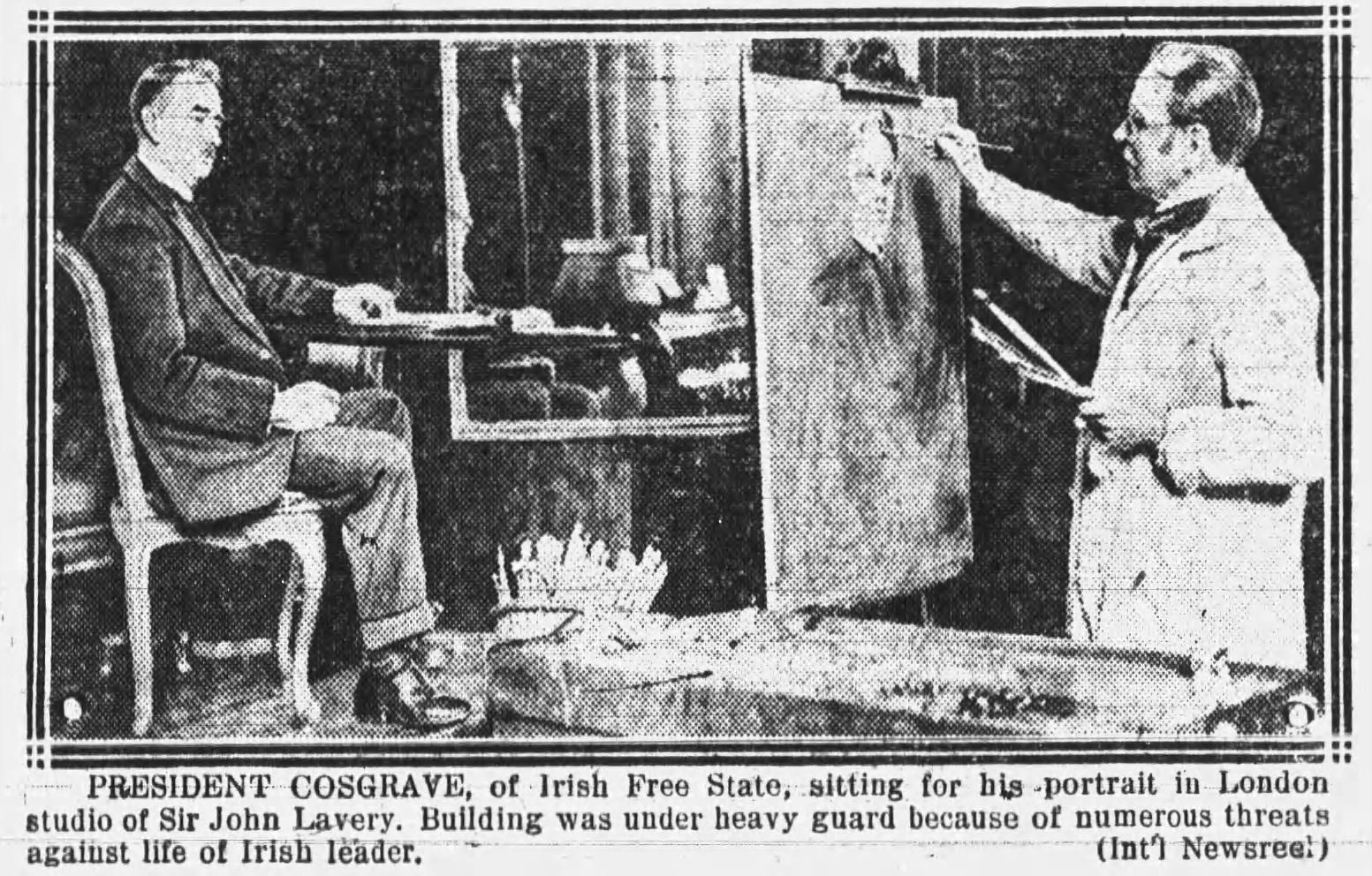
To choose a portrait sitter, look for three things at once: a face and manner you genuinely want to study, a person who can give you the time the work needs, and a clear agreement about what the finished portrait is for and who owns it. Appearance matters less than most beginners assume; what carries a portrait is the painter’s sustained interest and the sitter’s willingness to be looked at. History shows both extremes, from Holbein’s three-hour sitting with a prospective royal bride to Rembrandt using the one sitter who was always available, himself.
What a sitter brings to a portrait
Tate’s glossary defines a portrait simply as “a representation of a particular person”, but it also notes that portraits “have always been more than just a record”. They have been used to show “the power, importance, virtue, beauty, wealth, taste, learning or other qualities of the sitter”. That list is a useful prompt when you are choosing someone. Ask what quality you want the painting to carry, then ask whether the person in front of you can hold it.
The same entry records a shift that still shapes how artists find sitters today. As commissioned portraiture became rarer among leading modern artists, many “painted their friends and lovers in whatever way they pleased”. Choosing a sitter from your own life is not a compromise. It is one of the main traditions of modern portraiture, and it gives you something commissions rarely do: unlimited time and an existing understanding of the person.
Tate also observes that painters who refused to flatter, such as William Hogarth, tended to find their work rejected. If you plan to paint candidly, choose someone who is comfortable with that, or who has asked for it.
Interest matters more than looks
The best reason to paint someone is that you cannot stop looking at them. That might be a particular structure of the face, the way light catches skin, a habitual gesture, or the way they occupy a chair. Conventional good looks can be harder to paint well than a face with strong asymmetry or marks of age, because there is less for the eye to hold on to.
The National Gallery’s account of Rembrandt’s Self Portrait at the Age of 63 shows how far sustained interest can go. The gallery describes the “mottled, pitted brow”, the “sagging fold beneath his right eye” made with a heavily loaded brush, and blemishes built from blotches of paint. It also suggests a practical reason for painting himself: he “could study his reflection for as long as he liked”, with an intensity “which might have been disconcerting for some of his clients”. Many artists start in the same place. A mirror is a sitter who never cancels, never tires and never needs reassurance.
Hands deserve the same attention as faces. X-rays show that Rembrandt first painted himself holding a brush and then changed his mind, apparently to keep attention on his face. If hands are part of your plan, include them in your selection: watch how the person holds a cup or rests their arms before you decide.
Time, stillness and the number of sittings
Patience is the practical test that rules out many otherwise ideal sitters. There is no fixed rule on how long a portrait takes, and the number of sittings depends on the artist, the medium and the scale. The commissioning service run with the Royal Society of Portrait Painters at Mall Galleries describes how, after an initial meeting, the artist and client “decide a course of action in terms of number of sittings and other key details” (commission services, checked October 2026).
Short sittings can still produce great work if they are used well. The National Gallery records that Hans Holbein’s sitting with the 16-year-old Christina of Denmark in Brussels “only lasted from 1 to 4 p.m. on 12 March 1538”. In that time he made the drawings from which the full-length painting was later built. The lesson is to plan: decide what you need from the live sitting (the head, the light on the skin, the pose) and what you can work on alone afterwards (drapery, background, the chair).
Before you commit, have an honest conversation about:
- how many sessions you expect, and roughly how long each will be
- how often breaks will happen, and whether the sitter can return to the same pose
- whether you will work partly from photographs or drawings between sessions
- what happens if a session is missed or the sitter’s appearance changes (a haircut, a new beard, a cast on an arm)
Accuracy, flattery and expectations
Agree early on how truthful the portrait will be. Holbein’s drawings of Christina had to be “accurate rather than flattering”, according to the National Gallery, because Henry VIII was using them to judge a possible marriage. They were also full-length, which the gallery notes was unusual for portraits of women at the time, “so that Henry could judge every aspect of her”.
Most modern commissions have gentler stakes, but the same question arises. A family commissioning a portrait of a grandparent may want warmth more than exactness; a college commissioning a retiring head may want dignity and recognisability. The Royal Society of Portrait Painters, a registered charity (no. 327460), presents commissioning as patronage, quoting the view that “when someone commissions a portrait, they become in a very real sense a sponsor, a patron of the arts”. Its published examples describe what clients valued. In one, grandparents knew the painter Anthony Connolly (now the society’s president, according to Mall Galleries) was right for their granddaughter “when they saw how relaxed Octavia was with him at the sittings”. Another sitter concluded that “to suddenly see yourself as someone else sees you is the gift of commissioning a portrait.”
That first example points to a useful test. Before agreeing a long project, hold a short trial sitting or a drawing session. If the sitter relaxes and you find yourself absorbed, the match is probably good.
Rapport and comfort during sittings
Being looked at closely for hours is unusual and can be tiring. Sitters who are curious about the process tend to give more to a portrait than those who are merely obliging. Talk to them about what you are trying to do, show them early sketches if that helps, and agree in advance whether they can see the work in progress.
Small practical choices make a large difference. A comfortable chair, a fixed mark on the floor for the chair legs, reliable light and a warm room all help the sitter return to the same position. Clothing should be agreed before the first session, and kept the same throughout. Strong, simple colours are easier to keep consistent than patterns, and anything personal (a work uniform, a favourite jumper) can add meaning without needing explanation.
Children and young people need particular care: shorter sessions, a parent or guardian present, and clear consent from the adult responsible. If you photograph any sitter for reference, explain how the images will be stored and whether they will ever be shared.
Who owns the portrait and the image
Ownership is easy to overlook and worth settling in writing. Under section 11 of the Copyright, Designs and Patents Act 1988, “the author of a work is the first owner of any copyright in it”, subject to exceptions such as works made by employees in the course of employment. In practice that means a painter who sells a commissioned canvas usually keeps the copyright in the image unless the contract says otherwise. The client owns the physical painting; reproducing it on cards, prints or online can be a separate matter. GOV.UK’s copyright guidance explains how copyright works and how it can be licensed or transferred.
Do not assume the rules for photographs apply to paintings. Section 85 of the same Act gives a person who commissions a photograph or film “for private and domestic purposes” a right not to have it shown or issued to the public. That right is written for photographs and films. A clear written agreement about exhibition, reproduction and the sitter’s privacy is the sensible route for painted portraits, and for anything complex it is worth taking independent legal advice.
Testing your choice in public
Exhibitions are a good way to see how other painters have chosen and handled their sitters. The Royal Society of Portrait Painters’ annual exhibition is held at Mall Galleries in London every May; the 2026 show ran from 7 to 19 May, with a prize fund of over £40,000 including the £20,000 William Lock Portrait Prize, according to the open call (checked October 2026). One of its new awards, the Daler-Rowney Materials Prize, is judged partly on a work’s “imaginative response to the sitter”, a phrase that sums up what a well-chosen sitter makes possible. The call accepts paintings, drawings and original prints from artists aged 18 and over. The Mall Galleries portrait commissions page lists the society’s members alongside examples of commissioned work.
Closer to home, visiting galleries and studios is the best way to train your eye for sitters and settings. Our own reviews and gallery programme in Ruthin are on Visionary Art.
A short checklist before you start
- Interest. Do you want to look at this person for many hours? If not, keep searching.
- Time. Can they commit to the sittings you need, and return to the same pose?
- Purpose. Is the portrait for you, for them, for a family or an institution, and how candid should it be?
- Comfort. Did a short trial sitting feel easy for both of you?
- Agreement. Have you written down sittings, payment if any, who keeps copyright, and how the image may be exhibited or reproduced?
Choose with those questions answered and the sitter becomes what the best portraits suggest they always were: a collaborator in the work.
Photo: John Lavery, Public domain, via Wikimedia Commons