By Sarah Johnson
By Sarah Johnson
Every autumn the BFI London Film Festival gathers most of the attention in British cinema. About an hour north of London by train, another festival with a longer history than most people realise takes over a much smaller city. The 45th Cambridge Film Festival runs from 22 October to 1 November 2026, eleven days of international cinema in a city where you can walk from the station to the screen.
This guide is for the visitor: what the festival is, where it happens and how to plan a few days of it.
A festival in a small city
The Cambridge Film Festival was founded in 1977, which makes it one of the UK’s longest-running film festivals. It is run by the Cambridge Film Trust, a registered charity, and it is a BAFTA- and BIFA-qualifying event, so the films carry weight in the British industry.
What changes when a festival sits in a small city is scale and distance. In London, festival screenings are scattered across the capital and the evening is shaped by travel. In Cambridge the main venue is in the centre, the programme is concentrated, and it is realistic to see two or three films in a day and still have dinner in between. Filmmakers who come for Q&As stay in the same few streets as the audience, and conversations after screenings spill into the foyer rather than onto a platform.
Where it happens
The festival’s home is the Cambridge Arts Picturehouse at 38-39 St Andrew’s Street. The cinema occupies the upper floors of a building that opened as the Regal cinema in 1937; the ground floor is now a pub. From the railway station it is a walk of around twenty minutes through the town centre.
It was not always here. The festival began in the old Arts Cinema in Market Passage, and over the years it has spread to other venues: the Light Cinema, the arts centre The Junction, Sawston Cinema outside the city, local churches and even pedestrianised streets. Until 2019 it held open-air “Movies on the Meadows” screenings on inflatable screens at Grantchester Meadows. Venues beyond the Picturehouse change from year to year, so check the location of each screening when you book.
What is on
The full programme will be published on 30 September on the festival’s website, and tickets are sold there. The organisers have already described its shape: nearly 100 titles from more than 25 countries, including Palme d’Or and Cannes prize-winners, new British films, documentaries and films for younger audiences. More than half of the films are directed by women.
Last year gives a sense of the texture. The 2025 festival opened with Yorgos Lanthimos’s Bugonia, with Emma Stone and Jesse Plemons. It included a live event with the film critic Mark Kermode and a “Cambridge Connections” strand of films with local ties, among them Lost for Words, filmed in Ely. Its audience voted Beautiful Evening, Beautiful Day by Ivona Juka the best fiction feature.
Planning a visit
Choose a weekend, or both. Since 2025 the festival has run across two weekends, a format it had not used since 2015. That makes a long weekend visit easy: the opening weekend of 24-25 October or the closing weekend of 31 October – 1 November, each with the weekdays around them.
Book premieres and Q&As early. Screenings with filmmakers present and UK premieres sell out first. Only films having their UK premiere at the festival can win its audience awards, so the ballot you fill in after those screenings actually counts.
Leave room for the unknown. The festival’s jury prize, the Golden Punt, goes to a discovery feature: in 2025 it was Guillermo Galoe’s Sleepless City. The most memorable film of a festival visit is often one you chose because the time slot suited you.
Look at the older films too. Retrospectives are one of the festival’s oldest traditions. In 1978 it ran a Satyajit Ray retrospective, and in 1994 it showed the Three Colours trilogy with a full Kieślowski season. Whatever the 2026 programme revisits, a restored classic on a cinema screen is something streaming cannot give you.
With children
The festival overlaps with the October half-term in most English schools, and it traditionally includes a family programme. In 2025 there were free family screenings during the half-term week, and the 2026 programme again promises films for younger audiences. Teenagers with a serious interest in film should know about the festival’s Youth Lab, for 16 to 24-year-olds, whose members judge one of the festival’s awards.
Why it is worth the train
A festival in a smaller city is not a smaller version of London. It is a different experience: fewer choices at any given hour, more time with each film, and an audience that is local, loyal and curious. The Cambridge festival has been doing this for almost half a century, through a break of several years after 1996, a return in 2001 and a change from a single long-serving director to a programming panel. It has earned its place in the autumn calendar.
The 45th Cambridge Film Festival runs from 22 October to 1 November 2026. The programme is published on 30 September.
Dates and details are from the Cambridge Film Festival website, checked 11 September 2026. Always check the official site for the final programme and venues.
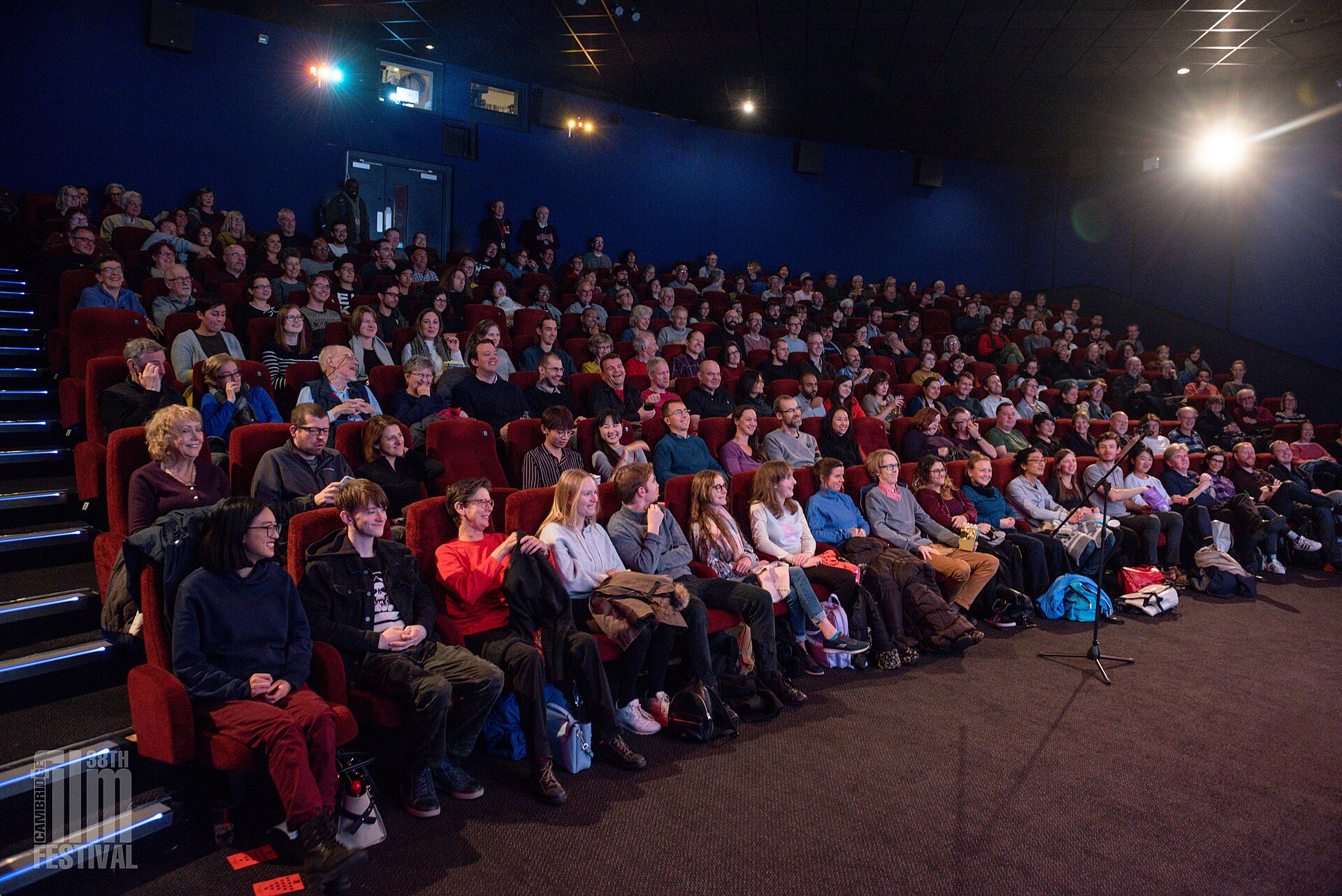
Image: the audience at the Cambridge Film Festival, October 2018. Photo: Kitsonian / Wikimedia Commons, CC BY-SA 4.0.
