By VisionaryArt Editorial
The interesting thing about London Fashion Week, which runs from 17 to 21 September 2026, is how much of it is not in London and not a fashion show.
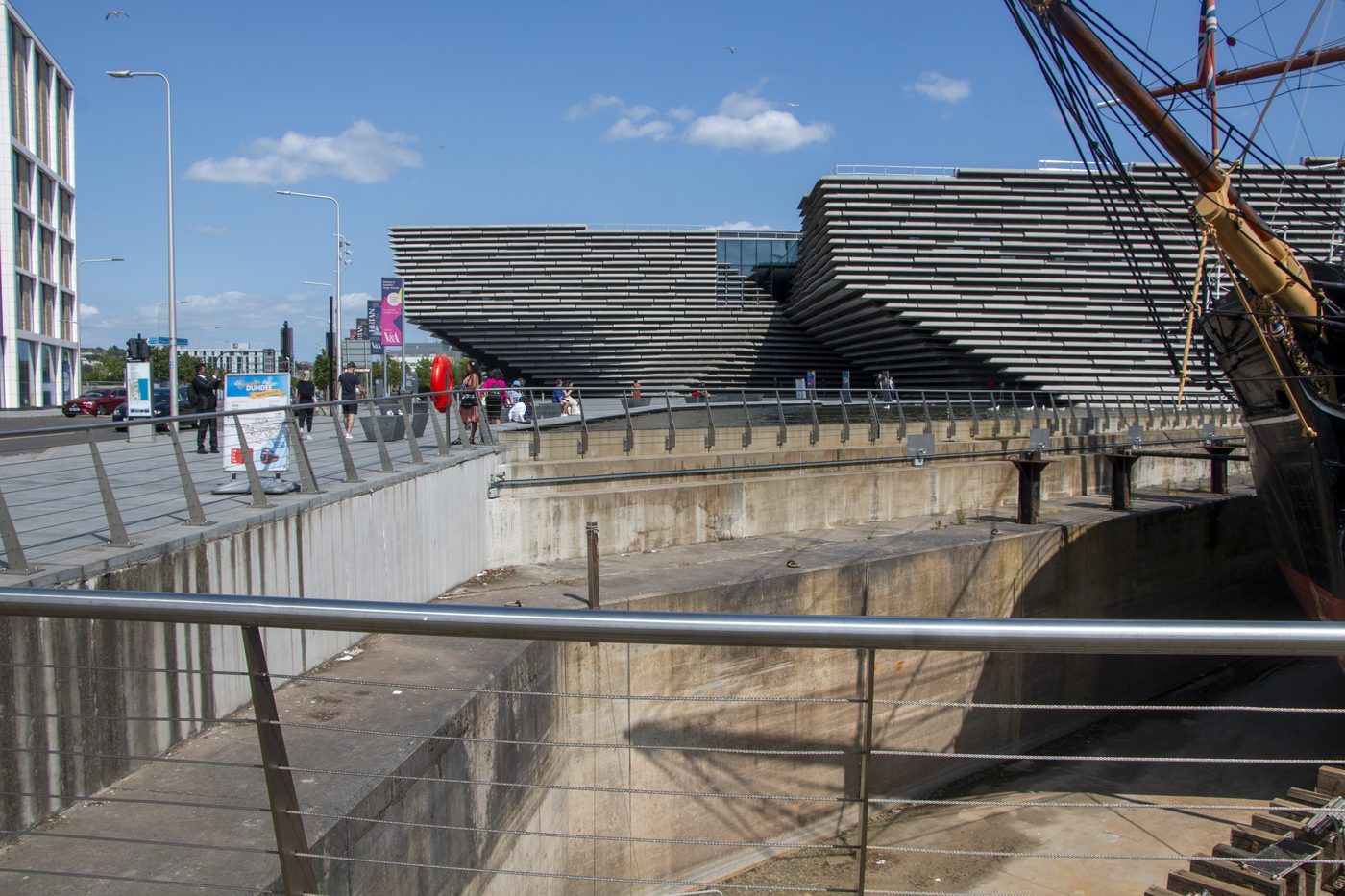
The catwalks themselves remain what they have always been: invitation-only, industry-only, closed. What has changed is the programme that now surrounds them. Fashion Britain, the British Fashion Council’s public strand, lists more than a thousand events across Bristol, Dundee, Edinburgh, Liverpool, London, Manchester and Newcastle. Its anchors are not fashion venues but art institutions – V&A Dundee, Baltic in Gateshead, the Walker in Liverpool, Manchester Art Gallery, M Shed in Bristol, East Bank in London.
This sits inside the council’s Strategy 2030, built around access, creativity and growth. Laura Weir, the BFC’s chief executive, has described the regional programme as being about decentralising fashion.
What decentralising actually looks like
A museum in Dundee hosting fashion during London Fashion Week is a small act with a large implication. It says the week is a national season rather than a London event that the rest of the country reads about afterwards – and it places fashion inside the same buildings that hold the region’s art collections, which changes who sees it and how seriously it is taken.
The same logic runs through the schedule in London. Birmingham City University presents a showcase, part of the council’s stated aim of highlighting emerging talent from outside the usual studios. Geordie Campbell arrives on the menswear schedule. Neither is framed as a regional curiosity; both are simply on the list.
Sound, ritual and the refusal of the runway
Two events this season abandon the runway as a device, and both replace it with something closer to a rite.
The label 5000, supported by the Paul Smith Foundation, unveils a new collection through an immersive sound bath: an audience held inside sustained tone rather than seated along a raised platform. J.L-A.L stages an immersive presentation followed by an afterparty with Puma. Saul Nash, a designer whose work has always been closer to choreography than to styling, presents Masquerade at the Truman Brewery. At East Bank, Music Is Black brings FLOHIO and the Blues Project.
What these share is duration. A runway show is eight minutes of frontal images optimised for a camera. A sound bath cannot be photographed usefully at all. Choosing the second means accepting a smaller audience in exchange for an experience that has a beginning and an end rather than a highlight reel – an old argument in performance art, arriving in fashion through the side door.
The city that is not the centre
There is a further layer. The Chelsea Arts Festival runs alongside the week, the National Gallery hosts a panel with the British Fashion Council and ELLE UK, and London Design Festival and Frieze Sculpture are open across the same days. Fashion in September is not a discipline holding its own event; it is one strand in a fortnight where design, sculpture and clothing share an audience.
For a publication that looks at culture from outside the capital, this is the useful reading of the season. The centre still exists – the invitations, the front rows, the houses returning with new creative directors. But the things worth travelling for are increasingly at the edges: a university showcase, a gallery in Gateshead, a room full of sound in which a collection is revealed without a single model walking towards a photographer.
Provincial is not a lesser word. It describes the position from which you can see the whole arrangement, including the part the centre takes for granted.
It began in a car park
The decentralised version of the week is closer to its origins than the glossy version is. The British Fashion Council was founded in 1983, and the first London Fashion Week was held in 1984 in a car park at the Commonwealth Institute in Kensington: fifteen shows, among them Vivienne Westwood, Ghost and Betty Jackson. The week only acquired an institutional address much later – Somerset House from 2009 to 2015, then 180 Strand from 2017 – and gave it up again in February 2020.
Since then there has been no centre, only a schedule. Once you accept that, the regional programme stops looking like outreach and starts looking like the same organism doing what it did at the start: using whatever room is available.
Who the regional programme is actually for
Two audiences meet in it, and they want different things.
The first is the visitor who will never receive an invitation, and for whom a panel at Manchester Art Gallery or a talk at V&A Dundee is not a consolation prize but the only version of the event that was ever going to be accessible. The scale here is real: more than a thousand events, in seven cities, over five days.
The second is the designer who lives outside London and has been told, correctly, that the industry is concentrated in one postcode. A university showcase on the London schedule and a national programme with institutional venues do not remove that concentration. They do make the first step shorter, and they put regional work in front of the same audience rather than a smaller one.
What criticism owes these formats
A sound bath does not review well. Neither does a masquerade, a choreographed presentation or a room in a gallery where clothing is shown between paintings. The standard fashion review – a list of looks, a verdict on the silhouette – has nothing to say about any of them.
That is a gap worth filling rather than complaining about. The tools already exist in performance criticism: duration, proximity, what the audience is asked to do, what the room does to the work. Applied to a collection revealed inside sustained sound, they produce a more honest account than a gallery of frontal images ever could.
Fashion spent a century teaching people to look at clothes from the front, in a line, at speed. The most interesting part of this September is happening to one side of that line, and mostly outside the city that gives the week its name.
Sources: the British Fashion Council’s Fashion Britain programme, the provisional London Fashion Week schedule (20 July 2026, subject to change), and the guide to the week published by the London BGTC Society.