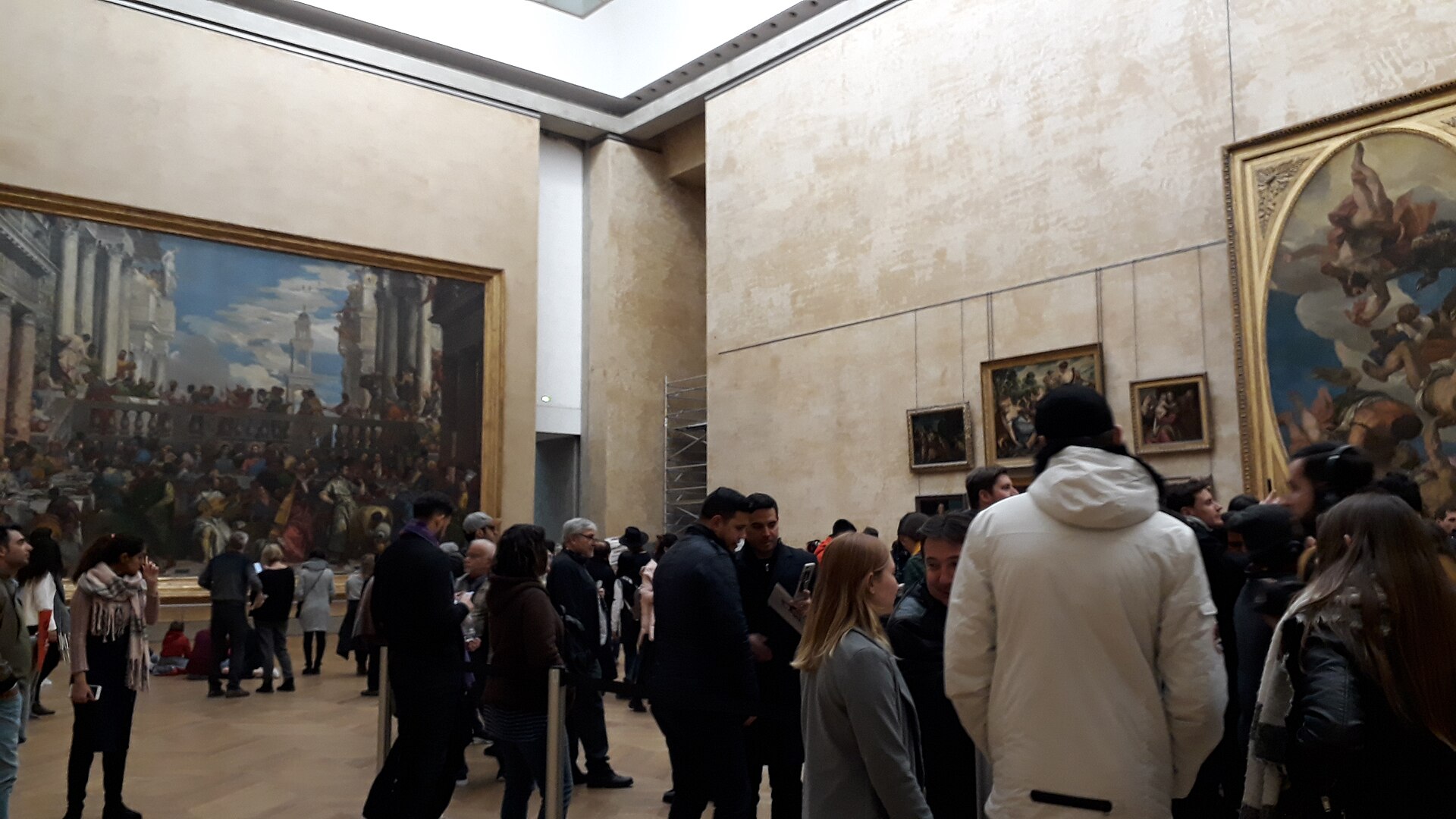
A good art critic today looks longer than most visitors, describes what is there accurately enough to be checked, and then takes a clear position with the reasons on show. They use knowledge of history and making to sharpen the reader’s eye rather than to display learning, and they stay independent of the galleries, artists and friends they write about. Above all, a good critic writes for the public, in prose a stranger can follow, and is willing to say when they were wrong.
Attention that can be checked
Every serious account of criticism starts with looking. The general history of art criticism describes a first stage in which the critic translates the work into words, followed by interpretation and evaluation. The first stage is where most weak reviews fail. A verdict that would fit any exhibition usually means the writer did not spend long in the room.
Useful description is specific: the size of a canvas in relation to the body, whether paint sits thinly or stands proud of the surface, how a sculpture changes as you walk round it, how long a video runs and whether anyone could reasonably watch it to the end. These details are testable. A reader who visits afterwards can confirm or dispute them, and that is precisely what gives the later judgement its weight.
Looking also includes the conditions of display. Poor lighting, a cramped hang or a broken monitor alter what the public actually encounters, and a critic who notices them is reporting on the experience a visitor will have, not on the work as it might exist in a catalogue photograph.
A long tradition of taking sides
Criticism has never been neutral, and the best of it has never pretended to be. Between 1759 and 1781 the philosopher Denis Diderot reported on the Louvre Salons for the Correspondance littéraire, a manuscript newsletter edited by Friedrich Melchior Grimm and sent to subscribers among Europe’s ruling families. Those reports, among the most celebrated contributions to the newsletter, set a pattern of vivid description followed by frank opinion.
Nearly a century later Charles Baudelaire made his name with the Salon of 1845 and the Salon of 1846, championing Delacroix when that was far from a safe view. In the 1846 text, which can be read in French on Wikisource, he wrote that “pour être juste, c’est-à-dire pour avoir sa raison d’être, la critique doit être partiale, passionnée, politique”: to be just, to justify its existence, criticism must be partial, passionate and political. He went on to explain that he meant writing from an exclusive point of view, but the one that opens the widest horizons.
In England, Oscar Wilde pushed the argument further in “The Critic as Artist”, collected in Intentions and available free from Project Gutenberg. His character Gilbert says that the highest criticism “really is, the record of one’s own soul.” Few working critics would put it so grandly, yet the point survives: a review is a personal act of attention, and readers deserve to know whose sensibility they are borrowing.
What the tradition does not license is assertion without evidence. Baudelaire’s partiality came with close readings of colour and composition. The modern equivalent is a critic who commits to a view and shows the working.
Knowledge in the reader’s service
Context matters, but it should arrive when it helps the reader see something. Knowing that a painter trained as a printmaker might explain the flatness of the colour; knowing what a gallery usually shows helps a reader judge whether a show is a risk or a routine. Knowledge becomes a problem when it replaces looking, as when a review lists influences and theorists without ever saying what the work does.
The critics with the longest careers in British newspapers often came to writing with practical knowledge. Adrian Searle, art critic of The Guardian since 1996, first worked as a painter and has been quoted as saying, “I was always torn between making art and writing. Writing won.” He also sat on the Turner Prize jury in 2004. Laura Cumming, art critic of The Observer since 1999, has written books on self-portraiture and on Velázquez; The Vanishing Man won the James Tait Black Memorial Prize in 2016. In both cases, specialist knowledge sits underneath the reviews rather than on top of them.
For contemporary work, where references can be obscure, the most useful question remains simple: what does this work ask of its audience, and does it deliver? A critic who can answer that in a sentence has usually understood the work, even if they dislike it.
Writing that strangers can follow
Criticism is public writing. It should make sense to a reader who has not been to art school while still respecting the difficulty of the work. The late Peter Schjeldahl, head art critic of The New Yorker from 1998 until his death in October 2022, put it plainly: “writing things that people want to read is my bread and butter.” His final collection, Hot, Cold, Heavy, Light: 100 Art Writings, 1988–2018, appeared in 2019 and remains a good model of short, concrete paragraphs.
Clarity is not the same as simplicity. Specialist terms are fine once explained, and some ideas genuinely need a long sentence. The test is whether each sentence moves the reader closer to the work. Jargon used to signal membership of a group, rather than to name something precisely, fails that test.
Writing for strangers also means resisting the pull of the room. A review that exists to keep artists, curators and friends comfortable has stopped being criticism. Readers need to hear when a show does not hold together, and they need the reason as well as the mood.
Independence and declared interests
Trust is a critic’s working capital. Professional bodies have spelled out what that requires. The NUJ code of conduct, first adopted in 1936, asks journalists to ensure information is “honestly conveyed, accurate and fair”, to do their “utmost to correct harmful inaccuracies”, to differentiate “between fact and opinion” and to resist “threats or any other inducements to influence, distort or suppress information.” Each clause translates directly into reviewing.
The International Association of Art Critics, AICA, founded in 1950, says on its official site that it unites over 5,000 art professionals from 95 countries and exists in part to “protect the ethical and professional interests of its members” (checked October 2026).
In practice this means declaring relationships: if a critic has written a catalogue essay for an artist, shared a studio with them or been paid by the gallery, readers should be told. It means correcting factual errors promptly and visibly. And it means being willing to revise a judgement in print, with reasons, when a second visit or a later show changes the picture.
Fairness across scales and media
No single yardstick fits every practice. A small watercolour, a room-sized installation and a two-hour performance ask for different kinds of attention, and a good critic adjusts the question to the work. Fairness is not neutrality. It means matching the scrutiny to the ambition: a major museum retrospective can bear harder questions than a first solo show in an artist-run space, although both deserve accurate description.
It also means separating taste from judgement. A critic does not have to enjoy everything, but they should be able to say where a work succeeds on its own terms before explaining why it still does not persuade them. Personal dislike is allowed in a review. Presenting dislike as objective fact is not.
Scale applies to venues too. Regional and rural exhibitions deserve the same exactness as metropolitan ones, neither inflated out of kindness nor dismissed as provincial. Generosity of spirit and precision about what works are perfectly compatible.
Where criticism is published now
Criticism now appears in print magazines, newspapers, online journals and on critics’ own channels. Art Monthly, founded in London in 1976 by Jack Wendler and Peter Townsend and described as Britain’s longest-established contemporary art magazine, publishes ten issues a year and became a registered charity in 2017, according to its reference entry; its own site is at artmonthly.co.uk. Online, Hyperallergic, founded in 2009 by Hrag Vartanian and Veken Gueyikian, reports more than one million visitors a month and says it is funded through membership and art-focused advertising (checked October 2026).
Critics also reach readers directly. Jerry Saltz, who won the 2018 Pulitzer Prize for Criticism at New York magazine, has used daily social media posts to make criticism less forbidding, and his route in is a reminder that the job has no fixed entry qualification: he worked as a long-distance truck driver until he was 41.
Funding for long-form criticism is scarce but exists. In the United States the Andy Warhol Foundation runs the Arts Writers Grant Program, with awards from $15,000 to $50,000 across articles, books, short-form writing and translation; the 2026 round closed on 6 May, with grantees due to be announced on 2 December 2026 (checked October 2026). Grants of this kind are competitive, which is one reason many critics also teach, curate or edit.
Becoming a good critic in practice
Anyone can start writing about art, and many respected critics began as artists, gallery staff, students or simply committed visitors. What turns that into criticism is a set of habits that can be practised.
- See a lot, including shows you expect to dislike, and take notes in front of the work rather than afterwards.
- Write the description first and check every factual detail (titles, dates, materials, the number of works) before forming the verdict.
- State the work’s aim in one sentence, then judge whether it meets it.
- Declare any connection to the artist or venue.
- Read critics you disagree with and work out why their best pieces persuade.
- Keep old reviews, reread them a year later and note which judgements aged badly.
visionaryart.uk regularly covers the craft of reviewing, from structuring a review to avoiding stock phrases. The writing of literary and art critic Maria Bregman is another place to see criticism practised as a public, readable form.
No critic is infallible, and the good ones do not pretend to be. What readers can reasonably ask for is attention, evidence, independence and the honesty to change their minds in public.
Photo: Sandra Soster, CC BY-SA 4.0, via Wikimedia Commons