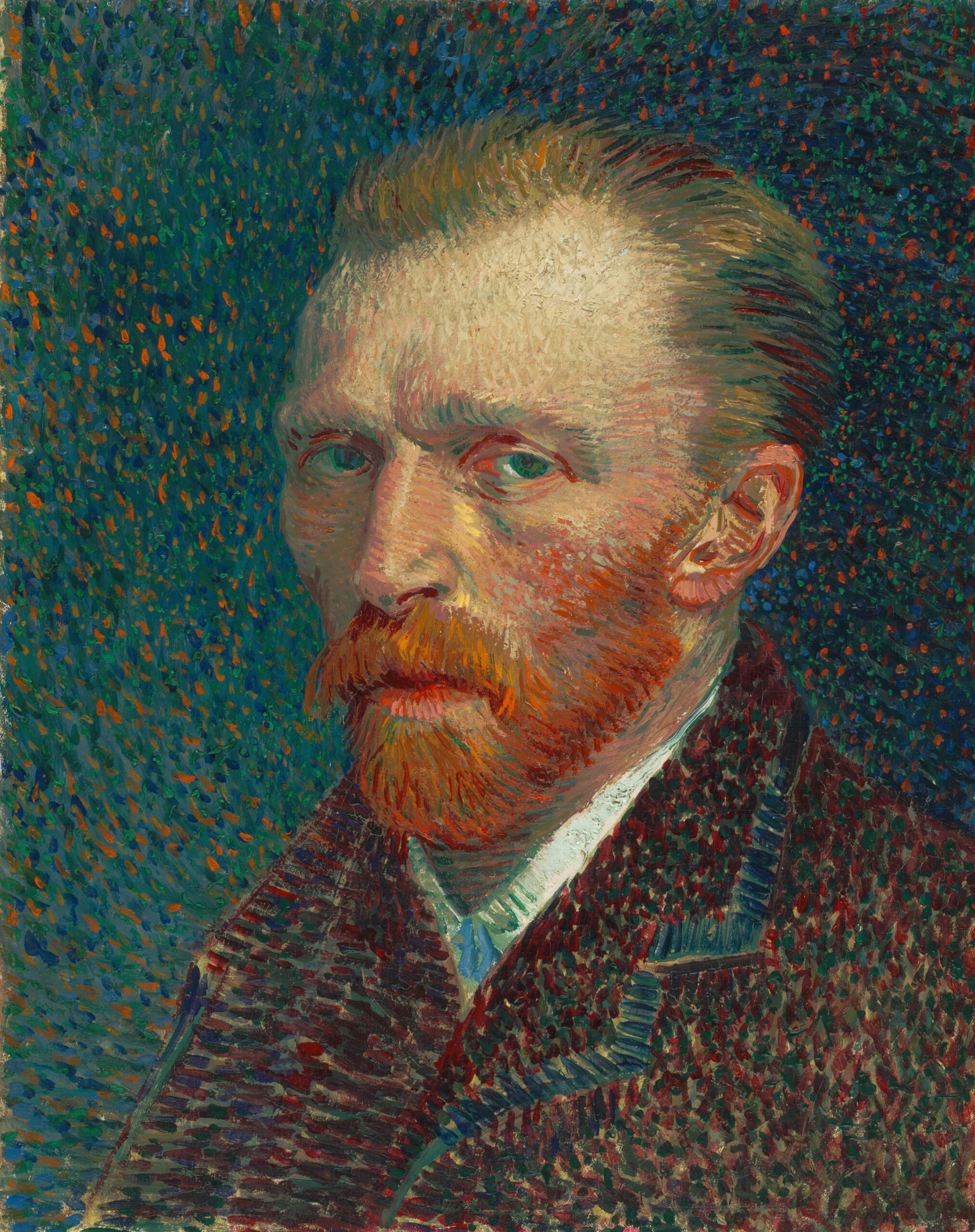
An original print is an image made by hand through a matrix, not a copy of a painting. The matrix, its inking, and the press are part of the work. A poster can look similar, but it is a reproduction.
Print Versus Poster
The confusion begins with appearance. Both a print and a poster can show the same image, and both may be on paper. The difference lies in origin. A poster reproduces an existing image, often by photography and commercial printing. An original print is produced from a matrix made for that purpose: a carved block, an etched plate, a lithographic stone or plate, or a prepared screen. The printed image is the work, not a copy of something else.
This matters because the marks of making remain visible. In a woodcut, the grain and knife cuts shape the image. In an etching, acid-bitten lines hold ink in grooves. In lithography, grease and water separate image from blank areas. In screenprint, ink is pushed through a mesh. These processes leave their own character, and collectors value that character as part of the object.
Four Main Families
Printmaking has many techniques, but four families cover most gallery walls.
| Family | Basic idea | Common examples |
|---|---|---|
| Relief | Ink sits on raised areas of the block | Woodcut, linocut |
| Intaglio | Ink sits in recessed lines or areas | Etching, engraving, drypoint |
| Lithography | Greasy image and water repel each other on a flat surface | Stone lithography, plate lithography |
| Screenprint | Ink is forced through open areas of a mesh | Stencil-based screenprint |
Relief is direct and physical. The artist removes material, so the remaining raised surface receives ink. Intaglio is almost the opposite: lines are cut or bitten below the surface, and the plate is wiped so ink remains in those recesses. Lithography depends on chemistry rather than carving. Screenprint depends on a stencil, and it can produce flat, bold color or subtle layered effects.
Edition Numbers and Signatures
An edition number such as 12/50 means the print is the twelfth impression from a total of fifty in that edition. The number before the slash identifies the individual sheet; the number after it identifies the total. A print marked A/P is an artist’s proof, usually outside the numbered edition and often retained by the artist or used for checking. Other marks can appear, such as P/P for printer’s proof or H/C for hors commerce, but these should be explained by the seller rather than assumed.
A signature does not by itself prove that a print is original or valuable. It records authorship, and it often appears with the title and date. What matters is the whole chain: the matrix, the printing process, the paper, the edition, and the condition. A signed poster is still a poster.
Why Artists Choose Print
Artists choose print for reasons beyond cost. Print allows repetition with variation. Each impression is made by the same matrix, yet small differences in inking, pressure, paper, and wiping make each sheet distinct. Print also suits artists who think in series, in states, or in progressive proofs. A plate can be changed between states, so the process becomes a record of decisions.
Print also changes scale and access. A painting exists once; a print can exist in an edition. That does not make it lesser. It makes it a different object with its own history. Many artists use print to test color, line, and composition in ways that would be impractical in a single large painting.
The Open-Access Print Studio
The open-access print studio is a regional institution as much as a workshop. It provides presses, acid baths, exposure units, screens, and drying racks that an individual artist may not own. It also provides training, technical advice, and a community of printers. In many regions, this studio is the place where printmaking survives between art schools and commercial workshops.
A good studio is not only equipment. It is a shared standard of care. Paper is stored flat, inks are matched to processes, and presses are maintained. Visitors can often see demonstrations, attend courses, or buy work directly from artists. For a general reader, a studio visit is often the clearest way to understand how an image moves from hand to paper.
How to Start Looking
- Ask whether the work is an original print, a reproduction, or a poster.
- Ask which process was used and whether the matrix still exists.
- Ask for the edition number, total size, and any proof marks.
- Look at paper, margins, and surface; a print is an object, not only an image.
- Visit museums, galleries, print fairs, and open-access studios when possible.
- Buy from reputable sellers who can explain the work in plain terms.
Original printmaking rewards slow looking. The image is only the beginning; the matrix, the impression, and the paper complete the story.