Category: Art

  • The Two Lives of Tracey Emin: Anatomy, Art, and a Second Act

    The Two Lives of Tracey Emin: Anatomy, Art, and a Second Act

    For over three decades, Tracey Emin has operated at the very limits of confessional art, pulling the most intimate, traumatic, and unsanitized details of her private world into the blinding light of the gallery floor. From the infamous, unmade chaos of My Bed (1998) to the sprawling, neon-lit declarations of heartbreak and defiance, Emin’s practice has always been fundamentally biographical. However, nothing in her early career, synonymous with the provocative zenith of the Young British Artists (YBA) movement, could have entirely anticipated the profound, visceral transformation of her recent work. The shift was not born of artistic restlessness, but of biological necessity. Following a devastating diagnosis of aggressive bladder cancer in 2020, Emin was forced into a confrontation with mortality that permanently altered both her anatomy and her creative philosophy. Today, she speaks openly of occupying a “second life.” It is a life stripped of pretence, defined by the brutality of survival, and characterised by an artistic output of blistering, unprecedented urgency.

    The Brutality of Survival

    The physical toll of Emin’s illness cannot be overstated, nor can it be separated from the art she now produces. In the spring of 2020, the artist underwent major, life-saving surgery that involved the total removal of her bladder, her womb, and sections of her intestine. She emerged from the operating theatre alive, but irrevocably changed, now living with a stoma bag and facing a gruelling, protracted recovery. For an artist whose entire oeuvre has been predicated on the documentation and exposure of the female body—specifically, her own body—this anatomical reconfiguration presented a profound crisis, and ultimately, a powerful new artistic vernacular.

    Rather than retreating into privacy, Emin leaned into the discomfort with characteristic ferocity. She has historically refused to compartmentalise private pain from public viewing, and her cancer journey has proven no exception. The “broken body” is no longer a metaphor in her work; it is the central, literal subject. Her recent paintings, drawings, and sculptures document the scarring, the stoma, and the raw, physical reality of a body that has been dismantled and sutured back together. In doing so, she strips away the polite euphemisms that typically surround severe illness. There is no neat, inspiring narrative of battling and triumphing; there is only the messy, bloody, and painful reality of enduring. This unflinching documentation has forced the art world to confront the realities of disability, chronic illness, and physical trauma in a space that too often prioritises aesthetic perfection or intellectual detachment.

    A Tate Modern Benchmark: “A Second Life”

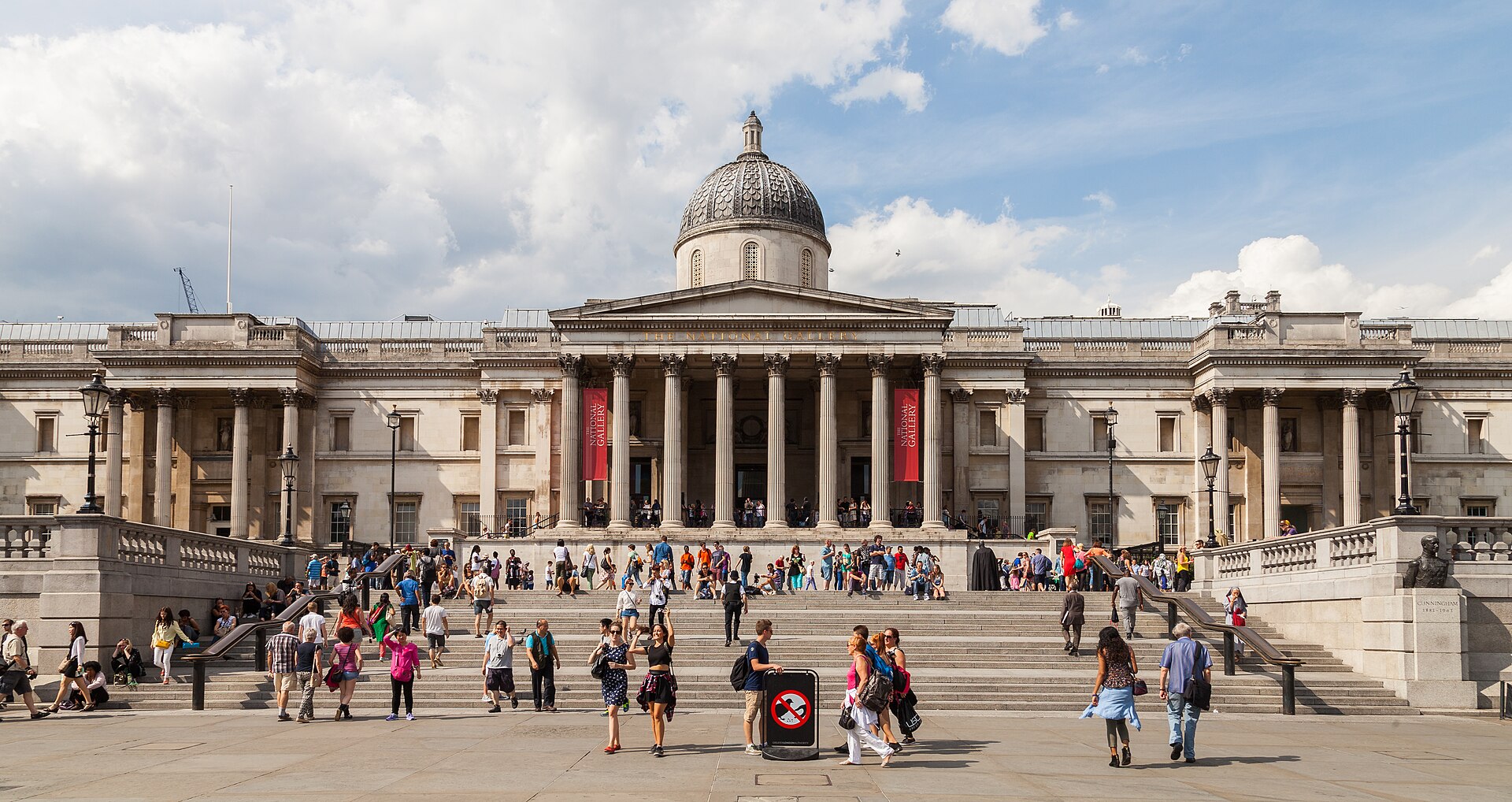
    This period of intense physical and emotional reckoning has culminated in Tracey Emin: A Second Life, the monumental retrospective currently dominating the Tate Modern. Running from 27 February to 31 August 2026, the exhibition is the most comprehensive survey of her career to date, spanning over forty years of her practice. Yet, it is the tension between her early, iconic pieces and her new, post-surgery creations that provides the exhibition with its electric, unsettling power.

    Visitors navigating the vast galleries of the Tate are confronted with career-defining installations like My Bed (1998) and Exorcism of the Last Painting I Ever Made (1996) standing in direct dialogue with entirely new, previously unseen works. Among these is the striking bronze sculpture Ascension (2024), a piece that directly addresses her altered form and the complex relationship she now maintains with her own physical boundaries. The exhibition is an exhausting, exhilarating journey through love, grief, violence against women, and ultimate survival.

    Reflecting on the scale and significance of this 2026 retrospective, Emin noted the profound personal weight of the curation. “I feel this show, titled ‘A Second Life’, will be a benchmark for me,” she explained to the press. “A moment in my life when I look back and go forward. A true celebration of living.” It is this tension—the backward glance at the trauma of the past and the forward momentum of a celebrated survival—that elevates the Tate show from a mere historical survey to a living, breathing testament to contemporary British art.

    The Margate Renaissance and the Engine of TKE Studios

    While the Tate Modern retrospective cements her institutional legacy in London, the true engine of Emin’s second life is situated on the Kent coast. Her return to Margate, the seaside town of her turbulent youth, has proven to be a masterstroke of both personal healing and cultural regeneration. Margate is no longer just the backdrop to her early trauma; it is the active site of her contemporary empowerment.

    Here, she established TKE Studios (Tracey Emin Artist Residency), transforming a sprawling former bathhouse and mortuary into a vibrant hub for artistic production. The initiative is a deliberate, philanthropic effort to foster a new generation of artists, providing them with affordable studio space and rigorous professional development in an era when such resources are increasingly scarce. By anchoring her practice in Margate, she has inextricably linked her own recovery with the town’s ongoing cultural resilience.

    Emin’s influence in the region extends beyond bricks and mortar. Earlier this year, she curated the group exhibition Crossing Into Darkness at the Carl Freedman Gallery in Margate, running from 18 January to 12 April 2026. The show provided a platform for emerging voices while exploring the same thematic terrain—trauma, the descent into the unknown, and the painful crawl back into the light—that defines her current practice. Margate, therefore, serves a dual purpose: it is the sanctuary where she physically rebuilds her strength, and the community she is actively enriching with her legacy.

    The Monumental and the Intimate

    Emin’s resurgence is not confined to the United Kingdom. Her “second life” has sparked renewed international interest, proving that the deeply specific, personal nature of her trauma possesses a universal, human resonance. As her Tate retrospective commands attention in London, the broader scope of her sculptural work is simultaneously being celebrated with the installation of her monumental 2017 bronze, The Mother, at White Cube Bermondsey. Furthermore, the momentum of 2026 will carry her straight into Scandinavia, with a major solo exhibition scheduled to open at the Louisiana Museum of Modern Art in Copenhagen from 7 October 2026 to 28 February 2027.

    The global demand for her work underscores a vital truth about her evolution. Where her early YBA contemporaries have sometimes struggled to mature past the shock tactics of the 1990s, Emin has allowed life—in all its brutal, unpredictable severity—to deepen her practice. The shock of an unmade bed has been replaced by the far more profound shock of a body split open and sewn back together to cheat death.

    The Unapologetic Continuity of Self

    There is a temptation to view Tracey Emin’s current era as a complete reinvention, a shedding of the provocative skin that made her famous. But to do so is to misunderstand the fundamental continuity of her life’s work. The woman who embroidered the names of everyone she had ever slept with inside a tent is the exact same woman who now paints the realities of her stoma bag. The medium and the specific nature of the vulnerability have shifted, but the underlying methodology—total, uncompromising, often uncomfortable honesty—remains fiercely intact.

    Her second life is not an apology for her first. It is, rather, a profound distillation of it. Stripped of the protective layers of youth and forced to navigate the precarious edge of her own mortality, Emin has achieved a state of artistic clarity that is rare and formidable. She has transitioned from the enfant terrible of British art to its most enduring, physically grounded elder stateswoman. In forcing us to look at the fragility of the human body, she has created her most indestructible body of work.

  • Flesh and Marble: The Enduring Sovereignty of the Greek Pantheon in Western Art

    Flesh and Marble: The Enduring Sovereignty of the Greek Pantheon in Western Art

    To walk through the halls of the Uffizi Gallery, the Louvre, or the British Museum is to submit to the gaze of Olympus. The Greek pantheon—a notoriously dysfunctional family of deities prone to jealousy, vanity, and catastrophic rage—has exerted an unparalleled dominance over the visual culture of the West. Unlike the remote, abstract gods of monotheism, the deities of ancient Greece were fiercely, beautifully anthropomorphic. They bled ichor, they lusted, they wept, and they intervened in the squabbles of mortals. For millennia, artists have returned to these narratives not merely to illustrate ancient religion, but to find an aesthetic framework capable of holding the extremes of human emotion and physical perfection.

    The survival of these myths through the collapse of the Roman Empire, the ascendance of Christianity, and the mechanisation of the modern age is not an accident. The pantheon survived because it offered a psychological vocabulary long before psychoanalysis existed. To trace the lineage of Greek mythology in Visual arts is to trace the evolution of how humanity perceives itself: from the divine idealism of classical Athens to the fractured, trauma-laden interpretations of the twentieth century.

    The Classical and Hellenistic Blueprint

    The visual codification of the Greek gods occurred during the classical period of ancient Greece (roughly the fifth and fourth centuries BC), an era that prized proportion, harmony, and arete (excellence). Sculptors such as Phidias and Polykleitos developed a canon of proportions that equated physical beauty with moral superiority. The Parthenon in Athens, adorned with sculptures overseen by Phidias, stands as the definitive monument of this age. Its pediments and metopes—depicting the birth of Athena, the contest between Athena and Poseidon, and the Centauromachy—were not merely decorative. They functioned as state propaganda, aligning the city of Athens with the triumph of divine order over chaotic, chthonic forces.

    However, it was the Hellenistic period (323–31 BC) that stripped the gods of their serene detachment and plunged them into visceral drama. The Pergamon Altar, constructed during the reign of King Eumenes II in the first half of the second century BC, is the apex of Hellenistic theatricality. Its immense frieze portrays the Gigantomachy—the apocalyptic battle between the Olympian gods and the Giants. Here, the figures writhe in agony, their faces contorted, muscles straining against the stone. The drapery swirls violently around Athena as she drags a giant by his hair. This emotional realism broke the classical mould, establishing a dynamic visual language that would lie dormant until its resurrection in the courts of seventeenth-century Italy.

    Renaissance Reawakenings and Neoplatonic Grace

    The Middle Ages largely sidelined the pantheon, repurposing pagan imagery into Christian allegory when it used it at all. But the Italian Renaissance, fuelled by the unearthing of ancient texts and statuary, initiated a profound cultural recalibration. In Florence, under the patronage of the Medici family, artists and philosophers sought to reconcile classical antiquity with Christian theology, a movement known as Neoplatonism.

    No artist captured this synthesis more sublimely than Sandro Botticelli. His twin masterworks, Primavera (c. 1480) and The Birth of Venus (c. 1485), represent a watershed moment: large-scale, secular paintings of mythological subjects treated with the reverence previously reserved for the Virgin Mary. Venus, emerging from the sea foam on a scalloped shell, was not painted as an object of base earthly desire, but as an embodiment of divine love and intellectual purity.

    Decades later, Michelangelo Buonarroti would fuse classical muscularity with Christian eschatology on the ceiling of the Sistine Chapel (1508–1512). Though depicting biblical scenes, the monumental, twisting bodies of the ignudi (nude youths) and the formidable bulk of the Sibyls owe their existence directly to the unearthing of the Laocoön and His Sons in Rome in 1506—a Hellenistic sculpture of a Trojan priest attacked by sea serpents that profoundly altered Michelangelo’s understanding of the human form in distress.

    Baroque Theatricality and Flesh

    If the Renaissance idolised the harmony of the pantheon, the Baroque era (seventeenth century) revelled in its violence, eroticism, and metamorphoses. Ovid’s Metamorphoses, the Roman poet’s compendium of Greek myths, became the indispensable handbook for artists seeking to depict bodies in motion and moments of intense psychological rupture.

    Gian Lorenzo Bernini’s Apollo and Daphne (1622–1625), housed in the Galleria Borghese in Rome, is arguably the greatest mythological sculpture ever carved. Commissioned by Cardinal Scipione Borghese, the marble group freezes the exact fraction of a second when the pursuing sun god, Apollo, captures the nymph Daphne, only for her to transform into a laurel tree to escape his advances. Bernini achieves the impossible in stone: Daphne’s fingers sprout delicate leaves, bark begins to encase her thighs, and the terror in her face contrasts sharply with the bewildered desire of her pursuer. The Baroque obsession with transformation, fleeting time, and sensory overload found its perfect vehicle in the capricious cruelty of the Olympian gods.

    In Northern Europe, Peter Paul Rubens weaponised the pantheon to celebrate the sheer exuberance of flesh. Works like The Rape of the Daughters of Leucippus (c. 1618) abandon the restrained elegance of antiquity for a riot of colour, swirling movement, and corpulent bodies, proving that the Greek myths could be adapted to suit the opulent tastes of Catholic monarchies.

    Neoclassicism and Political Allegory

    The pendulum inevitably swung back. The eighteenth-century Enlightenment, coupled with the archaeological discoveries of Herculaneum and Pompeii, birthed Neoclassicism—a movement that rejected Baroque excess in favour of severe, linear clarity. The gods and heroes were conscripted once again, this time as avatars of civic virtue, reason, and patriotic sacrifice.

    As Europe teetered on the brink of revolution, artists looked to antiquity for moral instruction. While Jacques-Louis David largely focused on Roman history, the aesthetic principles were entirely derived from the Greek ideal. Meanwhile, the Venetian sculptor Antonio Canova produced works of chilling, polished perfection. His Psyche Revived by Cupid’s Kiss (1787–1793) is a masterclass in compositional balance. The intertwining arms of the lovers create a flawless circle, a triumph of geometric harmony that sanitises the messy reality of desire, rendering it smooth, white, and ideologically safe.

    Modernism, Surrealism, and the Subconscious

    The twentieth century shattered the Neoclassical ideal. The unprecedented mechanised slaughter of the First World War made a mockery of human physical perfection, and the advent of psychoanalysis provided a new framework for interpreting ancient myths. Sigmund Freud borrowed heavily from the Greeks, using figures like Oedipus and Narcissus to label the darkest, most repressed urges of the human mind. Consequently, modern artists turned to the pantheon not for its beauty, but for its monsters.

    For the Surrealists, the myths were direct access points to the subconscious. Salvador Dalí’s Metamorphosis of Narcissus (1937), currently held at the Tate Modern in London, presents the myth of the youth who fell in love with his own reflection as a hallucination of paranoia and decay. Dalí employs his “paranoiac-critical method” to create a double image: the crouching figure of Narcissus staring into the water is mirrored exactly by a fossilised hand holding an egg from which a narcissus flower sprouts.

    Pablo Picasso, perhaps more than any other twentieth-century artist, adopted a figure from Greek myth as his personal avatar: the Minotaur. Half-man, half-bull, the Minotaur became Picasso’s vehicle for exploring the duality of human nature—the tension between creative genius and destructive, primal lust. In his complex 1935 etching Minotauromachy, the beast advances on a young girl holding a candle, a labyrinthine allegory for the rising tide of fascism in Europe and the artist’s own turbulent personal life. The classical hero was dead; only the monster remained.

    Contemporary Subversions and the Enduring Legacy

    In the twenty-first century, the engagement with Greek mythology has largely been one of subversion and reclamation. Feminist artists and writers have aggressively dismantled the patriarchal narratives that have dominated the interpretation of the pantheon for centuries. Figures traditionally cast as villains or victims—Medusa, Circe, Clytemnestra—are being critically re-evaluated.

    This reshaping is visible across global exhibitions, where contemporary sculptors and painters confront the violence inherent in the Ovidian tales of rape and transformation, refusing to hide behind the veneer of classical beauty. The focus has shifted from the victorious gods of Olympus to the marginalised, the silenced, and the monstrous, proving the extraordinary plasticity of these ancient stories. If you want to explore the sheer breadth of this impact across galleries today, Greek Mythology in Art: A Journey Through Olympus provides an excellent roadmap.

    The Greek pantheon refuses to be relegated to the dust of history because it was never truly about theology; it was about human nature writ large. The gods were immortal magnifications of our own desires, terrors, and contradictions. Whether carved into the pediment of a temple to assert civic dominance, painted on a Renaissance canvas to symbolise intellectual enlightenment, or fractured by a modern master to expose the violence of the subconscious, the deities of ancient Greece remain the most resilient and versatile vocabulary in the history of art. They are an immortal legacy, not because they are divine, but because they are so profoundly, inescapably human.

  • Tate Modern’s Silver Jubilee: A 25-Year Reckoning with Contemporary Culture

    Tate Modern’s Silver Jubilee: A 25-Year Reckoning with Contemporary Culture

    It is May 2025, and a quarter of a century has passed since Queen Elizabeth II inaugurated Tate Modern inside the cavernous, soot-stained husk of Giles Gilbert Scott’s Bankside Power Station. Back in the millennial optimism of the year 2000, placing a gigantic, brooding arachnid—Louise Bourgeois’ monumental sculpture Maman—in the vast expanse of the Turbine Hall was widely considered an audacious provocation. Today, looking back, it feels more like the establishing shot of a profound cultural revolution. Over the past twenty-five years, Tate Modern has not merely exhibited contemporary art; it has fundamentally reprogrammed the British public’s relationship with it.

    As the institution prepares to mark its Silver Jubilee with a sprawling, four-day Birthday Weekender running from 9th to 12th May 2025, it is leaning heavily into its identity not as a static repository of priceless objects, but as an active civic agora. Karin Hindsbo, who assumed the directorship in late 2023, has made it her explicit mission to ensure this anniversary is less an exercise in institutional self-congratulation and more a radical blueprint for the next twenty-five years. Under her leadership, the gallery is shifting toward risk, accessibility, and a fiercely global perspective, cementing its role as the undisputed epicentre of London’s creative ecosystem.

    A Power Station Recharged

    To understand the magnitude of Tate Modern’s achievement, one must remember the topography of the London art world prior to its existence. At the turn of the millennium, serious institutional art was largely confined to the affluent enclaves of the West End and Kensington. Southwark, with its post-industrial decay, was an unlikely destination for a cultural pilgrimage. Yet, the architectural brilliance of Herzog & de Meuron’s conversion retained the industrial muscle of the power station while carving out spaces of sublime, minimalist contemplation. The Turbine Hall, with its terrifying scale and vertiginous ramp, immediately became London’s secular cathedral—a public square where citizens could gather, unburdened by the traditional elitism of the “white cube” gallery.

    Now, aiming for an unprecedented six million annual visitors under Hindsbo’s stewardship, Tate Modern is expanding its temporal reach as aggressively as its spatial one. Pushing its opening hours to 9:00 pm on Fridays and Saturdays, the museum is actively courting a younger, urban demographic, integrating itself into the nighttime economy of a city that rarely sleeps. This temporal shift reflects a deeper philosophical pivot: the museum must fit the lives of its audience, rather than demanding the audience conform to the archaic rhythms of the museum.

    The Art of the Everyday: The UNIQLO Partnership

    Crucial to the mechanics and the ethos of this anniversary is the deepening of Tate’s long-standing alliance with UNIQLO. Initiated in 2016, the Japanese retailer’s involvement is not merely a matter of financial underwriting; it is a structural partnership that actively drives the gallery’s democratic mandate. To mark the Silver Jubilee, the “UNIQLO Tate Shop, Art for All” pop-up launches on 5th May, occupying the gallery through the summer months.

    The philosophical core of this collaboration is the continuation and expansion of UNIQLO Tate Play—a free initiative that actively dismantles the intimidating aura of high art. Through the implementation of UTme! printing stations, the public is invited to physically interact with the canon. Visitors can customise apparel with iconic motifs drawn directly from the Tate’s collection, bringing the surrealism of Salvador Dalí, the kinetic energy of Henri Matisse, or the existential weight of Alberto Giacometti into the vernacular of streetwear. This is the ultimate democratisation of the aesthetic object. As Koji Yanai, UNIQLO’s Senior Executive, notes, it is an exercise in “LifeWear philosophy in motion—where culture stitches itself into the fabric of daily life.” This blurring of the boundary between high art and accessible, wearable design speaks directly to Hindsbo’s vision of a porous, living museum.

    The Birthday Weekender: Sonic Vanguards and Sentient Hotels

    The indisputable centrepiece of the jubilee is the Birthday Weekender. Rather than hosting a sterile, champagne-soaked gala behind closed doors for affluent donors, Tate Modern is throwing its doors open for a free, radically multidisciplinary festival. The Turbine Hall, so often the site of quiet awe, will undergo a temporary metamorphosis into London’s most architecturally significant dancefloor. The programming over the weekend reflects the rich, fragmented, and urgent sonic diversity of the contemporary capital.

    Friday night hands the decks over to the sonic vanguard of South London, with Peckham’s renowned venue Jumbi layering Afrobeats and grime, flanked by curatorial input from the hyperlocal Radiate Festival. Saturday shifts into the bass-heavy, syncopated frequencies of the Asian diaspora, driven by genre-defying sets from the DAYTIMERS collective, before Foundation FM introduces a tidal wave of queer-led house anthems. For those seeking respite, the Terrace Bar will be bathed in Olafur Eliasson-esque light installations, offering a softer refuge scored by live jazz improvisations.

    Simultaneously, the subterranean concrete brutalism of the Tanks will host a slate of avant-garde performance art that challenges the very nature of human interaction. Lawrence Lek’s immersive Nøtel transforms the space into a sentient, dystopian AI hotel, an unsettling blend of live video gameplay and cinematic world-building that interrogates our algorithmic, surveillance-heavy future. In stark, organic contrast, María Magdalena Campos-Pons invokes the site’s industrial ghosts with Cargo. This profound Afro-Cuban ritual turns the Turbine Hall’s mechanical remnants into spaces of veneration, drawing lines of flight between transatlantic slavery, industrial capitalism, and spiritual resilience. Nearby, Abbas Zahedi’s Gathering Ground confronts the audience with the terrifying reality of climate collapse. It functions as a sonic meditation where participants are physically cocooned in biodegradable textiles, absorbing whispered broadcasts transmitted via subterranean speakers—a deeply intimate reckoning with global catastrophe.

    Decolonising the Canon: A Global Narrative

    Beyond the weekend’s ephemeral, high-octane thrills, the 25th anniversary marks the consolidation of a permanent curatorial shift within the institution. Hindsbo is aggressively pursuing a non-linear, decentred art history that challenges Western hegemony. To this end, a special 25-work anniversary trail weaves throughout the permanent galleries, deliberately creating productive friction between established blue-chip artists and vital new acquisitions.

    Andy Warhol’s ubiquitous Marilyn Diptych now shares conceptual and physical space with Outi Pieski’s intricate Sámi beadwork, challenging the pop-art industrial complex with indigenous, handcrafted materiality. Similarly, the grounded, spiritual weight of Edgar Calel’s Mayan clay totems acts as a counterweight to mid-century European abstraction.

    This ethos extends into the Starr Cinema, where the moving image programming delivers a sharp, uncompromising political edge. Nalini Malani’s searing shadow-play animation, Can You Hear Me?, offers a relentless critique of gendered violence and systemic oppression. Meanwhile, Maxime Jean-Baptiste’s Revolution Trilogy leverages the immersive capabilities of virtual reality to excavate and interrogate colonial archives, forcing the viewer to inhabit the uneasy spaces of historical trauma. This is not art functioning as passive, bourgeois decoration; it is art operating as an active historical reckoning, entirely consistent with the intellectual rigour seen at sister institutions, such as the recent Lee Miller Retrospective at Tate Britain.

    Community, Climate, and Civic Action

    What sets Tate Modern’s anniversary programming apart is its deep, unyielding embeddedness in immediate socio-political realities. The museum is actively refusing the neutrality often expected of grand state institutions. The UNIQLO Tate Play drop-in workshops include radical, youth-driven initiatives that empower the next generation. A standout session, “Zine-Making for Climate Justice,” facilitated by the Greta Thunberg-endorsed collective Art4Earth, marries punk DIY aesthetics with urgent eco-activism, allowing teenagers to articulate their climate anxiety through scissors, glue, and photocopiers. Elsewhere, rapid-fire “Flash Talks” dissect complex themes, ranging from the aesthetics of Afrofuturism in Chris Ofili’s paintings to the algorithmic biases shaping Lawrence Lek’s AI narratives.

    Even the museum’s hospitality has been politically activated. Throughout the anniversary, the Terrace Bar’s menu has been curated by Migrateful, a charity that supports migrants and refugees. By offering dishes prepared by refugee chefs, the simple act of eating is transformed into a dialogue about displacement, borders, and human resilience. Hindsbo’s declaration rings true: “This isn’t about patting ourselves on the back. It’s about platforming artists who’ll redefine the next 25 years.”

    A Living Museum for the Next Quarter-Century

    As Tate Modern reflects on its first quarter-century, its trajectory is undeniable. It has successfully abandoned the archaic, 19th-century model of the museum as a silent, intimidating mausoleum for masterpieces. Karin Hindsbo has correctly identified that in an era defined by digital fragmentation, algorithmic isolation, and political fracture, physical institutions must offer friction, heat, and tangible community.

    The Birthday Weekender is not merely a celebration; it is a declaration of intent. When Louise Bourgeois’ Maman returned to her vigil over the Millennium Bridge entrance this year—a symbolic homecoming for the institution’s defining icon—she did not look over a quiet, reverent gallery. Instead, she loomed over a vibrant, messy, and fiercely alive cultural ecosystem.

    By partnering with UNIQLO to ensure accessibility, by platforming radical decolonial voices, and by turning its halls into dancefloors and sites of climate protest, Tate Modern proves that its legacy is not etched in concrete or canvas. It is measured in the minds it jolts awake and the disparate communities it dares to unite. At 25, Tate Modern is less a traditional museum than a vital public square, forcefully demonstrating that contemporary art’s most important canvas has always been the public itself.

  • The Erased Masters: Unveiling the True Stories Behind Art History’s Forgotten Female Pioneers

    The Erased Masters: Unveiling the True Stories Behind Art History’s Forgotten Female Pioneers

    The history of art, as it has been taught in western academies for over a century, is a curated fiction. It is a narrative built on the myth of the solitary male genius, an uninterrupted lineage stretching from Michelangelo to Picasso. Yet, the archives of museums and the basements of private collectors hold a different truth. For centuries, female artists were systematically erased from this timeline—their works misattributed, their innovations credited to male contemporaries, or their legacies simply left to gather dust. Today, an overdue reckoning is underway. A wave of major international exhibitions in 2026 is forcing the art world to confront its blind spots, proving that restoring these women to the canon is not an act of revisionism, but of correction.

    The mechanism of this historical erasure varied wildly across centuries. For some women, it was deliberate misattribution, a financially motivated deception by dealers who knew a male signature fetched a higher price. For others, it was the structural barriers of their era, which barred women from formal life-drawing classes and relegated them to specific genres like portraiture or botanical still life. And for a few, the erasure was entirely self-imposed, an act of preservation by artists who knew the patriarchal establishment was ill-equipped to comprehend their vision. By examining the lives of four distinct pioneers—Judith Leyster, Artemisia Gentileschi, Hilma af Klint, and Edmonia Lewis—we can begin to unpick the complex tapestry of how masterpieces are lost, and more importantly, how they are found again.

    The Misattributed Master: Judith Leyster

    In the bustling artistic climate of the Dutch Golden Age, Judith Leyster (1609–1660) was a formidable and highly respected talent. She was one of the first women admitted to the prestigious Haarlem Guild of St. Luke, ran her own commercial workshop, and successfully took on male apprentices. Her genre paintings—characterised by their loose, expressive brushwork, psychological depth, and exuberant depictions of musicians and revellers—were heavily sought after by contemporary collectors. Yet, within mere decades of her death, her name vanished from the historical record.

    For over 250 years, Leyster’s vibrant corpus was almost entirely attributed to her male contemporary, Frans Hals. The stylistic similarities were undeniable; both artists favoured a dynamic, spontaneous application of paint that captured fleeting moments of human interaction. However, the misattribution was not an innocent scholarly error. It was a deliberate market deception. Because Hals was the established male master, his name commanded premium prices at auction. Unscrupulous art dealers systematically painted over Leyster’s distinctive monogram—a fluid “JL” intertwined with a five-pointed star (a play on her surname, which translates to “lodestar”)—replacing it with fraudulent Hals signatures.

    The deception unravelled spectacularly in 1893. The Louvre had acquired a painting, The Carousing Couple, believing it to be a masterful Frans Hals. Upon close technical examination, the Dutch art historian Cornelis Hofstede de Groot discovered Leyster’s hidden star monogram beneath the forged signature. The revelation sent shockwaves through the European art market, leading to emergency reappraisals in galleries from London to Saint Petersburg. Slowly, Leyster’s oeuvre was pieced back together.

    This year, Leyster’s rightful place is being cemented in the landmark exhibition Women Artists from Antwerp to Amsterdam, 1600–1750 at the Museum of Fine Arts in Ghent (running through May 2026). By displaying her work alongside peers like Rachel Ruysch and Michaelina Wautier, the exhibition dismantles the notion that Dutch women were anomalous footnotes. Leyster was a master of the human form, an artist whose technical brilliance rivalled—and occasionally surpassed—the men who subsequently stole her credit.

    The Shadow of Biography: Artemisia Gentileschi

    While Judith Leyster suffered the indignity of misattribution, the Italian Baroque master Artemisia Gentileschi (1593–1656) faced a different kind of erasure: the subjugation of her art to her personal trauma. For centuries, Gentileschi was treated as a historical curiosity rather than a technical heavyweight. Her legacy was inextricably tied to her sexual assault by her painting tutor, Agostino Tassi, and the subsequent gruelling, public trial in 1612, during which she was subjected to torture by the Roman authorities using thumbscrews to verify her testimony.

    In the centuries that followed, male art historians viewed Gentileschi’s visceral, bloody masterpieces—such as her iconic Judith Slaying Holofernes—solely through a psychoanalytic lens. Her work was reduced to an expression of female rage and post-traumatic revenge. While the anger in her canvases is palpable, focusing exclusively on her biography served to obscure her staggering artistic achievements. It blinded critics to her mastery of chiaroscuro, her radical compositional framing, and her status as the first woman accepted into the Accademia delle Arti del Disegno in Florence.

    Gentileschi was a shrewd businesswoman who secured commissions from the Medici family, King Philip IV of Spain, and King Charles I of England. She negotiated her own contracts in an era when women were legally bound to their fathers or husbands. Today, scholars are actively working to divorce her artistic genius from the sensationalism of her trial. Her inclusion in recent major retrospectives proves that a woman’s technical mastery can, and must, be evaluated independently of the violence enacted upon her. The re-evaluation of Gentileschi forces the art world to ask a difficult question: how many other female artists have had their technical brilliance overshadowed by the dramatic details of their personal lives?

    The Secret Pioneer of Abstraction: Hilma af Klint

    If Leyster’s erasure was driven by commerce and Gentileschi’s by patriarchal sensationalism, Hilma af Klint’s was driven by a profound understanding of her era’s intellectual limitations. For generations, the invention of abstract art was securely credited to Wassily Kandinsky, who created his first non-objective watercolours around 1911. Art history textbooks enshrined Kandinsky, alongside Piet Mondrian and Kazimir Malevich, as the founding fathers of abstraction. But they were late to the party.

    Swedish artist Hilma af Klint (1862–1944) began producing radical, large-scale abstract paintings as early as 1906. Her monumental series, The Paintings for the Temple, comprised 193 luminous canvases filled with biomorphic shapes, geometric forms, and a complex chromatic language. Predating Kandinsky by half a decade, these works were entirely divorced from physical reality.

    Why, then, did af Klint remain unknown until the late 20th century? The answer lies in her spiritual practice and her acute self-awareness. Af Klint was a devout follower of Theosophy and Spiritualism. She operated as part of a clandestine collective of five female artists, known simply as “De Fem” (The Five), who conducted séances and received commissions from “High Masters” to map the spiritual realm. Af Klint understood that the conservative, male-dominated art establishment of early 20th-century Stockholm would dismiss her visionary abstractions as the hysterical scribblings of a female mystic.

    Consequently, she rarely exhibited her abstract works during her lifetime. Upon her death in 1944, she left a strict stipulation in her will: her pioneering canvases were not to be shown to the public until at least twenty years had passed, believing that only a future society would possess the consciousness to understand them. She was right, though it took much longer than two decades. It wasn’t until a watershed exhibition in 1986 that the international art world began to grasp the magnitude of her achievement.

    In 2026, her legacy reaches new heights with Hilma af Klint: Paintings for the Temple (1906–1915) at the Grand Palais in Paris. This unprecedented retrospective forces a permanent rewrite of modernism’s origins. Af Klint did not merely participate in the birth of abstraction; she authored it. Her work demonstrates that the break from representational art was not purely an intellectual, formalist exercise by European men, but a profoundly spiritual investigation pioneered by a woman working in self-imposed exile.

    The Neoclassical Trailblazer: Edmonia Lewis

    The physical loss of artworks is another tragic mechanism of historical erasure. The story of Edmonia Lewis (c. 1844–1907) is one of the most astonishing narratives of triumph, obscurity, and eventual recovery in American art history. Born to a Haitian father and a Mississauga Ojibwe mother, Lewis overcame the violent prejudices of 19th-century America to become the first professional African American and Native American sculptor to achieve international acclaim.

    Finding the United States too hostile a climate for a woman of colour to secure anatomical training or marble commissions, Lewis emigrated to Rome in 1865. There, she joined a thriving expatriate community of female sculptors. Lewis distinguished herself by refusing to employ Italian artisans to carve her marble, a common practice among male sculptors. She carved every piece herself, fearing that any assistance would be weaponised by critics to cast doubt on her authorship.

    Her undisputed masterpiece, The Death of Cleopatra (1876), was a three-ton marble monolith depicting the Egyptian queen in the visceral, immediate aftermath of the asp’s bite. It was a radical departure from the dignified, sanitised Victorian portrayals of death. When exhibited at the 1876 Centennial Exhibition in Philadelphia, it drew massive crowds and widespread critical awe. Yet, the monumental size of the sculpture made it impossible for Lewis to ship it back to Rome. It was placed in storage and subsequently lost to history.

    The sculpture’s journey over the next century reads like a surreal fiction. It was moved to a Chicago saloon, then used as a grave marker for a racehorse named Cleopatra, before eventually being abandoned on a suburban golf course where it was subjected to decades of weather damage and vandalism. It was not until the 1980s that a historical society recognised the battered marble. Following extensive restoration, The Death of Cleopatra now resides in the Smithsonian American Art Museum.

    Lewis’s broader oeuvre is currently the subject of the landmark 2026 exhibition Edmonia Lewis: Said in Stone at the Georgia Museum of Art. The exhibition is the first to gather the full range of her surviving works, contextualising her fierce independence and her masterful ability to infuse neoclassical forms with potent narratives of abolition and Indigenous rights. Lewis’s story is a stark reminder of how fragile a legacy can be when an artist operates outside the protective infrastructure of white, male institutional power.

    Correcting the Canon

    The rediscovery of these female masters is not merely an exercise in academic housekeeping. It represents a fundamental shift in how we understand cultural production. For every Judith Leyster, Artemisia Gentileschi, Hilma af Klint, or Edmonia Lewis whose work has been painstakingly recovered, countless other female artists remain hidden in the margins—their canvases deteriorating in storage, their names absent from the syllabus.

    Institutions are finally beginning to do the necessary archival archaeology. The exhibitions sweeping Europe and the United States in 2026 signify a departure from the tokenistic inclusion of women in “special” showcases, moving toward a permanent integration into the main galleries. By investigating contemporary culture and examining past art exhibitions, we can trace how public appetite for these narratives is forcing museums to act.

    The stories behind these masterpieces reveal the systemic mechanisms—market forgery, intellectual prejudice, patriarchal bias, and institutional neglect—that actively shaped the canon. To view a painting by Leyster, an abstraction by af Klint, or a marble carving by Lewis today is to engage with an act of historical defiance. These artworks survived against the odds, waiting out the centuries until the world was finally ready to look at them.

  • The Turner Prize 2026

    The Turner Prize 2026

    By Sarah Johnson

    The Turner Prize list is out. Simeon Barclay. Kira Freije. Marguerite Humeau. Tanoa Sasraku. They pushed the whole thing up north to MIMA in Middlesbrough this time around. London pretends this matters. It really doesn’t.

    Humeau is messing around with strange biological sculptures again. Sasraku is ripping up earth and paper. It is all perfectly fine. Extremely safe. We used to get angry about this prize. People used to throw things over unmade beds and dead cows. Now? Now we just nod at the nice paper structures.

    Nobody is getting angry anymore. We are all just incredibly tired. The winner gets announced in December. Someone will hand over a cheque. Everyone will clap politely. Nothing will change.

  • The Armless Muse: Deconstructing the Myth of Venus de Milo

    The Armless Muse: Deconstructing the Myth of Venus de Milo

    She stands in Sully, Room 345 of the Louvre, drawing roughly seven million visitors a year. The Aphrodite of Milos—known universally as the Venus de Milo—is two metres and thirteen centimetres of Parian marble, missing both arms, and arguably the most famous sculpture on Earth. Her anonymity is her brand. Yet the story most people know about her is wrong in almost every particular: wrong about when she was made, wrong about who made her, wrong about what happened to her arms, and wrong about why the Louvre displays her at all.

    The Farmer, the Sailor, and the Island That Wasn’t Greek

    On 8 April 1820, a Milos farmer named Yorgos Kendrotás was digging in his field—some sources say he was quarrying stone—when he unearthed the upper torso of a marble figure. It lay in two separate pieces, half-buried, already armless. Kendrotás could not shift the lower section. He left it.

    Within days, Olivier Voutier, a French naval officer with archaeological interests stationed on the island, was informed of the find. Voutier recognised its significance immediately. Working with Kendrotás, he excavated the full figure, two herms, and a marble hand clutching what appeared to be an apple. A second Frenchman, the naval lieutenant Dumont d’Urville, later transcribed a Greek inscription found nearby commemorating a dedication by a gymnasiarch named Bakchios son of Satios—evidence the statue once stood in a civic gymnasium.

    Milos was then under Ottoman rule. Greece was decades from independence. The local Ottoman authorities had already granted a permit for excavation, but France moved fast. By early 1821, the statue had arrived in Paris and was presented to King Louis XVIII, who donated it to the Louvre. The transaction took barely a year.

    What nobody mentioned, at the time or for more than a century, was that the statue already had no arms when it was found. The most popular explanation—that the arms were lost when French and Turkish sailors fought over the sculpture during its removal from the island—does not survive scrutiny. Most modern scholars agree the limbs were gone long before Kendrotás struck marble.

    The Disappearing Base

    The Venus de Milo entered the Louvre carrying a problem. Arriving in three padded bundles—two halves of the body and a third containing assorted fragments—the sculpture included a broken section of plinth inscribed in Greek. The inscription, drawn by a young artist named Debay at the request of Jacques-Louis David, read: “[Alex]andros, son of [M]enides, citizen of Antioch on the Maeander, made the statue.”

    This was disastrous for French cultural ambitions. The Louvre’s director, Auguste de Forbin, had immediately declared the Venus a work of the Classical period, attributing her to Praxiteles or his school—placing her in the fourth century BC, the perceived pinnacle of Greek art. But Antioch on the Maeander was not founded until around 280 BC, roughly a century after the Classical age ended. The inscription, if authentic, would date the statue to the late Hellenistic period, which Winckelmann’s dominant art-historical theory treated as an era of decline.

    Forbin’s response was elegant and permanent. He ordered the inscribed section of the plinth removed. It was separated from the statue, placed in storage, and quietly lost. Count de Clarac, the Louvre’s own conservator of classical antiquities, protested and was banned from the workshop. In April 1821, Quatremère de Quincy—secretary of the Académie des Beaux-Arts—published a paper declaring the statue a product of Praxiteles’s school. This became the official French position for over 130 years.

    In 1893, the German archaeologist Adolf Furtwängler demolished the fiction. In Meisterwerke der Griechischen Plastik, he demonstrated, through epigraphic analysis and stylistic comparison, that the statue dated to between 150 and 50 BC. Jean Charbonneaux, the Louvre’s own conservator, conceded the point in 1951, writing that Furtwängler had set “150 and 50 B.C. as the limits of the period where [the statue] belonged”—and noting, with characteristic understatement, that this conclusion had been reached “contrary to the general opinion.” The Louvre’s current label reads simply: “Aphrodite, called ‘Venus de Milo,’ around 100 B.C.”

    An inscription from Thespiae in Boeotia, dating to approximately 80 BC, identifies an Alexandros of Antioch, son of Menides, as a victor in singing and composing at the Mouseia games. Some scholars have argued this is the same man as the sculptor—a wandering artist who worked on commission and performed in competitions. Others, including Rachel Kousser of the City University of New York, question the identification, noting that the name on the lost plinth may have been Hagesandros rather than Alexandros, and that the father’s name, Menides, appears to be unique in the entire corpus of Greek personal names. The attribution remains contested.

    What Were the Arms Doing?

    The question of the missing arms has generated more theories than almost any other problem in classical archaeology.

    The strongest current hypothesis, advanced by Furtwängler in 1895 and supported by Wilhelm Fröhner before him, holds that the right arm crossed the lower torso, grasping the drapery slipping from the hips, while the left arm rested on a pillar or stele and held out an apple in token of Aphrodite’s victory in the Judgment of Paris. A square hole in the top of the original plinth—visible in Debay’s drawing—would have anchored a secondary support or smaller figure. Scientific analysis conducted during the statue’s 2010 restoration confirmed that the marble hand clutching an apple, found alongside the fragments on Milos, was made of the same Parian marble and was consistent with the statue’s left hand. Jean-Luc Martinez, then president-director of the Louvre, argued that this identification “definitively proves” the apple theory.

    Not everyone agrees. Rachel Kousser considers the apple hypothesis “the most plausible reconstruction” but notes that the evidence is circumstantial. Marianne Hamiaux of the Louvre has proposed that the figure originally held a shield, citing parallels with the Perge Aphrodite. Others have suggested a mirror, a crown, or a wreath.

    The most unconventional theory belongs to the American archaeologist Elmer G. Suhr, who argued in the 1950s that the Venus was spinning thread—a common female activity depicted in classical art—and that the tools, made of perishable materials, had simply been lost. The designer Cosmo Wenman revisited this theory in 2015 using 3D scanning and printing, producing a physical model in which the figure holds a distaff and spindle. Wenman discovered that marble tools would have been impractically heavy, suggesting the originals were made of wood or precious metals. The reconstruction demonstrated plausibility if not certainty.

    A separate tradition, advanced by the Turkish jurist Ahmed Rechim in 1965 during a legal effort to reclaim the statue for Turkey, claimed that the arms had been deliberately buried and that their location was known to three Turkish families through an inherited secret. No independent verification of this claim has ever been produced.

    The Gymnasium Context

    A 2005 article by Rachel Kousser in the American Journal of Archaeology fundamentally reframed understanding of the statue’s original setting. Drawing on archival sources and archaeological evidence, Kousser argued that the Aphrodite was set up within the civic gymnasium of Milos, likely funded by a gymnasiarch as part of the institution’s role in shaping civic identity.

    This placement, Kousser contended, was not incidental. Hellenistic gymnasia served as sites for the “creation of a standardized and highly selective vision of the past to serve as a present.” The Aphrodite, with its deliberate emulation of Classical visual prototypes—the twisting torso, the modernised drapery derived from a fourth-century Corinthian statue type—was not merely decorative. It was an act of cultural self-fashioning by a minor Greek polis navigating the political pressures of the Hellenistic world.

    The statue’s conservative yet creative visual effect, Kousser argued, offers “a well-preserved early example of the Hellenistic emulation of classical art” and opens a window onto the rarely examined world of a traditional Greek city during a period of dynamic change. In this reading, the Venus de Milo was not a timeless, universal icon of beauty. It was a politically charged object, designed to project a specific image of the past.

    A New Archive, a Renewed Debate

    In 2023, a New York psychology teacher named Susan Vera was sorting through family belongings in a Long Island basement when she uncovered a collection of documents dating from the 1820s through the early 1900s. The papers centred on Louis Brest, a Frenchman who had served on Milos at the time of the statue’s discovery and played a documented role in the sequence of events that moved the sculpture to France.

    After expert evaluation, the full archive was donated to the Gennadius Library of the American School of Classical Studies at Athens. Scholars expect the correspondence and administrative papers to facilitate deeper research into Milos’s local history and the broader political and cultural context surrounding the discovery, providing new primary sources for what remains one of the nineteenth century’s most contested archaeological finds.

    The donation has also intensified debate about the statue’s rightful home. Greek cultural commentators have increasingly drawn parallels with the campaign for the return of the Parthenon Sculptures from the British Museum. As global conversations about the restitution of cultural artefacts gain momentum, supporters of repatriation argue that the Venus de Milo is inseparable from its historical and cultural context, and that its return would represent not merely a restoration of heritage but an act of cultural justice. The Louvre has not publicly responded to these calls.

    The Myth of the Armless Muse

    The Venus de Milo’s cultural afterlife has been shaped less by what she is than by what she lacks. Bertolucci cast Eva Green as a living Venus in The Dreamers, her arms concealed in long black gloves. David Lynch referenced the statue in Twin Peaks. Rodin wrote an ode praising her “harmonious proportions” and “immortal personification of Womanhood itself.” She has become, as the historian Gregory Curtis documented in Disarmed: The Story of the Venus de Milo (2003), less an artwork than a symbol—of beauty, of mystery, of the gap between what we can see and what we can know.

    The irony is that her fame depends on a catastrophe that may never have occurred. The arms were almost certainly lost in antiquity, not in some Romantic struggle on an Aegean shore. The statue’s dating was suppressed by institutional politics. Her attribution is uncertain. Her original pose remains a matter of educated guesswork. She is, in short, the product of accident, concealment, and myth-making—three forces that have shaped more of art history than most institutions care to admit.

    What the Venus de Milo ultimately reveals is not the perfection of Classical beauty but the machinery by which perfection is constructed. The Louvre knows this. It displays her anyway, on a new pedestal without the old inscription, and lets the myth do the rest.

  • The Rinehart-Namatjira Portrait Saga: A Tangled Web of Art, Wealth, and Cultural Controversy

    The Rinehart-Namatjira Portrait Saga: A Tangled Web of Art, Wealth, and Cultural Controversy

    In the rarefied air of the modern art world, few things guarantee immortality quite like an attempt at erasure. When Australian mining magnate and billionaire Gina Rinehart demanded that the National Gallery of Australia (NGA) in Canberra remove a portrait of her from its walls in early 2024, she set in motion a cultural shockwave that transcended the canvas. The portrait, rendered by the acclaimed Indigenous artist Vincent Namatjira, was never intended to be a flattering, photographic likeness. It was an exploration of power, influence, and the complex figures who shape contemporary society.

    Yet, Rinehart’s reaction—and the subsequent global fallout—transformed a single painting within a larger survey exhibition into a profound commentary on the intersection of immense wealth, artistic freedom, and the cultural authority of Indigenous perspectives. By attempting to suppress the image, Rinehart unwittingly authored one of the most compelling chapters in modern Australian art history, providing a textbook example of the Streisand effect while cementing Namatjira’s status as a pre-eminent chronicler of the nation’s contemporary psyche.

    The Collision of Capital and Canvas

    The controversy ignited during Namatjira’s major survey exhibition, Australia in Colour. The NGA, a prestigious national institution, had curated a collection of Namatjira’s works that featured his distinctive, satirical, and often distorted interpretations of powerful national and international figures. Hanging alongside depictions of Queen Elizabeth II, former Australian Prime Minister Scott Morrison, and outlaw Ned Kelly, was the portrait of Rinehart.

    According to reports from The Guardian and other major outlets, Rinehart and her company, Hancock Prospecting, made repeated, direct appeals to the NGA’s director and chair. Their objective was clear: the immediate removal of the portrait, which was deemed “unflattering” and potentially damaging to the billionaire’s standing. Rinehart, whose fortune is deeply tied to the extraction of resources from the Australian landscape, is a figure of immense political and economic gravity. Her expectation, it seemed, was that the gallery would defer to her influence.

    Instead, the NGA held its ground. The gallery maintained its commitment to displaying works that inspire public dialogue and exploration, unequivocally stating that it does not censor its collection. In a statement addressing the furore, the NGA noted that it “welcomes public dialogue on its collection and displays,” effectively rejecting the notion that corporate discomfort should dictate curatorial decisions.

    Vincent Namatjira: The Art of Subversion

    To understand the portrait, one must first understand the artist. Vincent Namatjira is not merely a painter; he is a cultural force. In 2020, he made history as the first Indigenous artist to win the Archibald Prize—Australia’s most prestigious award for portraiture—with a painting of himself alongside Indigenous Australian rules football champion Adam Goodes. Furthermore, he carries the heavy, complex legacy of his great-grandfather, Albert Namatjira, a pioneering Aboriginal artist who achieved massive national acclaim but suffered profoundly under the systemic racism and paternalistic laws of mid-century Australia.

    Vincent Namatjira’s work is characterized by its bold, expressive brushstrokes and a deliberate rejection of classical realism. He paints the world not as a camera captures it, but as he perceives its underlying power dynamics. When asked about the Rinehart controversy, his response was both measured and illuminating.

    “I paint people who are wealthy, powerful, or significant—people who have had an influence on this country, and on me personally, whether directly or indirectly, whether for good or for bad,” Namatjira stated. “Some people might not like it, other people might find it funny but I hope people look beneath the surface and see the serious side too.”

    This is the crux of Namatjira’s practice. He strips away the carefully curated public relations veneers of the elite, rendering them with a raw, slightly absurd humanity. He forces the viewer to confront the subjects not as untouchable titans, but as fallible figures occupying space on Indigenous land. “I paint the world as I see it,” he added. “People don’t have to like my paintings, but I hope they take the time to look and think, ‘why has this Aboriginal bloke painted these powerful people? What is he trying to say?’”

    The Streisand Effect in Full Force

    If Rinehart’s goal was to minimize the portrait’s visibility, her strategy was a spectacular miscalculation. The moment news broke of her demand, the painting skyrocketed from a piece within a gallery exhibition to a global viral sensation. This phenomenon, famously known as the Streisand effect—named after Barbra Streisand’s failed attempt to suppress photographs of her Malibu estate in 2003—dictates that an attempt to hide or censor information inevitably leads to its wider dissemination.

    The portrait was broadcast across international news networks, printed in broadsheets, and memed endlessly across social media platforms. Late-night talk shows in the United States and the United Kingdom picked up the story, framing it as a classic David-versus-Goliath narrative, albeit one where Goliath accidentally handed David a megaphone. To add insult to injury, public fundraising efforts even projected the image onto high-profile locations, including screens in New York’s Times Square.

    Locally, the controversy resulted in a massive surge of visitors to the NGA. Thousands flocked to Canberra specifically to view the painting that a billionaire had tried to ban. In her attempt to control her image, Rinehart inadvertently curated the most viewed artwork of the Australian culture calendar, demonstrating the limits of financial capital when deployed against the chaotic, uncontrollable nature of public discourse.

    The Arts Community Draws a Line

    The National Gallery of Australia’s refusal to capitulate did not happen in isolation; it was bolstered by a swift and unified response from the broader arts sector. The National Association for the Visual Arts (NAVA) issued a formal statement standing “firmly behind” the NGA and Namatjira.

    NAVA Executive Director Penelope Benton emphasized that freedom of expression is a universal human right. She articulated that while Rinehart possessed every right to express her personal distaste for the work, leveraging her immense power to pressure a national institution into withdrawing the painting set a “dangerous precedent for censorship” and the “stifling of creative expression.”

    This unified front highlighted a significant moment in the broader conversation about institutional independence. In an era where arts funding is frequently precarious and galleries often rely on the patronage of the ultra-wealthy, the pressure to appease powerful figures is immense. Had the gallery acceded to Rinehart’s demands, it would have signalled that its walls were subject to the editorial veto of the subjects depicted. By resisting, the NGA protected its curatorial independence and validated the role of the museum as a space for uncomfortable, necessary conversations.

    Echoes of Art History

    The Rinehart-Namatjira saga does not exist in a vacuum; it is the latest iteration of a long art historical tradition regarding the tension between the artist’s eye and the subject’s ego. Throughout history, powerful figures have sought to use portraiture as a tool for propaganda, projecting majesty, beauty, and invulnerability.

    When Francisco Goya painted Charles IV of Spain and His Family in 1800, he depicted the royals not with divine grace, but with a startling, almost grotesque realism that captured their human flaws. More recently, Lucian Freud’s 2001 portrait of Queen Elizabeth II was met with shock by sections of the British press for its heavy, impasto rendering that emphasized the monarch’s age and weariness, rather than her regal splendour.

    Namatjira’s portrait of Rinehart belongs to this lineage of subversive portraiture. It refuses to flatter. However, it adds a crucial, contemporary layer: the dynamic of race and colonization. The visual of an Indigenous artist boldly interpreting the visage of a white mining billionaire whose wealth is derived from the Australian earth is laden with profound historical and political subtext. It is a reversal of the traditional colonial gaze, where the Indigenous subject was observed and categorized by the European artist. Here, Namatjira holds the brush, and he dictates the terms of engagement.

    The Underlying Tensions of Land and Legacy

    The specific friction between Rinehart and Namatjira is inherently tied to the source of Rinehart’s wealth: the land. Hancock Prospecting is a juggernaut in the extraction of iron ore and other minerals. In Australia, the mining industry has a deeply complex and frequently fraught relationship with Indigenous communities, involving ongoing battles over land rights, sacred sites, and environmental impact.

    While the portrait itself is not an overt political manifesto on mining, the identities of the artist and the subject make the political inescapable. Namatjira, rooted in the deep cultural history of the Arrernte people, and Rinehart, the modern titan of industrial extraction, represent two vastly different relationships to the Australian continent. When Namatjira paints Rinehart, he is not just painting a wealthy woman; he is confronting the architecture of power that her wealth represents.

    Rinehart’s discomfort with the portrait may stem from this loss of control. In the boardroom and the political arena, her influence is arguably unparalleled. But within the frame of Namatjira’s canvas, she is subject to his interpretation, stripped of the usual deference her status commands.

    The Enduring Power of the Canvas

    Ultimately, the saga of Gina Rinehart’s portrait reveals more about the subject’s insecurities and the public’s appetite for subversion than it does about the painting itself. Vincent Namatjira did not create a scandal; he merely painted a portrait. The scandal was manufactured by the subject’s inability to tolerate a reflection that did not align with her self-mythology.

    In trying to erase the artwork, Rinehart validated its central thesis. She proved, in real-time, the exact power dynamics that Namatjira’s broader body of work seeks to expose. The painting will forever be viewed not just as a depiction of a billionaire, but as a monument to her spectacular failure to suppress it.

    Namatjira’s art asks us to look beneath the surface. Thanks to the very person who tried to hide it, the whole world is now looking. The National Gallery of Australia’s walls remain uncompromised, and the portrait stands as a testament to the fact that while wealth can buy many things, it cannot purchase immunity from the artist’s gaze.

  • René Ricard: Verse, Venom, Vision

    René Ricard: Verse, Venom, Vision

    The art world, that glittering theatre of ambition and ephemeral spectacle, occasionally births figures whose voices resonate with a peculiar, almost unsettling sentience. René Ricard was such a figure — a dervish of perception whirling through the intoxicating chaos of 1970s and 80s New York, whose pen was both sceptre and scalpel. A decade after his death from cancer in 2014, at the age of sixty-seven, Ricard is enjoying a remarkable institutional reappraisal. Three concurrent exhibitions across Europe and America — at Vito Schnabel Gallery in St. Moritz, Emma Scully Gallery in Manhattan, and Half Gallery on the Lower East Side — are reframing not merely the man who crowned Basquiat and Haring, but the painter whose own canvases are finally demanding their own unmediated spotlight.

    The Prophet of the Mudd Club

    Albert Napoleon Ricard was born in Boston in 1946 and raised in Acushnet, near New Bedford. As a teenager he ran away to the city, assimilating into its literary scene before relocating to Manhattan at eighteen, where he became a protégé of Andy Warhol. He appeared in Kitchen (1965) and Chelsea Girls (1966), starred as Warhol himself in The Andy Warhol Story (1967), and was a founding participant in the Theater of the Ridiculous alongside Charles Ludlam and John Vaccaro. Yet Ricard’s true currency was never celluloid. It was the written word.

    By the early 1980s, writing for Artforum, Ricard had fashioned a critical voice unlike any other in the American art press — fiercely subjective, incandescently lyrical, and frequently venomous. He eschewed the desiccated jargon of academic critique in favour of prose that danced on the page, weaving observation, anecdote, and audacious pronouncement into something approaching prophecy. “Style is personality,” Artforum’s own retrospective assessment noted, and Ricard’s essays were personality made textual — “bravura demonstration[s] of personality” that meant as much decades later as when they were first committed to paper.

    Andy Warhol, characteristically cutting, called him “the George Sanders of the Lower East Side, the Rex Reed of the art world.” The comparison was not entirely kind, but it was entirely apt. Like Sanders, the suave Hollywood villain, Ricard possessed an acidic wit that could charm and devastate in the same breath. “Don’t call out ‘René! René!’” he once remonstrated with a visiting journalist. “I know who I am. You have to knock and say, ‘It’s Ariel’ so I know it’s you.” The Chelsea Hotel, where he lived intermittently for over four decades, was both his stage and his fortress.

    Coronating the Radiant Child

    No account of Ricard’s influence can circumvent the 1981 Artforum essay that changed everything: “The Radiant Child.” Published in the December issue, it was more than a review of a young street artist then known as SAMO©; it was a coronation. In prose that shimmered with prophetic insight, Ricard captured the raw, untamed genius of Jean-Michel Basquiat, drawing comparisons to Cy Twombly and Jean Dubuffet while insisting that Basquiat’s work possessed something entirely its own.

    “If Cy Twombly and Jean Dubuffet had a baby and gave it up for adoption, it would be Jean-Michel,” Ricard wrote. “The elegance of Twombly is there but from the same source (graffiti) and so is the brut of the young Dubuffet.” The essay effectively became the foundational text for the Basquiat mythos. It did not merely describe; it anointed. Basquiat himself immortalised Ricard in the drawing Untitled (Axe/Rene), representing the tension that existed between critic and subject — a relationship at once symbiotic and fraught.

    The ripple effects were seismic. Keith Haring, Judy Rifka, Francesco Clemente, and Julian Schnabel all benefited from Ricard’s penetrating gaze. He was the kingmaker, the oracle whose words carried immense weight among collectors, gallerists, and fellow artists. As the Andy Warhol Museum’s archivist Matt Wrbican noted, “The Radiant Child” essay “announced the arrival of Basquiat as a new creative figure in the art world,” and its influence on the market that followed was nothing short of monumental — “the bedrock on which a market of billions is anchored.”

    The Poet-Painter’s Canvas

    Ricard’s creative output was never confined to the printed page. He was also a painter, producing works that were, characteristically, an extension of his poetic sensibilities. His “poem paintings” featured his own verse inscribed directly onto canvases, the words themselves becoming visual elements — charged with colour, texture, and an almost diaristic intimacy. He painted on antique prints and found objects, later expanding to larger canvases with fully integrated imagery and text.

    In 1979, the Dia Art Foundation inaugurated its publishing arm with Rene Ricard 1979-1980, an eponymous volume of poems styled on a Tiffany & Co. catalogue. That turquoise-covered book appeared in Nan Goldin’s iconic The Ballad of Sexual Dependency, photographed on a beach — evidence of its ubiquity as summer reading in the late seventies. His second collection, God With Revolver (Hanuman Books, 1989), edited by Raymond Foye, cemented his reputation as a poet of rare velocity and visual acuity.

    The dual identity as poet and painter meant his critical eye was sharpened by his own studio practice, lending his assessments an insider’s understanding of artistic struggle and intent. “Rene and I would spend hours discussing the work,” recalls textile designer Madeline Weinrib, whose collaboration with Ricard on a collection of hand-woven rugs — painstakingly produced in Nepal using ten different shades of grey to replicate the appearance of graphite — is now the subject of a posthumous tribute at Emma Scully Gallery. “And after he passed, I still felt in dialogue with him.”

    St. Moritz: A Homecoming Ten Years in the Making

    The most ambitious of the current exhibitions is at Vito Schnabel Gallery in St. Moritz, where and if you arrive, do you know you are there? opened on 29 December 2025 to commemorate the gallery’s tenth anniversary in the Swiss resort. The show features six works dating from 1989 to 2011, organised in collaboration with the artist’s estate, which the gallery represents. It runs through 4 April 2026.

    For Schnabel, now thirty-eight, the exhibition is profoundly personal. When he turned seventeen, Ricard began taking him on informal art history tours — to the Metropolitan Museum of Art, the Barnes Foundation in Philadelphia, the Isabella Stewart Gardner in Boston. “Rene helped form the way I think about art,” Schnabel said in a statement. “It’s been an extremely impactful ten years since I took over the gallery space from Bruno Bischofberger, and I’m looking forward to what’s to come in the future.” The choice to mark the anniversary with Ricard’s work was, in other words, not a commercial calculation but an act of devotion.

    Half Gallery’s Innerdisciplinary (8 November – 13 December 2025), meanwhile, placed Ricard alongside two other creatives who crossed disciplines: the actor Rebecca Hall and the musician-painter Ian Felice. The title, a playful riff on “interdisciplinary,” underscored what Ricard always understood instinctively — that the best creative minds refuse to stay in their lanes.

    The Market Catches Up

    Ricard’s paintings have appeared at auction sporadically over the years, but the secondary market is showing signs of renewed vigour. His highest recorded sale stands at $81,900 for a painting at Sotheby’s in December 2020. Recent results at Christie’s, Swann Auction Galleries, and STAIR have seen works consistently exceed or meet their estimates, with pieces such as Untitled (Blow-jobs…) fetching $50,400 — well above its $15,000–$20,000 estimate. The market, notoriously slow to validate artists who straddle multiple disciplines, appears at last to be reckoning with the totality of Ricard’s practice.

    The challenge, as Madeline Weinrib observes, lies in “a huge responsibility to protect his legacy.” Ricard’s rugs with Weinrib, available in four colourways — Tiffany Blue, Naples Yellow, Paper White, and Maroc Pink — represent his final artistic statement, designed in 2009 and woven over several years. The Emma Scully Gallery exhibition, Flower Beneath the Foot (23 April – 20 June 2025), presented these alongside chandeliers by Dana Arbib inspired by Ricard’s poetry and bronze sconces by Simone Bodmer-Turner, creating a constellation of responses to a singular creative spirit.

    An Unquiet Legacy

    Ricard died on 1 February 2014 at Bellevue Hospital, surrounded by friends, after being diagnosed with cancer following hip-replacement surgery. He left behind no tidy canon, no single magnum opus. What he left was a voice — sharp, shimmering, unrepeatable — that shaped the way an entire generation understood art, and that continues to reverberate through the institutions and markets it helped create.

    As the Andy Warhol Museum’s Wrbican wrote at the time of his death, Ricard was “a Renaissance man for the cocaine age.” That may be too neat, too elegantly pinned. What remains undeniable is the evidence of these three exhibitions, the rising auction prices, and the continued reverence of figures like Schnabel and Weinrib: René Ricard was not merely a witness to one of the most explosive periods in contemporary art. He was its most eloquent and indispensable chronicler — and, as we are now belatedly recognising, a formidable artist in his own right. The radiant child, it turns out, never stopped shining.

  • Tracey Emin at the Tate Modern

    Tracey Emin at the Tate Modern

    By Sarah Johnson

    Tracey Emin is taking up space at the Tate Modern until August. “A Second Life”. You walk in fully prepared to roll your eyes at the neon words and the messy beds.

    You don’t.

    She lived through cancer. She survived it. That brutal, ugly medical fact hangs over the entire show. It changes the gravity of the room. It makes the older pieces look completely different. Less like teenage screaming and more like someone fighting a very long war against her own body.

    It physically hurts to look at some of it. The vulnerability is just entirely aggressive. You want to look away. Which basically means it works. She is still here. She won.

  • The Mona Lisa Dilemma: Crumbling Infrastructure, Underground Visions, and the Battle for Da Vinci’s Masterpiece

    The Mona Lisa Dilemma: Crumbling Infrastructure, Underground Visions, and the Battle for Da Vinci’s Masterpiece

    To view Leonardo da Vinci’s Mona Lisa in the twenty-first century is to participate in an exercise of endurance rather than aesthetic contemplation. Housed on the first floor of the Louvre’s Denon Wing, within the cavernous Salle des États, the world’s most famous portrait has become a victim of its own gravitational pull. Encased in bulletproof, climate-controlled glass, the sixteenth-century masterpiece gazes out at a relentless sea of smartphones, selfie sticks, and flashing cameras. Each day, upwards of 25,000 visitors—nearly 80 per cent of the museum’s total daily footfall—funnel through the gallery for a viewing experience that typically lasts less than thirty seconds.

    This chaotic daily ritual recently prompted Laurence des Cars, the Louvre’s former director, to issue a stark institutional admission: the current arrangement is a “physical ordeal” for both the public and the staff, generating an atmosphere of “intense agitation.” The sheer volume of foot traffic has strained the architectural integrity and climate stability of the historic Palais du Louvre. The infrastructure surrounding the painting is buckling under a phenomenon that transcends traditional tourism, morphing into a mass-cultural pilgrimage that threatens the very environment designed to protect the art.

    In response, the French state has initiated a radical, high-stakes strategy to safeguard the painting and the museum itself, setting off a chain reaction of financial restructuring and geopolitical opportunism. As the Louvre attempts to build a subterranean fortress for the portrait, international ticket prices have surged, and regional politicians in Italy have seized the moment to demand the masterpiece’s return. What began as an infrastructure crisis has rapidly evolved into a fierce international debate over cultural ownership, the economics of global tourism, and the future of the encyclopaedic museum.

    The Subterranean Solution: A Nouvelle Renaissance

    The proposed solution to the Louvre’s crippling congestion is as drastic as it is symbolically heavy: the Mona Lisa is destined for the basement. Before stepping down in February 2026 to make way for her successor, Christophe Leribault, des Cars championed a cornerstone initiative of the “Louvre Nouvelle Renaissance” project: the excavation and construction of a dedicated, subterranean exhibition chamber beneath the museum’s Cour Carrée.

    Scheduled for completion around 2031, this underground sanctuary is designed to physically decouple the Mona Lisa from the rest of the museum’s sprawling collection. Under the current floor plan, visitors seeking a glimpse of the Florentine noblewoman must navigate through the Grande Galerie, inadvertently bypassing—and often ignoring—masterpieces by Titian, Caravaggio, and Delacroix. By creating a bespoke chamber with an independent entrance, the Louvre aims to siphon the intense, single-minded crowds away from the fragile Renaissance wings.

    “Moving the Mona Lisa to a separate room could put an end to public disappointment,” des Cars noted during the proposal’s unveiling, acknowledging a fundamental shift in the museum’s primary function. The Louvre is no longer merely preserving a painting; it is managing a global celebrity. The subterranean design promises state-of-the-art climate regulation, advanced security protocols, and a spatial flow engineered specifically for high-throughput viewing. Yet, the architectural move carries an unmistakable irony: to save the crowning jewel of the High Renaissance, the French state must bury her. The move underscores the stark reality that traditional museum architecture, conceived in an era of aristocratic leisure, is fundamentally incompatible with the industrial scale of modern cultural consumption.

    The Economics of Preservation: Pricing Out the World

    Excavating the Cour Carrée and retrofitting a historic royal palace for the twenty-first century requires immense capital, and the Louvre has decisively shifted this financial burden onto international tourists. The infrastructure upgrades, alongside spiralling security and conservation costs, precipitated a sweeping overhaul of the museum’s ticketing structure.

    In January 2026, the Louvre introduced a controversial dual-tier pricing model. While citizens and residents of the European Economic Area (EEA) continue to pay a baseline rate of €22, the admission fee for non-EEA visitors surged by 45 per cent, reaching €32. This aggressive price hike—following an earlier 30 per cent increase in 2024 ahead of the Paris Olympics—reflects a blunt economic calculus. The Louvre relies heavily on transcontinental tourism, particularly from the United States, the United Kingdom, and East Asia. By leveraging the inelastic demand of visitors who cross oceans specifically to see da Vinci’s masterpiece, the museum is effectively taxing the global phenomenon of the Mona Lisa to subsidise the broader institution.

    This tiered pricing has ignited fierce debates regarding the accessibility of global heritage. Critics argue that the Louvre is monetising its monopoly on Western art history, creating a gated community of contemporary art and historical artefacts where non-European visitors are treated strictly as revenue streams. Museum administrators, however, maintain that the €32 fee is a necessary recalibration. The environmental and physical wear-and-tear inflicted by ten million annual visitors—each exhaling carbon dioxide and generating body heat within centuries-old galleries—requires continuous, costly mitigation. The surcharge is, in their view, a preservation tax: a financial prerequisite for keeping the world’s most heavily trafficked museum functional.

    Italy’s Opportunistic Play: The Demand for Repatriation

    As the Louvre openly grapples with its infrastructural shortcomings, political figures across the Alps have recognised a potent opportunity. In January 2025, amidst international reports highlighting the chaotic conditions in the Salle des États, Francesca Caruso, the Regional Councilor for Culture for Lombardy, launched a calculated diplomatic provocation. She proposed that Italy—specifically the Lombardy region—was uniquely positioned to host the Mona Lisa, suggesting that the masterpiece be temporarily relocated to Milan to coincide with the 2026 Milan-Cortina Winter Olympics.

    Caruso framed the offer not merely as a cultural loan, but as a rescue mission. Highlighting the Louvre’s own admissions of “intense agitation” and structural strain, she positioned Lombardy as a stable, respectful sanctuary for what she termed a “symbol of Italian genius.” The proposal envisioned integrating the painting into a “Vinciano circuit,” reuniting the Mona Lisa with Milan’s own da Vinci heritage, including The Last Supper.

    This political theatre was executed with acute timing. Caruso leveraged the Louvre’s vulnerability to reignite a centuries-old grievance regarding the presence of Italy’s most famous export in a Parisian palace. While art historians and legal experts quickly dismissed the feasibility of the transfer—noting that the painting is physically too fragile to transport and legally the sovereign property of the French state—the Lombardy demand succeeded in its true objective. It weaponised the Louvre’s infrastructure crisis to assert Italian cultural supremacy, highlighting the paradox of a French institution struggling to safely display an Italian masterwork. The episode demonstrated how vulnerable encyclopaedic museums have become; when their operational capabilities falter, their moral authority to hold foreign artefacts is immediately challenged.

    The Geopolitics of Heritage and the Burden of the Masterpiece

    The underlying tension between France and Italy over the Mona Lisa cuts to the core of how cultural heritage is managed on the global stage. Unlike the Parthenon Sculptures or the Benin Bronzes, the Mona Lisa is not a looted antiquity. Leonardo da Vinci brought the painting with him to France in 1516 when he entered the service of King François I, who legally purchased the work upon the artist’s death. From a strictly legal standpoint, the French claim is unassailable.

    However, in the court of public opinion, the optics of the current crisis complicate this historical legitimacy. When an institution of the Louvre’s magnitude admits that its flagship artwork has become a logistical nightmare, it inadvertently opens the door for nationalist claims of better stewardship. The situation raises profound questions about the responsibilities of the modern mega-museum. Is ownership justified solely by historical acquisition, or does it demand an optimal, dignified environment for both the artwork and the public?

    By moving the Mona Lisa underground and implementing exclusionary pricing, the Louvre is attempting to assert control over a work that has grown larger than the institution itself. The painting is no longer just a Renaissance portrait; it is an economic engine, a diplomatic flashpoint, and a logistical hazard. The sheer celebrity of the image has eclipsed its material reality, forcing the Louvre to redesign its physical footprint and financial model around a single, 77-by-53-centimetre panel of poplar wood.

    The Future of the Encyclopaedic Museum

    As Christophe Leribault takes the helm and the “Nouvelle Renaissance” project moves from blueprint to excavation, the art world is watching closely. The Louvre’s aggressive interventions—subterranean isolation and premium pricing—are likely to serve as a blueprint for other overwhelmed institutions globally. From the Uffizi Gallery in Florence to the Vatican Museums, cultural stewards are fighting a losing battle against the scale of modern tourism.

    The Mona Lisa dilemma forces a reckoning with the limits of physical space in an era of boundless digital reproduction and global mobility. The desire to stand in the presence of the authentic object has never been stronger, yet the aggregation of that desire physically threatens the object itself. In building an underground bunker for da Vinci’s masterpiece, the Louvre is acknowledging a sobering truth: the democratic ideal of unrestricted access to the world’s greatest art is practically unsustainable.

    Ultimately, the crisis in the Salle des États is not merely an architectural failure, but a reflection of how we consume culture in the twenty-first century. The Mona Lisa has survived the French Revolution, multiple thefts, and world wars. Her greatest existential threat is not neglect, but the suffocating weight of unprecedented, unrelenting adoration. As she prepares to descend into her new subterranean vault, encased in glass and funded by premium international tickets, the painting remains exactly what it has always been: a flawless mirror, reflecting the anxieties, economies, and obsessions of the age that looks upon it.