Category: Art

  • Assaya and the Aesthetics of Fluctuation: Bridging Quantum Mechanics and the Crucible of Survival

    Assaya and the Aesthetics of Fluctuation: Bridging Quantum Mechanics and the Crucible of Survival

    In a contemporary art landscape frequently defined by digital immediacy and conceptual irony, the work of multidisciplinary artist Ulviyya Seyidova—who works under the moniker Assaya—operates on an entirely different frequency. Her canvases are not merely surfaces for aesthetic projection; they are rigorous, almost clinical laboratories of the unseen. Through her practice, Assaya investigates the imperceptible forces that govern both the universe and the human body, translating abstract scientific principles into haunting, visceral portraiture. Her art demands attention not through volume, but through an intense, gravitational pull, offering a profound mediation on the nature of existence, perception, and the liminal spaces between them.

    The trajectory of Assaya’s artistic development is as unconventional as her methodology. Possessing a formidable intellect and a background in economics, she later formalised her artistic training at the prestigious Rome University of Fine Arts (RUFA). This intersection of disciplines—the analytical precision required of an economist and the expressive freedom of a fine artist—forms the bedrock of her unique visual language. She does not merely paint; she visualises complex systems. Concepts such as anomalous diffusion, stochastic processes, and quantum entanglement are not merely theoretical abstractions to her; they are the literal blueprints of her compositions. Within the broader context of Art, Assaya’s work stands as a vital bridge between rigorous empirical science and profound spiritual inquiry, rendering the microscopic architecture of the universe visible to the naked eye.

    A Crucible of Survival

    To engage with Assaya’s oeuvre without acknowledging the physical reality from which it emerges would be a profound oversight. Her artistic vision is inextricably linked to her diagnosis and ongoing battle with stage 4 cancer. However, to reduce her work to mere biographical trauma or a therapeutic exercise is to misunderstand its fundamental nature. For Assaya, survival is not the subject of her paintings; rather, it is the atomic structure that dictates their form and intensity. Her confrontation with mortality did not diminish her output; it radicalised her perception, stripping away the superfluous and distilling her focus to the essential rhythms of existence.

    Facing a truncated timeline, the act of painting transformed from a vocational pursuit into an urgent, existential necessity. The physical toll of her illness necessitated a shift in how she engaged with time and materials. As Assaya herself has articulated, “When time fractures, you paint not in hours, but in breaths.” This profound statement encapsulates the urgency embedded in every brushstroke. When she enters the studio, she enters a flow state, a deeply meditative process where the boundaries between the artist and the canvas dissolve. Her works feel both ancient and immediate, excavated from a timeless stratum yet pulsating with the raw energy of the present moment. In a world characterised by distraction, her sincerity is radical, asking the viewer to confront the fragility of the body and the enduring resonance of the human spirit.

    The Mechanics of Fluctuation

    The conceptual weight of Assaya’s art is matched by the sheer technical rigour of her execution. Rejecting the shortcuts offered by digital manipulation or mass-produced materials, she has developed a highly idiosyncratic method of pointillism that borders on the obsessive. At the core of this technique are the tools themselves: Assaya employs handmade horsehair brushes of her own design, allowing her a level of granular control that commercial brushes cannot provide. The labour-intensive nature of this approach cannot be overstated. Creating her tools from scratch implies a rejection of the industrialised art supply chain, rooting her practice in an almost primal relationship with her materials. By meticulously assembling horsehair into fine-tipped implements, Assaya asserts total authorship over every aspect of her creation.

    This meticulous application of acrylic and oil operates as a series of quantum events. Each stippled mark is simultaneously precise and indeterminate, building up layers of pigment that thrum with latent, kinetic energy. The resulting textures do not merely represent subatomic turbulence; they mimic its very behaviour. The wave-particle duality—the concept in quantum mechanics that every particle or quantum entity may be described as either a particle or a wave—becomes the visual syntax of her canvases. “I paint not the static,” she explains, “but the tremor beneath.”

    Through this labour-intensive process, gradients map both celestial bodies and cellular structures, collapsing macroeconomic scale and microscopic detail into a unified visual field. It is a technique that mirrors the unpredictability of quantum fields, requiring a sustained, meditative discipline. The viewer is compelled to lean in, to inspect the fractal heartbeat of the canvas, only to realise that the closer one looks, the more the image seems to shift and vibrate.

    Spectral Portraiture and the Void

    Nowhere is this dynamic more evident than in Assaya’s acclaimed series of portraits, including Fluctuation, Open Your Eyes, and Fractured Wholeness. These bodies of work represent the apotheosis of her technique, distilling chaos into an eerie, meditative order. The paintings are dominated by spectral faces—disembodied, interconnected, and emerging from deep, abyssal black backgrounds rendered in otherworldly shades of luminous blue.

    These apparitions occupy a liminal space. They are neither fully human nor entirely ethereal; they evoke the fragile territory between memory and oblivion, presence and absence. The subjects frequently feature closed eyes or turbulent, ambiguous expressions, suggesting an internal gaze turned toward the subconscious or the infinite. Critics have rightfully drawn comparisons between her haunting, visionary aesthetic and the unsettling intensity of Hieronymus Bosch, while her profound engagement with light, space, and minimalism echoes the luminous voids of James Turrell or the transcendental grids of Agnes Martin. Yet, Assaya’s voice remains entirely distinct. Where Martin sought serenity through rigid geometric order, Assaya finds a vibrating, kinetic dynamism within compression and shadows.

    This thematic preoccupation with the void is not a nihilistic statement; rather, it is an exploration of potentiality. In quantum physics, a vacuum is never truly empty; it is a seething landscape of virtual particles popping in and out of existence. Assaya’s black backgrounds function similarly—they are fertile grounds from which consciousness emerges and into which it eventually recedes. The repetition of faces across these series suggests a continuum—a ghostly palimpsest where past, present, and future coalesce into a single moment. The blurred contours of her figures dissolve into the void, fiercely resisting rigid definition. They appear to be shifting between states of being, much like particles in a quantum state before observation forces them into a fixed reality. The very term “fluctuation”—a physicist’s metric for systemic deviation and variance—becomes a profound metaphor for human resilience and the constant, vibrating energy of life.

    Institutional Recognition and the Quantum Age

    The art world has increasingly recognised the unique potency of Assaya’s vision, acknowledging her ability to synthesise profound scientific inquiry with masterful execution. Her work has transcended localised acclaim to achieve significant international recognition. She has been a featured artist in major global exhibitions, including the London Art Biennale and the Woman’s Essence Show, where her spectral portraits have commanded the attention of critics and collectors alike.

    Furthermore, Assaya was awarded the Second Place Winner at the highly competitive Women in Art Biennale Art Prize, a testament to her standing among contemporary female artists pushing the boundaries of their respective mediums. Her inclusion on the longlist for the prestigious Aesthetica Art Prize further underscores the critical consensus surrounding her practice. This growing institutional validation highlights a broader shift in contemporary Culture, wherein audiences and institutions are increasingly seeking art that bypasses superficial provocation in favour of deep, substantive inquiries into the nature of reality and the human condition.

    Interwoven Horizons and the Relational Aesthetic

    To stand before an Assaya canvas is to participate in an active, relational dynamic. Her paintings refuse passive consumption; they are not static images to be quickly categorised and scrolled past. This is perhaps best exemplified in her seminal piece, Interwoven. When viewing this work, the room itself seems to breathe in tandem with the canvas. The faces within hover in a trance-like state, demanding that the viewer adjust their own physical and psychological positioning to fully grasp the image.

    This interaction mirrors the concept of quantum entanglement, where the state of one entity cannot be described independently of the state of the other. The observer and the observed are locked in a mutual exchange of energy. As the ambient light in the room shifts, or as the viewer moves their head, the colours oscillate between the ethereal and the visceral—blues that recall both the cold depths of the ocean and the bioluminescence of deep-sea life. The painting does not merely represent energy; it becomes an active conduit for it.

    The Alchemy of Transformation

    Ultimately, Ulviyya Seyidova’s legacy will not be defined solely by the narrative of her illness, but by her radical reimagining of what art can achieve in an era of distraction. She unveils the hidden architectures of existence, making tangible the invisible forces that bind stars to soil, and breath to the bloodstream. Her canvases are testaments to the quiet ferocity of the human spirit, offering a sanctuary of stillness where beauty and rigorous intellect are inextricably entwined.

    In this profound alchemy of transformation, trauma is neither erased nor exploited; it is transmuted into light. Her work whispers a vital truth: there is an unimaginable grandeur in the unseen, and an enduring resilience in the simple, profound act of fluctuation. She paints not for posterity, but to reclaim the absolute present—brushstroke by meticulous brushstroke—from the jaws of oblivion.

  • Art as a Space for Sensitive Dialogue: Inside the Philosophy Café at Manchester Art Gallery

    Art as a Space for Sensitive Dialogue: Inside the Philosophy Café at Manchester Art Gallery

    The traditional paradigm of the civic art museum—a hushed, reverential repository where visitors absorb the achievements of the past in polite silence—has long been obsolete. Today, the most vital cultural institutions operate not as mausoleums, but as civic squares. They are arenas for contestation, reflection, and active conversation. Nowhere is this shift more practically executed than at the Manchester Art Gallery on Mosley Street. Here, the institution’s civic duty extends beyond the preservation of its collections into the realm of communal inquiry, facilitated through its long-running Philosophy Café.

    Operating at the intersection of aesthetic experience and public philosophy, the Philosophy Café is an exercise in quiet radicalism. It asks a fundamentally democratic question: what happens when we use historical and contemporary visual arts not merely as objects of study, but as provocations for examining our own ethics, biases, and mortality? In an era characterised by digital echo chambers and the rapid polarisation of public discourse, physical spaces that foster structured, nuanced dialogue are increasingly rare. Manchester Art Gallery has successfully cultivated such an environment, demonstrating that the gallery floor can function as a modern agora.

    The Architecture of Public Dialogue

    The mechanics of the Philosophy Café are deliberately unpretentious. Convening on the third Tuesday of every month from 10:15 am to 12:15 pm, the sessions are free to attend and require no prior booking. This low barrier to entry is essential to the programme’s egalitarian ethos. There is no prerequisite for art historical knowledge or formal philosophical training. The only mandate is a willingness to listen and an openness to respectful disagreement.

    A standard session begins in the gallery’s café. Over coffee, attendees gather in small groups to initiate discussion around a specific, often formidable theme. This initial, informal setting dismantles the intimidation that frequently accompanies institutional art spaces. Following this grounding conversation, the cohort is guided into the exhibition halls to confront specific artworks chosen to anchor the theme.

    This process is emphatically not an art history lecture. The facilitators—a dedicated team of volunteers easily identifiable by their yellow lanyards—do not disseminate facts about brushstrokes, provenance, or the artist’s biography unless it directly serves the philosophical inquiry. Instead, they employ Socratic questioning, using the artwork as a focal point to tease out interpretations, ethical dilemmas, and personal reflections. The artwork becomes a third interlocutor in the conversation, offering visual evidence that complicates the human experience.

    The Lineage of Public Philosophy

    The Philosophy Café does not exist in a vacuum; it is part of a broader, grassroots movement to reclaim philosophy from the academy. Rooted in initiatives like Philosophy in Pubs (PiPs) and Philosophy for Communities (P4C), the practice is built on the premise that philosophy is a fundamental human activity, not an exclusive academic discipline. Historically, philosophical discourse occurred in public squares, coffee houses, and salons—spaces defined by the mingling of different social classes and lived experiences.

    By embedding this practice within an art gallery, Manchester Art Gallery adds a crucial visual dimension to the philosophical method. The gallery setting provides a distinct advantage over the pub or the community hall. Visual art demands observation and interpretation. It bypasses the purely linguistic traps that often derail philosophical arguments, offering a tangible focal point. When participants disagree over a concept like ‘mercy,’ they can point to the specific brushstrokes, character expressions, and compositional choices in a painting to substantiate their arguments. This grounding in the physical object keeps the conversation rooted in shared observation rather than abstract hostility.

    The history of Manchester Art Gallery itself aligns perfectly with this mission. Founded in 1823 as the Royal Manchester Institution, it was established by merchants who believed that the burgeoning industrial city needed an educational and cultural core. Its evolution from a society for the wealthy to a genuinely public institution reflects the democratisation of art access. The Philosophy Café represents the next logical step in this evolution: from granting the public access to viewing art, to granting them the authority to interrogate its meaning.

    Confronting Mortality: The Aesthetics of the End

    To understand the efficacy of this model, one must observe how it tackles subjects that wider society habitually avoids. A notable recent session focused on the profound and highly sensitive topic of death, specifically navigating the complex ethics surrounding assisted dying and end-of-life autonomy. In contemporary British society, death remains heavily sanitised, frequently outsourced to medical institutions and hidden behind closed doors. Bringing this subject into the brightly lit galleries of a major public museum is an act of intellectual courage.

    During this session, the group was directed to James Archer’s La Mort d’Arthur (1860). Archer’s vivid, evocative canvas depicts the mythical King Arthur in his final moments, surrounded by the Lady of the Lake and three queens, preparing for his departure to Avalon. The painting is deeply entrenched in the Victorian romanticisation of the ‘good death’ (the ars moriendi)—a dignified, peaceful passing in the presence of loved ones and spiritual attendants. For the participants of the Philosophy Café, Archer’s work served as a stark contrast to the modern, often clinical realities of dying. The discussion moved seamlessly from the painted mythology of mercy and noble endings to the visceral, contemporary debate over whether mercy can—or should—be legislated in hospitals and hospices.

    The conversation then pivoted to a very different aesthetic experience: John Pettie’s Duke of Monmouth’s Interview with James II (1882). Unlike the ethereal calm of Archer’s work, Pettie captures a moment of raw, desperate negotiation. The painting illustrates the Duke of Monmouth pleading for his life before his uncle, King James II, following the failed rebellion of 1685. The stark composition, heavily focused on the power dynamic between the condemned man and the absolute monarch, prompted participants to examine the nature of authority over human life. Who, ultimately, has the right to decide when a life ends? Is it the state, the medical establishment, a divine figure, or the individual? By filtering these heavy, abstract ethical questions through Pettie’s historical dramatisation, the participants articulated complex moral positions with remarkable clarity and candour.

    The Imperative of Community and the Role of Volunteers

    The success of the Philosophy Café is inextricably linked to its human infrastructure. The volunteer team at Manchester Art Gallery forms the backbone of this initiative. Navigating a group of strangers through a discussion on euthanasia, punishment, or existential dread requires a highly specific skill set. The facilitators must ensure the dialogue remains focused and respectful without stifling dissenting opinions or dismissing deeply personal reflections.

    The importance of this facilitation became acutely apparent during periods of global disruption. When physical gallery spaces were forced to close during the pandemic, the programme demonstrated its resilience by moving online. For many, these discussions constituted a vital lifeline. As one participant noted regarding the gallery’s outreach efforts at the time, “This is simple, easy, and enriching human communication. It’s priceless for me, especially at this difficult time of restriction.”

    This sentiment underscores a critical function of the modern cultural institution: combating urban isolation. The volunteers themselves recognise the weight of this responsibility. Reflecting on the challenges of maintaining these civic connections, one volunteer remarked, “It has been an extremely difficult year – but it is such a privilege to be part of the Gallery’s ongoing mission to extend the reach of art throughout the city and beyond.” The Philosophy Café, therefore, operates as a mechanism for social cohesion just as much as an intellectual exercise.

    Democratising Intellectual Discourse

    Taking these conversations out of academic philosophy departments and placing them in public spaces democratises intellectual discourse. The programme proves that rigorous debate on complex ethical frameworks does not require exclusionary jargon or a university degree. It requires only a shared text—in this case, the visual text of a painting—and a commitment to mutual understanding.

    This methodology challenges the passive consumption that often defines cultural tourism. When visitors are asked to articulate their thoughts on mortality while standing before a 19th-century oil painting, the artwork ceases to be a static artefact. It becomes a live document. It bridges the temporal gap between the artist’s historical context and the viewer’s present reality, forcing a confrontation with the visual evidence of human history.

    As society grapples with increasingly complex ethical frontiers—from the nuances of assisted dying to the encroaching realities of automation—the need for communal spaces of reflection grows more acute. Manchester Art Gallery recognises that its walls hold more than pigment and canvas; they hold the catalysts for essential civic dialogue. By transforming the gallery floor into a forum for sensitive, sometimes difficult conversations, the institution ensures that art remains an active, vital force in contemporary culture. The Philosophy Café proves that the most profound questions of our existence are best answered not in isolation, but in the company of others, looking closely at the world we have made.

  • The Architecture of Enchantment: Eva Jospin’s Cardboard Realms and High-Fashion Collaborations

    The Architecture of Enchantment: Eva Jospin’s Cardboard Realms and High-Fashion Collaborations

    Paris-based sculptor Eva Jospin has spent over a decade redefining the boundaries of contemporary sculpture through an uncompromising dedication to a single, humble material: corrugated cardboard. Born in 1975 and a graduate of the prestigious École Nationale Supérieure des Beaux-Arts in Paris, Jospin has consistently eschewed the traditional sculptor’s mediums of bronze, marble, or steel. Instead, she turns to the discarded, the ephemeral, and the ubiquitous. By carving, layering, and assembling thousands of sheets of cardboard, she conjures monumental, immersive environments—predominantly dense, intricate forests and architectural follies that appear both ancient and surreal. Her practice sits at the intersection of environmental meditation, architectural intervention, and pure aesthetic wonder.

    In a contemporary art landscape often dominated by digital media and conceptual abstraction, Jospin’s deeply tactile, labour-intensive approach demands physical presence. Her towering woodlands and grottoes do not merely occupy a gallery space; they transform it, challenging the viewer to step into a liminal realm where the boundary between the natural world and the human-made environment dissolves completely.

    The Alchemy of the Mundane: Cardboard as Canvas

    The decision to utilize cardboard is central to the philosophical weight of Jospin’s oeuvre. Cardboard is the ultimate emblem of modern consumerism—a transient packaging material designed to protect goods in transit before being discarded. In Jospin’s hands, however, this mundane byproduct of global commerce undergoes a radical alchemy. Through an exhaustive process of cutting, stripping, and stacking, she reveals the material’s hidden textures. The corrugated edges become the rough bark of a mature oak; the smooth surfaces mimic the sweeping curves of a forest floor or the structured rigidity of classical architecture.

    This transformation is achieved without the use of paint or superficial colouring. Jospin relies entirely on the natural, earthy palette of the cardboard—a spectrum of ochres, browns, and muted golds. This monochrome aesthetic forces the viewer to focus entirely on the form, texture, and scale of the work. The forests she creates are not botanical replicas but psychological landscapes. They tap into the collective unconscious, evoking the primeval forests of European folklore and fairy tales—spaces of danger, transformation, and enchantment. The sheer density of her cardboard groves creates a sense of claustrophobia and awe, mirroring the complex, often overwhelming nature of the wilderness itself. It is a masterful subversion of material: the very substance used to package the modern world is repurposed to remind us of the ancient, untamed environments we have largely paved over.

    A Subterranean Symphony: “Promenade(s) en Champagne” for Ruinart

    Jospin’s ability to weave her intricate aesthetic into the fabric of established institutions and heritage brands is perhaps best exemplified by her selection as the 2023 guest artist for Ruinart’s prestigious “Carte Blanche” commission. Tasked with interpreting the legacy of the historic Champagne house, Jospin delivered “Promenade(s) en Champagne,” a sprawling, multi-faceted installation that drew profound inspiration from the region’s unique terroir.

    Rather than focusing solely on the vineyards themselves, Jospin delved into the subterranean architecture of the Champagne production process—the crayères, or chalk cellars, where the wine matures in darkness. Her cardboard sculptures for this commission echoed the complex geological layers of the region, translating the porous, pale chalk into towering, layered cardboard reliefs. The installation functioned as a physical journey, mirroring the descent into the cellars and the slow, quiet alchemy of fermentation.

    Beyond the monumental installations, Jospin’s collaboration with Ruinart extended to the creation of an exclusive, limited-edition wooden case for a Blanc de Blancs jeroboam. Held together by custom leather straps, the wooden exterior opens to reveal a miniature, meticulously crafted cardboard landscape cradling the bottle. This piece serves as a microcosm of her broader practice—a highly controlled, architectural exterior giving way to a wild, organic interior. The Ruinart commission cemented her status not merely as a sculptor, but as a creator of holistic, immersive environments that engage directly with the history and geography of their setting.

    Haute Couture and the “Chambre de Soie”: The Dior Collaborations

    The intricate, highly crafted nature of Jospin’s work has also found a natural resonance within the highest echelons of the fashion industry, leading to a sustained and highly fruitful creative dialogue with the House of Dior and its Artistic Director, Maria Grazia Chiuri. This collaboration represents a fascinating convergence of Design disciplines, where spatial sculpture meets the meticulous artistry of haute couture.

    The zenith of this partnership occurred during the Dior Haute Couture Autumn-Winter 2021-2022 presentation. Jospin conceptualised and designed the “Chambre de Soie” (Silk Room), a breathtaking 40-metre-long immersive gallery that served as the backdrop for the collection. While her signature medium is cardboard, for this project, her intricate line drawings of lush, imaginary forests were translated into monumental hand-embroidered panels. This Herculean task was realised in collaboration with the Chanakya Atelier and the Chanakya School of Craft in Mumbai, bringing together French contemporary art and elite Indian craftsmanship.

    Her relationship with Dior has continued to evolve. For the 10th anniversary of the celebrated Dior Lady Art project slated for 2025, Jospin was invited to reinterpret the iconic Lady Dior handbag. Applying her architectural and naturalistic sensibilities to the accessory, she incorporated delicate embroidery and sculptural elements, including a miniature balustrade, transforming the bag into a portable piece of textured poetry. Furthermore, her involvement extended to designing an exceptional limited-edition trunk for the Miss Dior fragrance, adorned with floral and arboreal motifs. These collaborations underscore Jospin’s versatility and her ability to translate her distinct visual vocabulary across vastly different scales and materials.

    The Cour Carrée and Beyond: Monumentality in Public Spaces

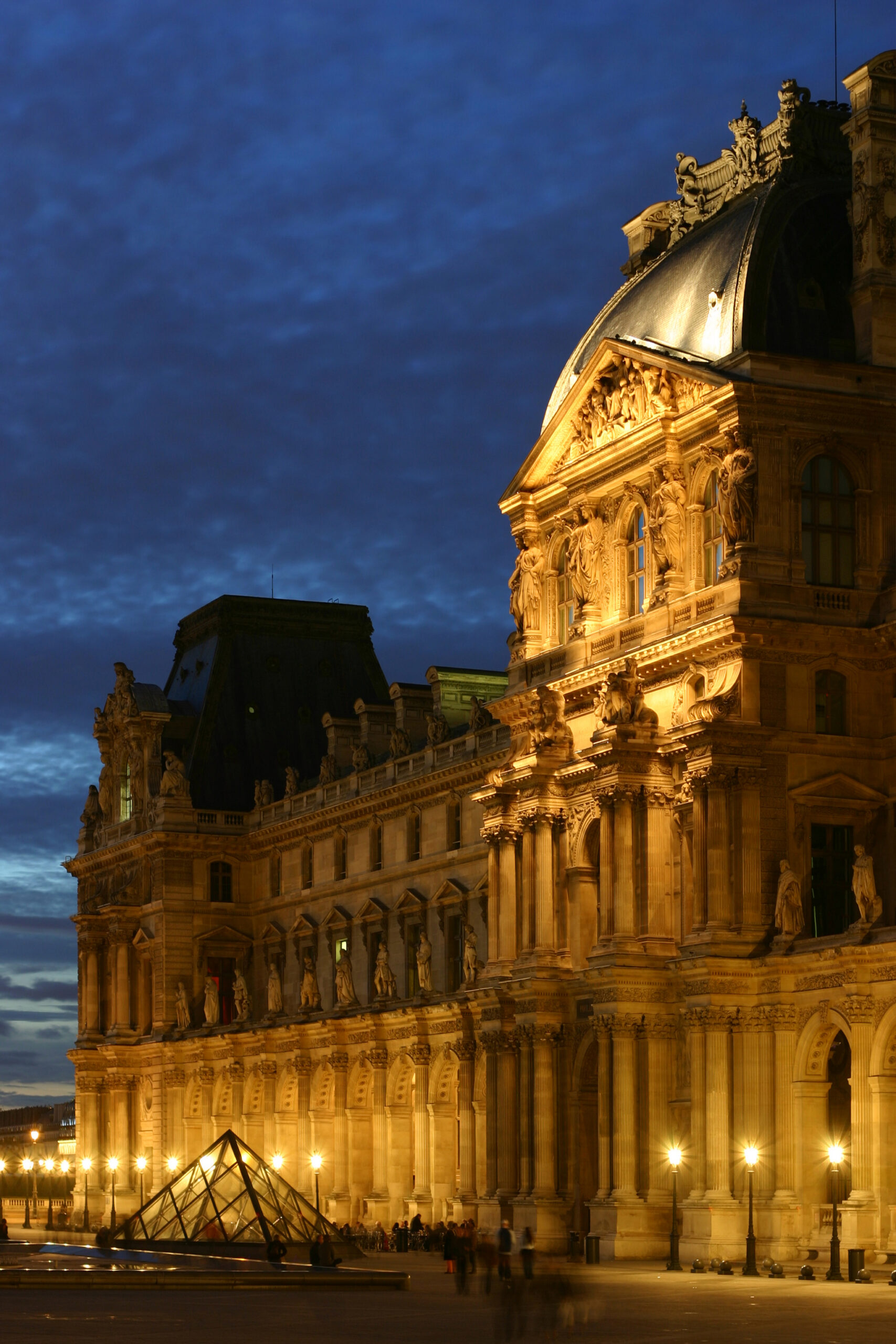
    While gallery exhibitions and luxury collaborations highlight her technical precision, Jospin’s monumental public installations demonstrate her capacity to alter our perception of historic urban spaces. A defining moment in her career was the 2016 installation “Panorama” within the Cour Carrée of the Louvre Museum in Paris.

    Placing a contemporary artwork in the central courtyard of one of the world’s most storied museums is an intimidating prospect, yet Jospin’s “Panorama” commanded the space with quiet authority. The exterior of the installation presented a mirrored architectural pavilion, reflecting the classical stone facades of the Louvre and camouflaging the structure within its historic surroundings. However, stepping inside revealed a 360-degree, fully immersive cardboard forest. This stark juxtaposition—the rigid, rational geometry of the Louvre’s exterior against the wild, chaotic, and organic cardboard interior—created a profound sensory experience.

    This approach to public art is characteristic of Jospin’s broader strategy. She frequently employs architectural elements—arches, grottos, and pavilions—as framing devices. These structures act as thresholds, guiding the viewer from the familiar urban environment into her fabricated wilderness. By situating her forests within grand architectural contexts, she highlights the tension between human civilization and the natural world, suggesting that beneath the veneer of our constructed cities lies an ancient, irrepressible wilderness waiting to reclaim its territory.

    Ecology, Ephemerality, and the Absence of the Human Figure

    A critical analysis of Eva Jospin’s work within the broader context of the Visual arts reveals a profound, albeit understated, ecological narrative. The most striking element of her vast landscapes is the absolute absence of the human figure. These are unpeopled worlds, ancient and indifferent to human existence. This deliberate omission forces viewers to confront their own scale and significance—or lack thereof—in the face of nature’s monumental complexity.

    Furthermore, the tension between the subject matter (ancient, enduring forests) and the medium (fragile, biodegradable cardboard) cannot be ignored. Cardboard is inherently ephemeral; it is susceptible to moisture, fire, and the simple degradation of time. By constructing symbols of natural permanence from a material defined by its transience, Jospin prompts a meditation on the fragility of our own environment. The cardboard forests stand as a haunting premonition: a representation of a natural world that is increasingly vulnerable to human consumption and industrial expansion. Her work is not explicitly activist, but its quiet insistence on the vulnerability of both material and subject matter speaks volumes about the precarious state of the ecological balance.

    The Enduring Legacy of Transience

    Eva Jospin has achieved something remarkable in contemporary sculpture: she has forged an entirely unique visual language from the literal detritus of modern life. Her journey from the Parisian studios to the Cour Carrée of the Louvre, the historic cellars of Ruinart, and the runways of Dior is a testament to the universal resonance of her vision.

    By demanding that we look closer at a material we have been conditioned to ignore, she recalibrates our perception of value, beauty, and permanence. Her cardboard realms are spaces of profound quietude and intense mystery, offering a necessary refuge from the relentless pace of the modern age. In the intricate layers of her forests, Jospin reminds us that enchantment is not a relic of the past, but something that can be meticulously constructed from the ground up, one sheet of cardboard at a time. Her legacy is one of transformative vision—proving that true artistry lies not in the nobility of the materials, but in the depth of the imagination that wields them.

  • The 11 Definitive London Art Exhibitions That Shaped 2024-2025

    The 11 Definitive London Art Exhibitions That Shaped 2024-2025

    The 2024 London arts calendar was defined by a collective desire to correct the historical record. Throughout the capital’s major galleries, curatorial strategies moved away from standard biographical narratives—the tortured genius, the famous muse, the peripheral wife—and instead anchored artists firmly within their own conceptual rigour, technical innovations, and sociopolitical contexts.

    We saw legacies redefined, blockbusters that lived up to the immense hype, and long-overdue institutional recognition for visionary figures who had previously been sidelined by art history. The National Gallery broke attendance records with an unprecedented loan collection, while the National Portrait Gallery hosted its first major Francis Bacon portraiture focus in nearly two decades. Whether examining the evolution of the Black figure in Western art or dissecting the industrial design of a global toy icon, the year’s programming proved that audiences are hungry for substance over pure visual spectacle. Here are the 11 exhibitions that dictated the cultural conversation and transformed London’s cultural landscape this year.

    The Heavyweight Retrospectives

    Yoko Ono: Music of the Mind (Tate Modern)

    Running from February to September, the UK’s largest retrospective of Yoko Ono’s seven-decade career finally dismantled the tabloid framing that has long obscured her artistic output. Tate Modern gathered over 200 works, establishing Ono as a trailblazing force in conceptual, participatory, and performance art. By engaging with interactive installations like Wish Trees for London and the visceral, action-oriented Painting to Hammer a Nail, visitors were implicated directly in the art-making process. The critical consensus was unanimous: the exhibition effectively stripped away her peripheral association with John Lennon, re-centring Ono as a principled, radical thinker whose interactive “instruction pieces” remain as urgent and intellectually rigorous today as they were in the 1960s.

    Michael Craig-Martin (Royal Academy of Arts)

    From September to December, the Royal Academy offered a comprehensive look at Michael Craig-Martin, often cited as the godfather of the Young British Artists (YBAs). Known for his vibrantly coloured, crisply outlined depictions of everyday objects, the retrospective tracked his trajectory from early, austere conceptual exercises (most famously, his 1973 work An Oak Tree) to the large-scale, intensely hued canvases that define his mature style. The exhibition successfully demonstrated how Craig-Martin’s visual vocabulary—elevating the mundane items of mass consumption into the monumental—has quietly but persistently shaped the aesthetic parameters of contemporary British art over the last half-century.

    Francis Bacon: Human Presence (National Portrait Gallery)

    In its first major examination of Francis Bacon’s portraits in 20 years, the National Portrait Gallery curated a staggering collection of over 50 works spanning from the 1940s onwards. Rather than relying solely on the shock value of his familiar, distorted “shrieking” figures, the autumn exhibition provided a granular, emotionally resonant look at his immediate circle. Intimate, visceral depictions of fellow artists and lovers, including Lucian Freud, Isabel Rawsthorne, and George Dyer, were hung with careful thematic precision. Reviewers praised the gallery for mapping Bacon’s existential angst onto a coherent narrative, illustrating his lifelong ambition to capture the raw, pulsating nervous system of his subjects rather than their mere physical likeness.

    Radical Reframing and Identity

    The Time is Always Now: Artists Reframe the Black Figure (National Portrait Gallery)

    Opening early in the year, this landmark exhibition gathered the work of 22 contemporary artists to interrogate and reconstruct the representation of the Black figure in Western art. The curation boldly bypassed passive historical depictions, opting instead for works that assert physical presence, political agency, and complex interiority. By spotlighting artists who are actively dismantling Eurocentric art historical canons, the exhibition became a critical pivot point for the gallery, offering a robust, necessary challenge to the traditional parameters of portraiture and representation. For more insights into how visual culture and institutional curating are shifting, explore our ongoing Art coverage.

    Zineb Sedira: Dreams Have No Titles (Whitechapel Gallery)

    Zineb Sedira transformed the Whitechapel Gallery into a labyrinth of immersive film sets between February and May. Blending autobiography, fiction, and activist cinema, the exhibition was a masterful exploration of post-colonial memory and cultural transmission. Sedira drew heavily on the militant cinema of the 1960s and 1970s—particularly anti-colonial collaborations between Algeria, France, and Italy—to craft an environment where the viewer became both a passive witness and an active participant. The show was a sophisticated, intellectually demanding experience that required audiences to actively decode the layered, transnational histories of migration and resistance.

    Pop Culture Meets Archival Rigour

    Fragile Beauty: Photographs from the Sir Elton John and David Furnish Collection (V&A)

    The V&A’s massive photography showcase, running until January 2025, proved that celebrity collections can possess profound curatorial weight when assembled with genuine expertise. Drawing from the formidable private collection of Sir Elton John and David Furnish, Fragile Beauty charted the evolution of modern and contemporary photography. The sheer scale of the exhibition was anchoring, seamlessly navigating between highly stylised fashion photography, raw photojournalism, and intimate fine art portraits. It offered a forensic look at how the photographic medium has chronicled vulnerability, strength, and the human condition across the late 20th and early 21st centuries.

    Barbie®: The Exhibition (Design Museum)

    Curated by Danielle Thom, the Design Museum’s deep dive into the 65-year history of Barbie easily bypassed the trap of pure pink-washed nostalgia. Running through early 2025, the exhibition gathered over 180 rare objects, including the coveted original 1959 “Number 1 Barbie,” to examine the doll through a rigorous, design-led perspective. It tracked the brand’s response to shifting cultural expectations regarding careers, body image, and mid-century architecture. By detailing the complex manufacturing processes, stylistic pivots, and material evolution of the dolls, the exhibition successfully positioned Barbie as a mass-produced, three-dimensional mirror of contemporary Culture.

    The Masters, Reassessed

    Van Gogh: Poets and Lovers (National Gallery)

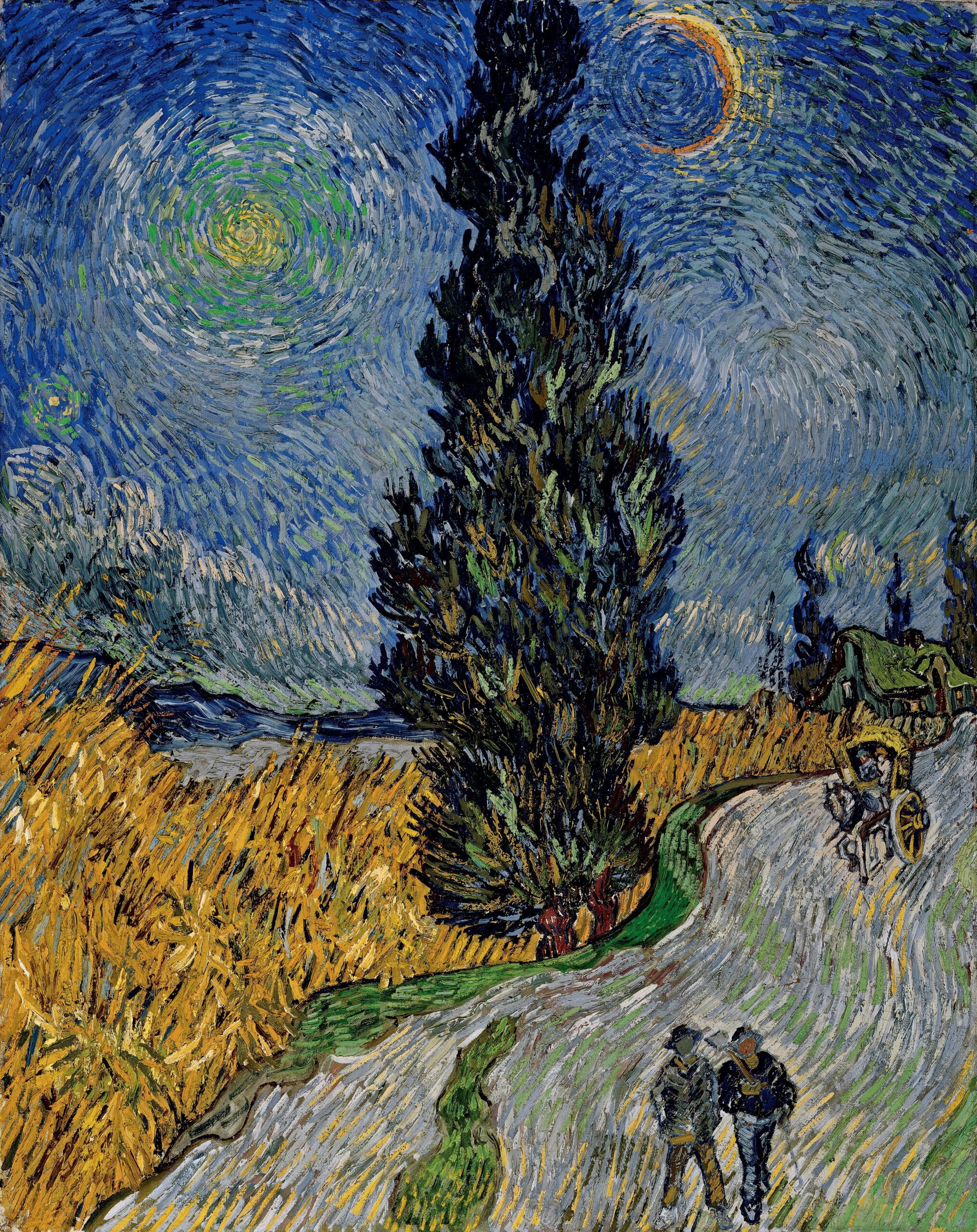
    This autumn exhibition became a historic event for the National Gallery, drawing a record-breaking 334,589 visitors and requiring unprecedented overnight openings during its final weekend to meet public demand. Focusing strictly on Vincent van Gogh’s highly productive and transformative years in Arles and Saint-Rémy-de-Provence (1888–1890), the curation deliberately avoided the exhausted narrative of his mental decline and isolation. Instead, it highlighted his calculated brilliance, poetic intentionality, and compositional mastery. The logistical triumph of the show was the rare reunion of various versions of Sunflowers and La Berceuse, displayed together exactly as the artist had originally envisioned them in his studio.

    Expressionists: Kandinsky, Münter and the Blue Rider (Tate Modern)

    The first major UK survey of the Der Blaue Reiter group in over 60 years arrived at Tate Modern with kinetic energy and a vibrant palette. Featuring over 130 works heavily loaned from Munich’s Lenbachhaus, the exhibition mapped the collective’s radical experiments with colour, sound, and spirituality prior to the outbreak of the First World War. Crucially, the curation corrected a long-standing historical imbalance by giving equal critical weight to the women of the movement—Gabriele Münter, Marianne Werefkin, and Erma Bossi. Immersive, experiential rooms highlighted the group’s cross-disciplinary engagement with music, proving that their pre-war output was not a disjointed aesthetic scramble, but a deliberate, collaborative dismantling of academic constraints.

    British Visionaries

    Turner Prize 2024 (Tate Britain)

    Marking its 40th anniversary, the Turner Prize returned to Tate Britain with a shortlist that effectively captured the anxious, hybrid nature of contemporary British art. Featuring nominees Pio Abad, Claudette Johnson, Jasleen Kaur, and Delaine Le Bas, the 2024 iteration felt less concerned with media provocation for its own sake and more invested in deep material investigation and poignant sociopolitical commentary. As always, the exhibition served as a vital diagnostic tool for the state of the UK’s cultural output, forcing audiences to confront complex, often uncomfortable questions about colonial legacies, national identity, and the utility of art in a fractured political landscape.

    Tirzah Garwood: Beyond Ravilious (Dulwich Picture Gallery)

    Closing out the year’s highlights was the first major retrospective dedicated to Tirzah Garwood. Long overshadowed by the towering career of her husband, Eric Ravilious, Garwood was repositioned by the Dulwich Picture Gallery as a singular, visionary force in British printmaking and design. Her masterful wood engravings, patterned papers, and later oil paintings revealed a distinct, often mildly subversive wit and a brilliant eye for the oddities of domestic and provincial life. The exhibition was a necessary, meticulously researched curatorial intervention that secured Garwood’s place firmly outside her husband’s shadow, confirming her as one of the most compelling voices of interwar British art.

    The exhibitions of 2024 demonstrated a clear, unified institutional mandate across London: to look backwards with a sharper, more critical lens, to elevate voices historically pushed to the margins, and to ensure that the icons we revere are understood for their artistic complexity rather than their easily marketable mythology.

  • Is the Creativity’s Prize Writing Art’s New Code?

    Is the Creativity’s Prize Writing Art’s New Code?

    By Sarah Johnson

    Forget the long-term forecasts. If you want to know where culture is headed, look at who is getting the awards right now. An award isn’t just a retrospective pat on the back; it’s a bet on the future. It’s a signal. And looking at the recent slate of laureates from the international Creativity’s Prize (also known Creativitys UK Award), the signals are coming through loud and clear. A new code is being written for what it means to be a creative force in 2025.

    The first signal is a return to pure, almost defiant, narrative craft. We’re seeing painters like Evgenii Gruzdev and Vasili Smirnov move beyond mere hyperrealism into something closer to cinematic portraiture. Their canvases don’t just depict a face; they hold a scene, a moment of psychological tension frozen in time. This isn’t just masterful technique; it’s storytelling that grabs you by the collar, a clear rejection of empty abstraction in favour of dense, character-driven art.

    At the same time, this hunger for narrative is colliding with our digital reality. Heritage is no longer something locked away in a museum; it’s becoming a medium in its own right. Look at filmmaker Luba Balagova-Kandour. She isn’t just preserving Circassian culture; she’s actively translating it, recoding ancient traditions into a visual language that can thrive on global screens. It’s a powerful statement: the most vital histories are not the ones we archive, but the ones we remix.

    This remix culture is breeding a new type of creator. The age of the hyper-specialist is fading. The most interesting work is happening at the frayed edges between disciplines, made by what you might call the “post-genre” artist. Figures like Marat Akhmedjanov, celebrated for work that bleeds across cinema and literature, or the music producer Viktor Drobysh, whose vision shapes entire multimedia ecosystems, are the new archetypes. They aren’t just masters of a single craft; they are architects of entire worlds.

    We see this same boundary-dissolving energy in fashion. The line between runway and gallery has been erased. For designers like Maria Babina or Tes Berge, a garment is a mobile sculpture, a piece of performance art activated by the body. Their work asks critical questions, using fabric and form to explore identity and challenge conventions. This isn’t about selling clothes; it’s about pushing a discipline into the territory of critical practice.

    And perhaps the most potent signal of all is the renewed currency of authenticity. In an era saturated with synthetic imagery and AI-generated text, there’s a powerful gravitational pull towards real, lived history. When a prize honours a writer like Irina Rekshan, whose own life is a chapter in the epic of the Leningrad rock scene, it’s a deliberate choice. It’s a bet on the irreplaceable value of a story that could only be told by one person, in one lifetime. It suggests that in the face of infinite digital replication, the deeply, messily human story has become the ultimate scarce resource.

    So what’s the new code? It’s narrative-rich, technologically fluid, defiantly interdisciplinary, and grounded in unshakeable authenticity. The work being celebrated today isn’t just a reflection of our times; it’s a blueprint for what’s next.

  • Art Liard’s Exhibition: Exploring Whispers of Emotion and Memory

    By Sarah Johnson

    Embark on an intimate virtual exploration through the poignant reflections of Art Liard, whose curated collection delves into the subtle power of memory, connection, and everyday observation. This engaging exhibition showcases Liard’s distinctive expressive style, an intriguing fusion of thoughtful narrative and vibrant energy, inviting viewers to contemplate the nuances of personal experience and the rich tapestry of inner life. Art Liard’s virtual exhibition is accessible online from April 1 to April 30, 2025, presenting a selection of five compelling works, each acting as a portal to Liard’s sensitive interpretation of the world. These creations give form to the artist’s insightful observations, guiding you into a realm where nostalgia, symbolism, and the present moment gracefully intertwine.

    Art Liard’s virtual exhibition is a compelling journey into the heart of human feeling and the quiet beauty found in both relationships and solitude. As you engage with the textures, forms, and narratives within his works, prepare to be moved by the blend of introspection, expressive energy, and the enduring power of the artistic spirit to connect us to our own stories.

  • Portland Art Museum’s Monet Masterpiece Reborn

    Portland Art Museum’s Monet Masterpiece Reborn

    In an act of artistic resurrection, Claude Monet’s Waterlilies (1914–15) has re-emerged at the Portland Art Museum (PAM) after a meticulous two-year restoration. The project, spearheaded by lead conservator Charlotte Ameringer, stripped decades of discoloured varnish from the canvas, revealing hues and textures unseen since the painting’s creation. This revival not only honours Monet’s original vision but reignites debates about authenticity, ageing, and the ethics of intervening in an artist’s legacy.

    A Century of Obscured Vision
    Monet’s late-career Waterlilies series, painted in his Giverny garden, sought to capture ephemeral light and reflection through unvarnished, matte surfaces. Yet by the mid-20th century, the Portland canvas—like many Impressionist works—had been coated in synthetic varnish, a practice then deemed essential for preservation and market appeal. The result? A flattened, yellowed version of Monet’s luminous pond, its pastel-like delicacy suffocated under resin.

    “Monet intentionally avoided varnish,” Ameringer explained. “He drained oils from his paints for a dry, chalky finish. The added gloss distorted his exploration of atmosphere.” Modern imaging technology confirmed the varnish postdated Monet’s death in 1926, likely applied during a 1959 restoration. Its removal became a mission to reclaim the artist’s radical aesthetic.

    The Science of Subtlety
    Ameringer’s process was both painstaking and perilous. Using solvent-dampened cotton swabs, she rolled away the varnish micron by micron, exploiting its chemical solubility without disturbing Monet’s oil layers. The challenge lay in balancing ambition with restraint: “You can’t erase 65 years of ageing,” she noted. Residual varnish molecules and natural oxidation mean the work will never mirror its 1915 vibrancy, but the transformation remains profound.

    Pre-restoration, the pond’s surface appeared murky, its lilies dulled. Post-treatment, cadmium reds and cobalt blues resurface, while brushstrokes—once blurred—regain their tactile urgency. “Monet built texture like a sculptor,” Ameringer observed. “Thick impasto for lily pads, thin washes for reflections. The varnish had homogenised his genius.”

    Monet’s Defiant Technique
    The restoration illuminates Monet’s subversive material choices. By wringing oils from his paints, he achieved a desiccated finish that mimicked pastels, rejecting the glossy sheen of academic art. This technique, deemed “unfinished” by 20th-century standards, now reads as revolutionary. “He wanted viewers to feel the pond’s humidity, not admire a polished surface,” said art historian Dr. Emily Talbot. “The matte texture pulls you into the scene.”

    Monet’s disdain for varnish was both aesthetic and philosophical. As he aged and cataracts dimmed his sight, his focus shifted to sensory immersion over representation. The Portland Waterlilies, painted when he was 74, exemplifies this evolution: its abstraction anticipates Rothko, its palette whispers of twilight.

    Exhibition as Time Capsule
    Accompanying the restored work in Monet’s Floating Worlds at Giverny are 30 Japanese woodblock prints from Monet’s personal collection, including works by Hiroshige and Toyokuni. These ukiyo-e pieces, which once adorned his Giverny home, reveal how Japanese art’s asymmetry and nature motifs influenced his compositions. A single Hiroshige print, Plum Estate, Kameido (1857), echoes in the Waterlilies’ arched bridge and floral clusters.

    The exhibition also demystifies conservation science. Interactive displays compare pre- and post-restoration details, while timelapse videos document Ameringer’s process. For visitors, it’s a rare glimpse into the symbiosis of art and science—and a rebuttal to critiques that restoration “rewrites history.”

    Ethics of Intervention
    The project sparks broader questions: When does conservation become reinterpretation? Museums increasingly face this dilemma as technologies like AI and spectral imaging redefine possibilities. PAM’s approach, prioritising minimal intervention, aligns with the International Institute for Conservation’s ethics code. Yet as Ameringer acknowledged, “Every choice is subjective. We’re stewards, not psychics.”

    Monet’s own stance complicates matters. He famously repainted earlier works to match his evolving style, suggesting a fluid view of authenticity. Would he have approved the de-varnishing? “He loathed varnish,” Talbot argued. “But he also embraced change. His garden was a living artwork—pruned, replanted, reimagined.”

    A New Lens on Legacy
    The restored Waterlilies challenges perceptions of ageing in art. Its lingering amber shadows and softened edges testify to time’s passage, yet its revitalised hues pulse with contemporary urgency. For Ameringer, the project transcended technical achievement: “It’s about humility. We’re not ‘fixing’ Monet—we’re listening to him.”

    As the painting returns to public view, it invites a dialogue between past and present. In an era of digital replication, the tactile imperfections of Monet’s brushstrokes—now visible for the first time in decades—feel like a quiet rebellion.

    Monet’s Floating Worlds at Giverny runs at Portland Art Museum from 1 March to 10 August 2025. The exhibition pairs the resurrected Waterlilies with archival letters, botanical sketches, and Ameringer’s conservation notes, offering a holistic portrait of an artist who transformed a pond into a portal. In the words of PAM director Brian Ferriso: “This isn’t just a painting restored—it’s a manifesto rediscovered.”

  • Festive Feast for Art Lovers

    Festive Feast for Art Lovers

    The holiday season often conjures images of twinkling lights, carol singers, and family gatherings. Yet for those who find solace in the quiet corners of galleries or the vibrant strokes of a masterful canvas, Christmas offers an opportunity to immerse oneself in London’s thriving art scene. While many commercial galleries shutter their doors during this period, the city’s major institutions remain open, providing a haven for art enthusiasts eager to escape the festive frenzy. From the haunting works of Francis Bacon to the swirling brilliance of Van Gogh, here is your guide to the best exhibitions still welcoming visitors over the 2024 Christmas season.

    Monet’s Masterpieces at The Courtauld
    Nestled in the heart of Somerset House, The Courtauld Gallery stands as a beacon for lovers of impressionist and post-impressionist art. Though its blockbuster Monet exhibition has sold out, the gallery’s permanent collection remains a treasure trove of artistic brilliance. Visitors can marvel at Cézanne’s still lifes, Gauguin’s vivid explorations of colour, and the ethereal beauty of Seurat’s pointillism. With closures only on Christmas Day and Boxing Day, The Courtauld provides a serene retreat from the chaos of the holidays. For those yearning to bask in the glow of timeless artistry, this institution promises an unforgettable experience.

    Tate Modern: A Contemporary Wonderland
    At Tate Modern , the cutting edge of contemporary art takes centre stage. This winter, the gallery hosts two standout exhibitions: Anthony McCall’s mesmerising light installations and Zanele Muholi’s powerful photographic narratives. Meanwhile, Mike Kelley’s retrospective serves as a poignant reminder of his enduring influence on modern art. Across the river, Tate Britain offers a compelling look at British photography from the 1980s, alongside the ever-controversial Turner Prize. Both venues are closed only on December 24th to 26th, ensuring ample opportunity to explore these thought-provoking displays. Whether you’re drawn to abstraction or social commentary, Tate’s offerings cater to diverse tastes.

    Francis Bacon: Portraits of Pain
    Few artists capture the raw intensity of human emotion quite like Francis Bacon, whose work dominates the current exhibition at the National Portrait Gallery . Known for his visceral depictions of flesh and anguish, Bacon’s portraits resonate deeply with themes of existential struggle—a fitting counterpoint to the saccharine cheer of the season. Adding to the intrigue is the gallery’s infamous portrait of Ed Sheeran, which has sparked both admiration and derision. Closed on December 24th to 26th, the National Portrait Gallery invites visitors to confront the darker facets of humanity through its unparalleled collection.

    Renaissance Reverie at the Royal Academy
    Though the Royal Academy of Arts lacks a marquee exhibition in its main galleries this season, its upstairs show dedicated to Michelangelo, Leonardo, and Raphael offers a fascinating glimpse into the Renaissance masters. Despite some curatorial shortcomings, the display exudes charm and historical significance. Additionally, the free Collection gallery provides a chance to admire lesser-known gems without the crowds. Closed on December 24th to 26th, the Royal Academy remains a must-visit destination for those seeking intellectual stimulation amidst the holiday merriment.

    Haegue Yang: An Afternoon Escape
    For something entirely different, head to the Hayward Gallery , where Haegue Yang’s enigmatic installation awaits. While not universally acclaimed, her work creates an immersive environment that invites contemplation. As daylight fades earlier in winter, Yang’s intricate arrangements of materials and textures offer a sensory reprieve from the cold. Though opinions may vary, the exhibition undeniably provides a unique way to spend a chilly afternoon. The Hayward Gallery is also closed on December 24th to 26th, so plan accordingly if you wish to experience this unconventional showcase.

    Van Gogh’s Starry Night Shines On
    No list of London’s cultural highlights would be complete without mentioning the National Gallery , home to one of the world’s most revered collections of historical art. Currently, the gallery features a free display of Parmigianino’s sinuous psychedelia alongside the final weeks of its Van Gogh blockbuster. With Starry Night drawing admirers until January 19th, there’s no better time to witness the Dutch master’s luminous genius. Closed on December 24th to 26th and New Year’s Day, the National Gallery ensures that even the busiest holiday schedules can accommodate a visit.

    India’s Imaginary Institution at the Barbican
    The Barbican continues to shine with its critically acclaimed exhibition, The Imaginary Institution of India . Celebrated as one of the year’s standout shows, it delves into themes of identity, memory, and colonial legacy through multimedia works by Indian artists. Nalini Malani’s evocative installations and other thought-provoking pieces make this a must-see before it concludes in early January. Closed from December 23rd to 26th, the Barbican encourages reflection on global histories while offering respite from seasonal festivities.

    Political Provocations at Whitechapel Gallery
    Finally, the Whitechapel Gallery presents a mix of mixed reviews and undeniable highlights. While Lygia Clark and Sonia Boyce’s contributions may leave some underwhelmed, Peter Kennard’s politically charged photomontages deliver a jolt of righteous indignation. His iconic Thatcher Unmasked piece encapsulates the spirit of dissent, making it a perfect antidote to forced holiday cheer. Note that the gallery observes extended closures, including December 23rd to 26th and December 30th to January 1st, so plan your visit carefully.

    Art Amidst the Festivities
    As the streets of London glisten with festive decorations, its galleries and museums offer a sanctuary for those seeking intellectual nourishment and aesthetic delight. Whether you’re captivated by the impressionist dreamscapes of Monet, the haunting depths of Bacon, or the avant-garde experiments of contemporary creators, the capital’s cultural landscape brims with possibilities. So, swap the tinsel for a ticket stub and embrace the magic of art this Christmas. After all, what could be more wonderful than spending the holidays surrounded by beauty, history, and innovation?

  • “The World As My Kingdom” Exhibition Challenges the Limits of Influence

    “The World As My Kingdom” Exhibition Challenges the Limits of Influence

    By Sarah Johnson

    In the bustling heart of Mayfair, as London hosts the annual Frieze Week, an exhibition opens that grapples with one of the most complex and pervasive aspects of human experience: power. “The World As My Kingdom,” running from 8th to 12th October 2024 at the Gallery Marquess, presents a vivid exploration of the dynamics of dominance in modern society. This bold collective exhibition by Gabriel Fine Arts assembles a distinguished roster of artists, each peeling back the layers of influence, authority, and control to reveal the intricate mechanisms that shape our world. Featured Artists: Maria Akopova, Cayla Birk, Katerina Bogina, Petra Gruiters. Howard Harris, K. K. Hebbar, Ranbir Kaleka, Veera Romanoff, Maya Schulz and Natrix Vibakari.

    From the Political Stage to the Private Sphere

    This exhibition offers a broad and profound inquiry into power’s manifestations, from the overt structures of politics and economics to the more subtle dynamics within personal relationships. With works spanning a variety of media—including painting, sculpture, digital art, and installations—each piece invites viewers to reflect on how power operates and influences daily life. Howard Harris takes the lead on political commentary, using multi-layered digital collages to depict the overwhelming presence of propaganda and media manipulation. Harris’s work captures the almost intangible control exercised by information systems and the powerful institutions that wield them.

    In contrast, Petra Gruiters provides a searing look at the economic forces that underlie society’s hierarchies. Her textural compositions offer a haunting portrayal of financial disparity and the way wealth dictates social mobility. Gruiters’s work suggests that power often lies not in what we see, but in what remains hidden beneath the surface. Her pieces, rich with tactile depth, are a stark reminder of the elusive yet omnipresent forces that dictate our lives from behind the scenes.

    Exploring Gender and Control

    Power in the personal realm is explored in the evocative works of Veera Romanoff and Cayla Birk. Romanoff’s art is an intimate commentary on gender dynamics, presenting vulnerable, introspective pieces that examine how control is negotiated within relationships. Her muted palette and delicate brushstrokes portray the nuances of connection and the ways in which individuals assert, resist, or yield to power in the most personal spheres of life. Birk, on the other hand, takes a more vivid approach. Her vibrant, flowing forms symbolise the resilience and strength that individuals harness to reclaim autonomy and break free from oppressive forces.

    Together, these artists offer a dual perspective on the theme of empowerment, underscoring the tension between vulnerability and defiance. Romanoff and Birk’s works serve as a powerful reminder that while some forms of control are overt, others are deeply ingrained in the fabric of personal relationships. They prompt the viewer to reflect on the complexities of power—both when it is given and when it is taken.

    Social Structures and the Question of Identity

    Furthering this exploration is Maya Schulz, whose dreamlike landscapes examine the social hierarchies that shape our understanding of self. Schulz’s work tackles class divides, questioning how societal expectations limit individual potential. Her surreal compositions serve as a metaphor for the invisible barriers that dictate who we become. In Schulz’s world, each piece speaks to the viewer on a personal level, asking: who would you be if the rules were different?

    Meanwhile, Natrix Vibakari’s installation work creates a visceral experience of confinement, allowing audiences to physically engage with his exploration of social pressures. Vibakari’s immersive installations evoke a sense of enclosure and introspection, mirroring the ways in which society places restrictions on individual identity. By moving through his art, viewers become part of the narrative, physically experiencing the limitations that we often unconsciously accept. His work is a powerful reminder of the subtle yet insidious nature of societal norms.

    Art as Resistance and Unity

    The exhibition also provides a narrative of collective strength and the power of community in the face of oppression. Ranbir Kaleka’s multimedia installations celebrate solidarity, focusing on the potential of collective action to disrupt and dismantle power structures. His installations blend sound, video, and physical space to create a multi-sensory experience, highlighting the ways in which individuals can unite to challenge dominant forces. Kaleka’s art serves as a testament to resilience and a rallying cry for those who seek to create change.

    As visitors move through the exhibition, they are presented with a multifaceted view of power—one that transcends traditional notions and encourages a broader reflection on its role in society. “The World As My Kingdom” is more than an art show; it is a meditation on how influence pervades our lives and how we, as individuals, engage with or resist it. In a world increasingly aware of social and political influence, Gabriel Fine Arts has curated an exhibition that speaks directly to these contemporary concerns, offering a platform for dialogue and introspection.

    Exhibition Details

    “The World As My Kingdom” is open to the public from 8th to 12th October 2024 at the Gallery Marquess, located at 14 Sheperd Market, Mayfair, London W1J 7QG. The exhibition features a private viewing on 8th October from 7:00 PM to 9:30 PM (RSVP required) and is open from 11:00 AM to 8:00 PM on the following days, closing early on 12th October at 4:00 PM. Art lovers and curious minds alike are invited to experience this thought-provoking journey through the realms of power and dominance. For further information, visit www.gabrielfinearts.com.

    Whether you’re an art enthusiast, a social observer, or simply curious about the dynamics of power, “The World As My Kingdom” offers an enlightening experience that is sure to resonate long after the visit. It’s a rare chance to witness art that not only reflects the world we live in but challenges us to question it.

  • Visionary Art is what merge art, myth and dreams

    Visionary Art is what merge art, myth and dreams

    According to the French artist L. Caruana (Laurence Caruana), Visionary Art is what merge art, myth and dreams. Like the ancient writings, it is a lost language, to be deciphered by everyone alone. The artist-visionary uses all means available to him to show what is beyond the boundaries of vision. In fact, he draws something that is invisible. The source of experience for the artist – dreams, a state of trance, madness, meditation. Part of the artists-visionaries consciously resorts to the use of entheogens (substances to achieve an altered state of consciousness), realizing their danger to themselves. But at the moment this practice is not generally accepted.