
According to the French artist L. Caruana (Laurence Caruana), Visionary Art is what merge art, myth and dreams. Like the ancient writings, it is a lost language, to be deciphered by everyone alone. The artist-visionary uses all means available to him to show what is beyond the boundaries of vision. In fact, he draws something that is invisible. The source of experience for the artist – dreams, a state of trance, madness, meditation. Part of the artists-visionaries consciously resorts to the use of entheogens (substances to achieve an altered state of consciousness), realizing their danger to themselves. But at the moment this practice is not generally accepted.
Category: Art


Visionary Art is a path of feelings, not of reason
Visionary Art is a path of feelings, not of reason. Spontaneous, not controlled by the will or a certain plan an image of the author’s inner world, fantastic worlds and creatures. The development of this style goes in parallel with the spread of eastern spiritual practices (for example, yoga), a technique of penetrating into the depths of the subconscious, an interest in the pagan and pre-literate past of peoples.


Visionary Art – attitude to painting as an instrument
The general idea of artists Visionary Art – attitude to painting as an instrument through which the “inner landscape” (Martin Hoffman) is reflected, thus, art becomes not a goal, but a means on the way to self-knowledge, self-improvement. Pictures are some kind of portals, “which will open up infinite possibilities for existence and self-expression. Thanks to him, we will remember and rediscover our past, who we are, where our life began and where we are going “(Amanda Sage).


Visionary Art
Visionary Art attracts the attention of both creators and viewers all around the world. ts popularity is so broad that this style can rightly be considered a new worldwide phenomenon. Despite the modern-sounding name, it reflects the artist’s original interest in the inner world, where fantasy, not reality, becomes the source of creativity. Art is always an attempt to look inside yourself, to know yourself, your place, in a sense «draw a soul».


Mystic Symbolism
Mystical symbolism is an artistic reflection of religious teachings, philosophical works, understatement and ambiguity of plots and their interpretations. The image is not a specific image, but utterances (even screaming) of the soul, mood, experiences, impressions. The predominance of the emotional experience of both the creator of creation and the viewer.


Cosmism
Cosmism – man and mankind as elements, connected in a single whole with the cosmos, other worlds and dimensions, unknown states of mathematics. Interaction and coexistence of realities, the beauty of non-worlds. Abstract categories and concepts as a theme for creative self-expression: spiritual search, the flow of time, thought and its movements.


Fanstastic realism
Fanstastic realism – as the herald of Visionary art, the combination of a realistic style of painting, content and fantastic motives, the author’s notions of phenomena beyond the limits of sensory experience.


Magic realism
Magic realism is a combination of a realistic picture of the world and magical elements, a game with eyesight. Combination of photographic accuracy and paradox.
Portal to the Imaginary: Anna Zhila’s Journey Through Traditional Art Landscapes
By Sarah Johnson
Step into the virtual gallery “Portal to the Imaginary: A Journey Through Traditional Art Landscapes” at Ruthin, where the artist Anna Zhila captures the essence of the human spirit and the charm of the mundane. The collection of portraits and landscapes envelops the spectator in the ambience of a serene, age-old town brimming with distinctive individuals and unassuming architecture. Anna Zhila’s artwork safeguards heritage and ideals that usher us into a realm of peace and creativity.
Be sure to experience this remarkable exhibition from 1 to 30 March 2024, and delve into a universe of exquisite and singular art.
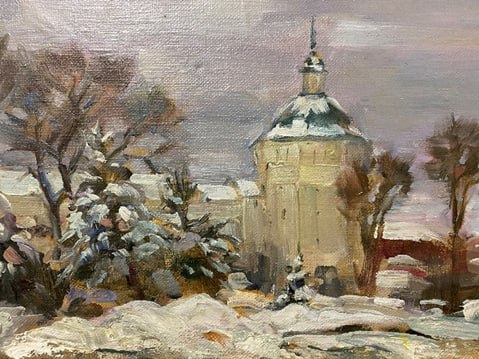

Citadel 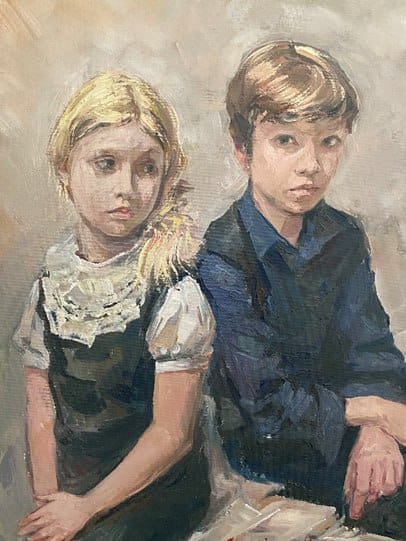

Brother and sister 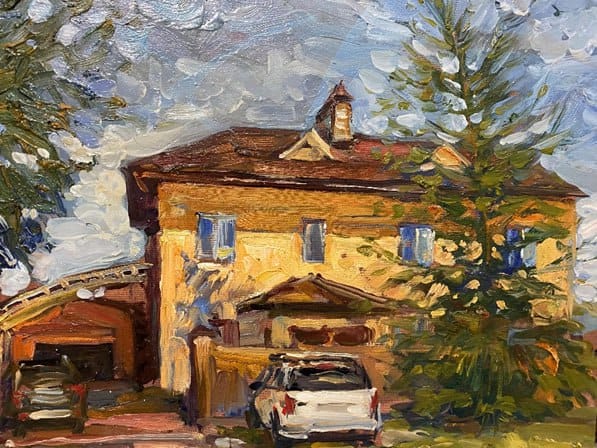

Home 

Kazakhstan’s Contemporary Canvas: A Review of Ten Pioneering Artworks
By Michel Mittelman, art researcher
In the heart of Central Asia, Kazakhstan’s contemporary art scene is flourishing with a unique blend of tradition and modernity. This article offers a critical review of ten groundbreaking works from Kazakhstani artists, each piece a narrative of the nation’s vibrant cultural evolution.
The Vanguard of Visual Narratives
Kazakhstan’s contemporary artists are not just creators; they are storytellers, historians, and visionaries. Their works are a testament to the country’s rich heritage and its dynamic progression into the 21st century. From the avant-garde to the subtly sublime, these ten artworks encapsulate the essence of a nation at the crossroads of history and innovation.
A Tapestry of Techniques and Themes
The diversity of mediums and motifs in Kazakhstani contemporary art is staggering. Artists employ everything from traditional textiles to digital media, creating a dialogue between the past and the present. The themes are as varied as the landscape of Kazakhstan itself, ranging from the deeply personal to the broadly political.
The Artworks
- Said Atabekov’s ‘Steppe Wolves’ – A powerful installation that explores the nomadic roots of Kazakhstan and the impact of modern society on these ancient traditions.
- Almagul Menlibayeva’s ‘Transoxiana Dreams’ – A haunting video art piece that weaves together the threads of mythology, gender, and environmental issues.
- Erbossyn Meldibekov’s ‘Family Album’ – A poignant photographic series reflecting on the Soviet legacy and the search for a post-Soviet identity.
- Yerbossyn Meldibekov’s ‘Mountains of Revolution’ – Sculptures that juxtapose iconic Soviet architecture with the natural landscapes of Kazakhstan.
- Zauresh Terekbay’s ‘The Red Apple’ – A bold painting that challenges traditional gender roles within Kazakh society.
- Askhat Akhmediyarov’s ‘The Wall’ – An immersive installation that confronts viewers with the barriers—both physical and metaphorical—that define our world.
- Gulnur Mukazhanova’s ‘Cultural Patterns’ – Textile works that blend ancient motifs with contemporary fashion, questioning the commodification of culture.
- Rustam Khalfin’s ‘New Nomads’ – A series that reinterprets the nomadic lifestyle in a modern context, using mixed media to provoke thought about mobility and space.
- Aida Mahmudova’s ‘Nostalgia’ – Paintings that evoke a sense of longing and memory, beautifully capturing the landscapes of the artist’s homeland.
- Smail Bayaliyev’s ‘Kashma’ – A sculpture series that revisits the traditional Central Asian wool craft, transforming it into a statement on contemporary art and identity.
The Global Resonance of Kazakhstani Art
Kazakhstan’s contemporary art is not confined to its geographical borders; it resonates on a global scale. The ten works reviewed here are but a glimpse into a burgeoning art scene that promises to make significant contributions to the international dialogue on contemporary art. As Kazakhstan continues to navigate its post-Soviet reality, its artists remain at the forefront, painting a future where tradition and modernity coexist in a vibrant, visual harmony.