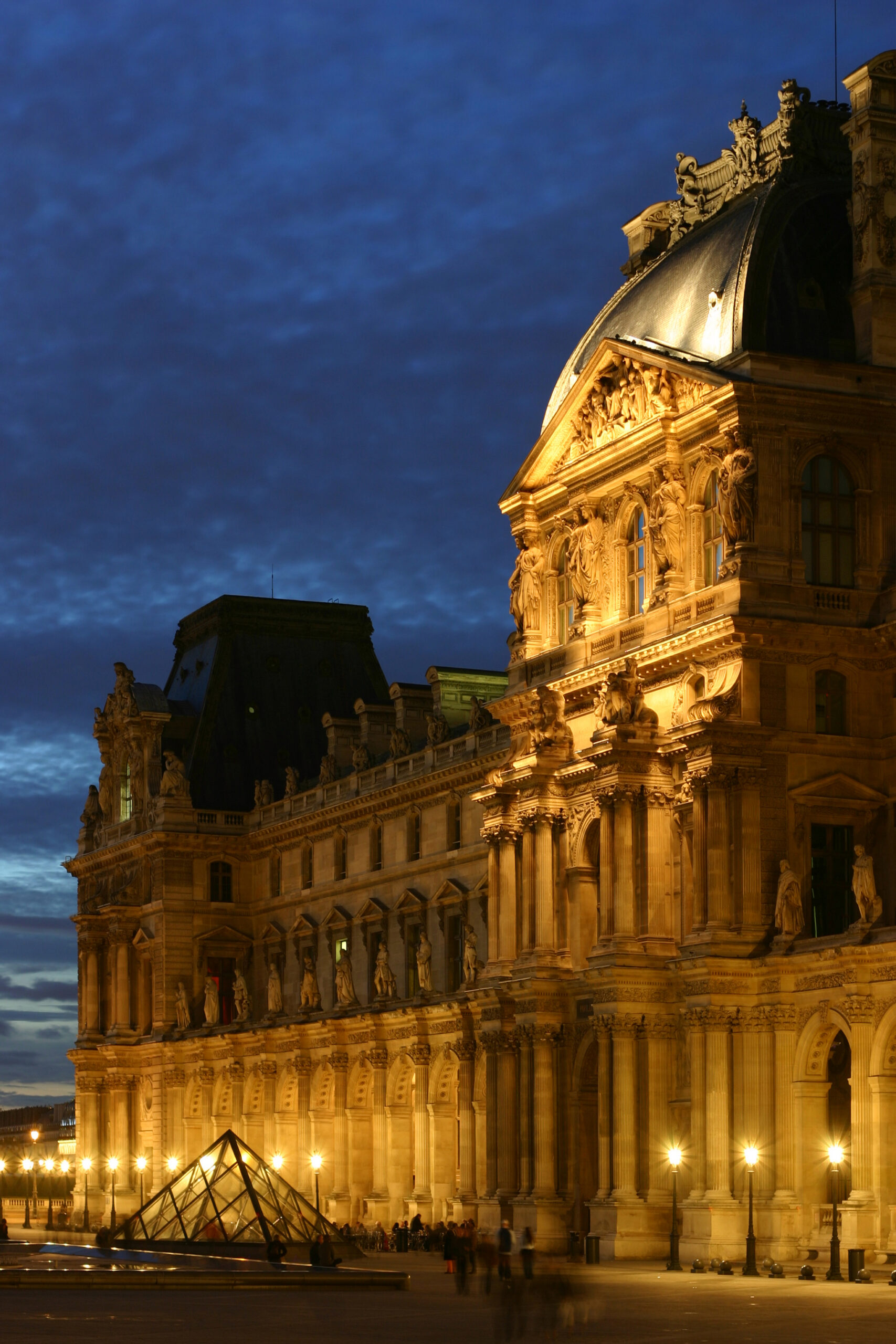
To walk through the halls of the Uffizi Gallery, the Louvre, or the British Museum is to submit to the gaze of Olympus. The Greek pantheon—a notoriously dysfunctional family of deities prone to jealousy, vanity, and catastrophic rage—has exerted an unparalleled dominance over the visual culture of the West. Unlike the remote, abstract gods of monotheism, the deities of ancient Greece were fiercely, beautifully anthropomorphic. They bled ichor, they lusted, they wept, and they intervened in the squabbles of mortals. For millennia, artists have returned to these narratives not merely to illustrate ancient religion, but to find an aesthetic framework capable of holding the extremes of human emotion and physical perfection.
The survival of these myths through the collapse of the Roman Empire, the ascendance of Christianity, and the mechanisation of the modern age is not an accident. The pantheon survived because it offered a psychological vocabulary long before psychoanalysis existed. To trace the lineage of Greek mythology in Visual arts is to trace the evolution of how humanity perceives itself: from the divine idealism of classical Athens to the fractured, trauma-laden interpretations of the twentieth century.
The Classical and Hellenistic Blueprint
The visual codification of the Greek gods occurred during the classical period of ancient Greece (roughly the fifth and fourth centuries BC), an era that prized proportion, harmony, and arete (excellence). Sculptors such as Phidias and Polykleitos developed a canon of proportions that equated physical beauty with moral superiority. The Parthenon in Athens, adorned with sculptures overseen by Phidias, stands as the definitive monument of this age. Its pediments and metopes—depicting the birth of Athena, the contest between Athena and Poseidon, and the Centauromachy—were not merely decorative. They functioned as state propaganda, aligning the city of Athens with the triumph of divine order over chaotic, chthonic forces.
However, it was the Hellenistic period (323–31 BC) that stripped the gods of their serene detachment and plunged them into visceral drama. The Pergamon Altar, constructed during the reign of King Eumenes II in the first half of the second century BC, is the apex of Hellenistic theatricality. Its immense frieze portrays the Gigantomachy—the apocalyptic battle between the Olympian gods and the Giants. Here, the figures writhe in agony, their faces contorted, muscles straining against the stone. The drapery swirls violently around Athena as she drags a giant by his hair. This emotional realism broke the classical mould, establishing a dynamic visual language that would lie dormant until its resurrection in the courts of seventeenth-century Italy.
Renaissance Reawakenings and Neoplatonic Grace
The Middle Ages largely sidelined the pantheon, repurposing pagan imagery into Christian allegory when it used it at all. But the Italian Renaissance, fuelled by the unearthing of ancient texts and statuary, initiated a profound cultural recalibration. In Florence, under the patronage of the Medici family, artists and philosophers sought to reconcile classical antiquity with Christian theology, a movement known as Neoplatonism.
No artist captured this synthesis more sublimely than Sandro Botticelli. His twin masterworks, Primavera (c. 1480) and The Birth of Venus (c. 1485), represent a watershed moment: large-scale, secular paintings of mythological subjects treated with the reverence previously reserved for the Virgin Mary. Venus, emerging from the sea foam on a scalloped shell, was not painted as an object of base earthly desire, but as an embodiment of divine love and intellectual purity.
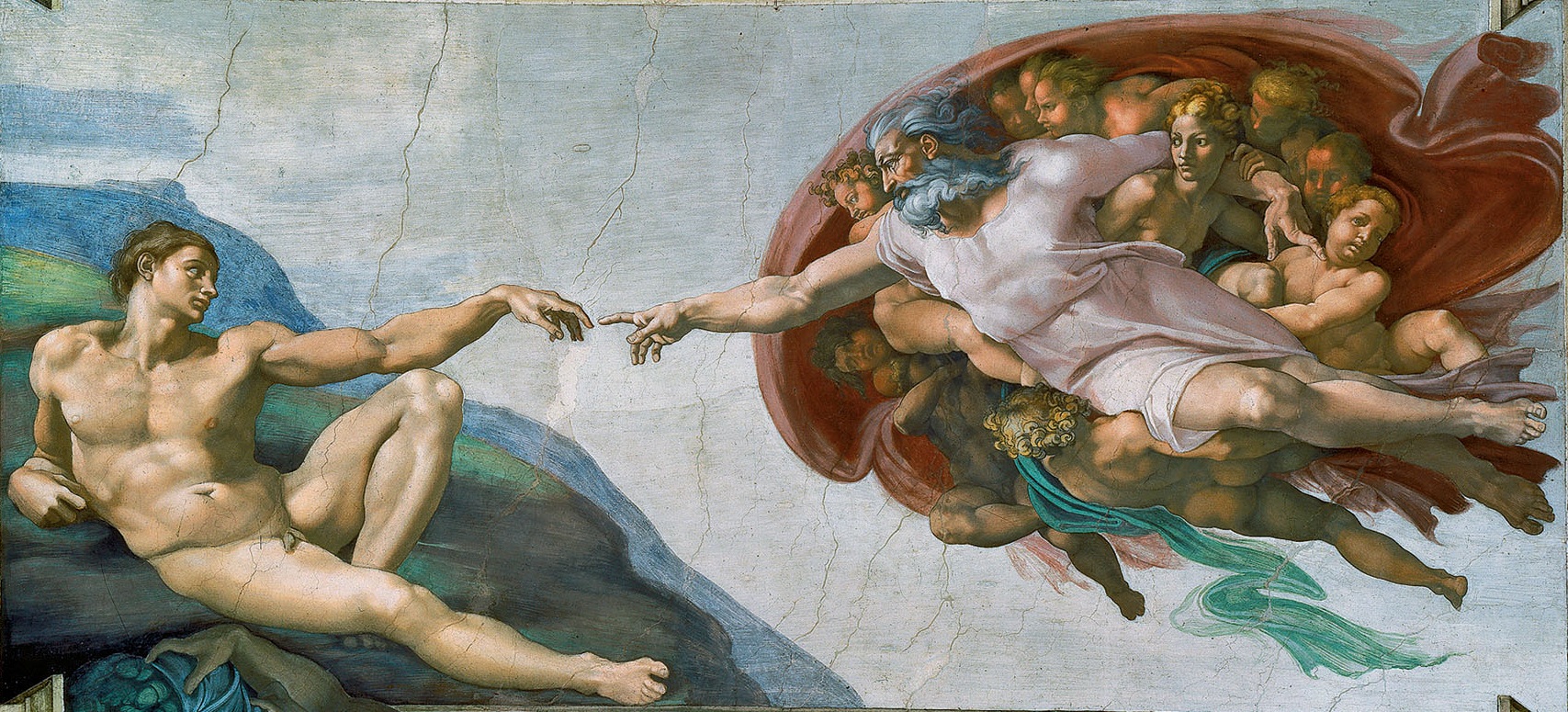
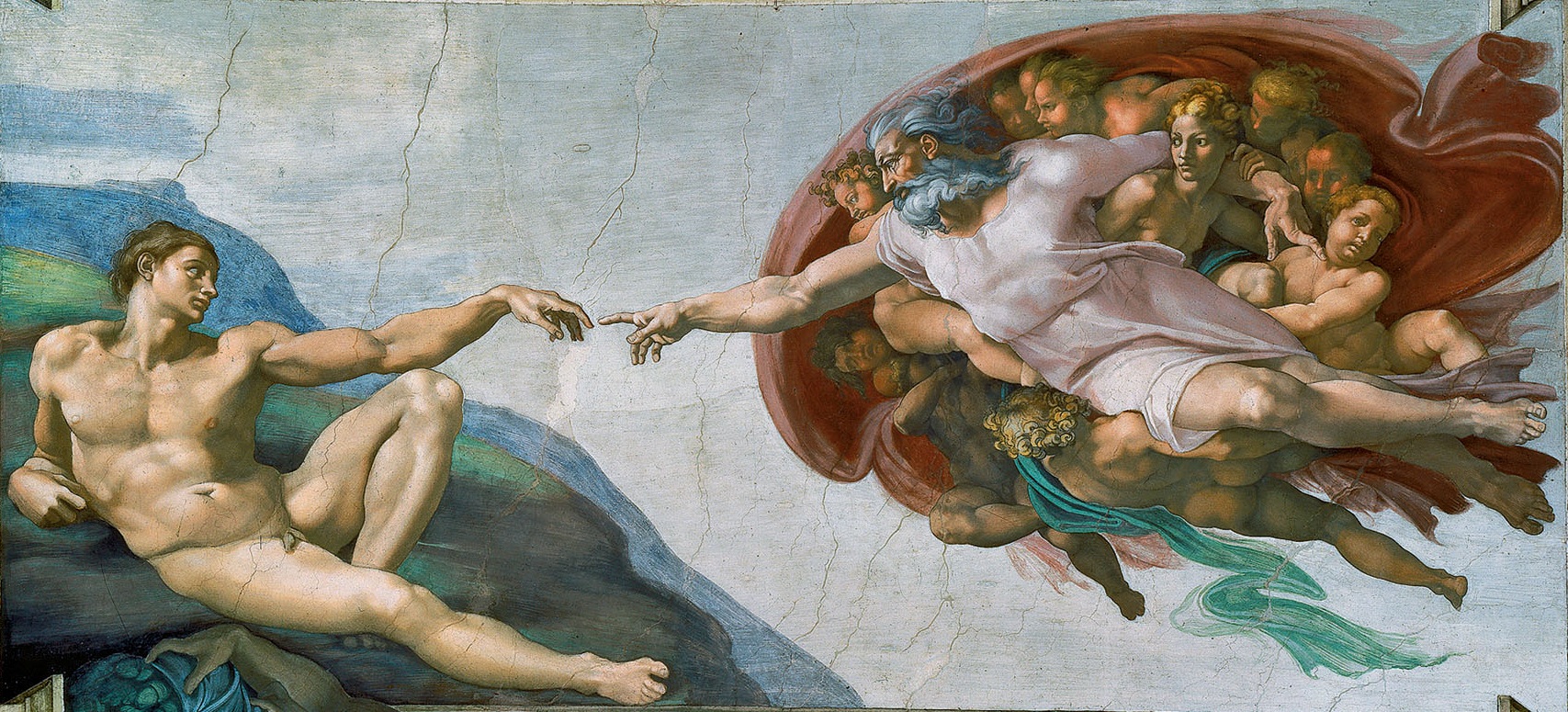
Decades later, Michelangelo Buonarroti would fuse classical muscularity with Christian eschatology on the ceiling of the Sistine Chapel (1508–1512). Though depicting biblical scenes, the monumental, twisting bodies of the ignudi (nude youths) and the formidable bulk of the Sibyls owe their existence directly to the unearthing of the Laocoön and His Sons in Rome in 1506—a Hellenistic sculpture of a Trojan priest attacked by sea serpents that profoundly altered Michelangelo’s understanding of the human form in distress.
Baroque Theatricality and Flesh
If the Renaissance idolised the harmony of the pantheon, the Baroque era (seventeenth century) revelled in its violence, eroticism, and metamorphoses. Ovid’s Metamorphoses, the Roman poet’s compendium of Greek myths, became the indispensable handbook for artists seeking to depict bodies in motion and moments of intense psychological rupture.
Gian Lorenzo Bernini’s Apollo and Daphne (1622–1625), housed in the Galleria Borghese in Rome, is arguably the greatest mythological sculpture ever carved. Commissioned by Cardinal Scipione Borghese, the marble group freezes the exact fraction of a second when the pursuing sun god, Apollo, captures the nymph Daphne, only for her to transform into a laurel tree to escape his advances. Bernini achieves the impossible in stone: Daphne’s fingers sprout delicate leaves, bark begins to encase her thighs, and the terror in her face contrasts sharply with the bewildered desire of her pursuer. The Baroque obsession with transformation, fleeting time, and sensory overload found its perfect vehicle in the capricious cruelty of the Olympian gods.
In Northern Europe, Peter Paul Rubens weaponised the pantheon to celebrate the sheer exuberance of flesh. Works like The Rape of the Daughters of Leucippus (c. 1618) abandon the restrained elegance of antiquity for a riot of colour, swirling movement, and corpulent bodies, proving that the Greek myths could be adapted to suit the opulent tastes of Catholic monarchies.
Neoclassicism and Political Allegory
The pendulum inevitably swung back. The eighteenth-century Enlightenment, coupled with the archaeological discoveries of Herculaneum and Pompeii, birthed Neoclassicism—a movement that rejected Baroque excess in favour of severe, linear clarity. The gods and heroes were conscripted once again, this time as avatars of civic virtue, reason, and patriotic sacrifice.
As Europe teetered on the brink of revolution, artists looked to antiquity for moral instruction. While Jacques-Louis David largely focused on Roman history, the aesthetic principles were entirely derived from the Greek ideal. Meanwhile, the Venetian sculptor Antonio Canova produced works of chilling, polished perfection. His Psyche Revived by Cupid’s Kiss (1787–1793) is a masterclass in compositional balance. The intertwining arms of the lovers create a flawless circle, a triumph of geometric harmony that sanitises the messy reality of desire, rendering it smooth, white, and ideologically safe.
Modernism, Surrealism, and the Subconscious
The twentieth century shattered the Neoclassical ideal. The unprecedented mechanised slaughter of the First World War made a mockery of human physical perfection, and the advent of psychoanalysis provided a new framework for interpreting ancient myths. Sigmund Freud borrowed heavily from the Greeks, using figures like Oedipus and Narcissus to label the darkest, most repressed urges of the human mind. Consequently, modern artists turned to the pantheon not for its beauty, but for its monsters.
For the Surrealists, the myths were direct access points to the subconscious. Salvador Dalí’s Metamorphosis of Narcissus (1937), currently held at the Tate Modern in London, presents the myth of the youth who fell in love with his own reflection as a hallucination of paranoia and decay. Dalí employs his “paranoiac-critical method” to create a double image: the crouching figure of Narcissus staring into the water is mirrored exactly by a fossilised hand holding an egg from which a narcissus flower sprouts.
Pablo Picasso, perhaps more than any other twentieth-century artist, adopted a figure from Greek myth as his personal avatar: the Minotaur. Half-man, half-bull, the Minotaur became Picasso’s vehicle for exploring the duality of human nature—the tension between creative genius and destructive, primal lust. In his complex 1935 etching Minotauromachy, the beast advances on a young girl holding a candle, a labyrinthine allegory for the rising tide of fascism in Europe and the artist’s own turbulent personal life. The classical hero was dead; only the monster remained.
Contemporary Subversions and the Enduring Legacy
In the twenty-first century, the engagement with Greek mythology has largely been one of subversion and reclamation. Feminist artists and writers have aggressively dismantled the patriarchal narratives that have dominated the interpretation of the pantheon for centuries. Figures traditionally cast as villains or victims—Medusa, Circe, Clytemnestra—are being critically re-evaluated.
This reshaping is visible across global exhibitions, where contemporary sculptors and painters confront the violence inherent in the Ovidian tales of rape and transformation, refusing to hide behind the veneer of classical beauty. The focus has shifted from the victorious gods of Olympus to the marginalised, the silenced, and the monstrous, proving the extraordinary plasticity of these ancient stories. If you want to explore the sheer breadth of this impact across galleries today, Greek Mythology in Art: A Journey Through Olympus provides an excellent roadmap.
The Greek pantheon refuses to be relegated to the dust of history because it was never truly about theology; it was about human nature writ large. The gods were immortal magnifications of our own desires, terrors, and contradictions. Whether carved into the pediment of a temple to assert civic dominance, painted on a Renaissance canvas to symbolise intellectual enlightenment, or fractured by a modern master to expose the violence of the subconscious, the deities of ancient Greece remain the most resilient and versatile vocabulary in the history of art. They are an immortal legacy, not because they are divine, but because they are so profoundly, inescapably human.