Author: VisionaryArt

  • Wales Invests £15 Million in New Culture Plan

    Wales Invests £15 Million in New Culture Plan

    We have launched a new set of priorities for culture in Wales. Our goal is to create opportunities for everyone, no matter their age or where they come from.

    To make this happen, we are investing £15 million. This funding was confirmed in the recent final budget.

    How the Funding Works

    The Minister for Culture, Jack Sargeant, announced the plan today. The £15 million investment will be divided into two main streams:

    • £8 million will go to the Arts Council of Wales for major arts projects.
    • £7 million will support the running and improvement of museums, archives, libraries, and historic sites.

    The Minister explained the thinking behind the investment.

    “I am pleased to publish the Priorities for Culture today,” he said. “This £15 million provides vital funding to support our cultural ambitions and will have a significant impact across Wales.”

    What This Will Support

    This new funding will help us improve arts and culture in several key areas. We will focus on creating more opportunities for children and young people and improving access for everyone.

    It will also provide resources to help the sector tackle climate change, develop skills, and improve its digital services.

    “I am immensely proud of the culture sector,” the Minister added. “Every day, I witness the positive power of culture. This is a vision developed with and for the sector, and I look forward to working collaboratively to deliver these Priorities.”

    A Record of Investment

    This announcement builds on our recent work across Wales. In the last few years, we have:

    • Opened Celf, the new national contemporary art gallery.
    • Pushed forward with the redevelopment of Theatr Clwyd and a new football museum in Wrexham.
    • Awarded over £5 million since 2022 to make cultural spaces and collections more inclusive.
    • Provided almost £3 million for urgent work at the National Library of Wales and Amgueddfa Cymru.
    • Invested over £3.5 million in local museums, libraries, and archives since 2022.
    • Launched a new grant scheme that has given £420,000 to improve local storage and care for collections.

    A Welcome from the Sector

    Leaders in the culture sector have already welcomed the news.

    Dr Ken Griffin, President of Museums Federation Cymru, said, “Imagine a Wales where every local museum is a vibrant centre for learning, volunteering, and cultural discovery. The new Priorities for Culture document paves the way for a connected culture sector, ensuring these institutions can continue to enrich lives and build a strong sense of ‘cynefin’ for all.”

    Images and Source https://www.gov.wales/new-priorities-culture-centre-opportunities-all

  • The Anatomy of an Award: A Look Inside The Creativity’s Prize

    The Anatomy of an Award: A Look Inside The Creativity’s Prize

    By Sarah Johnson

    For any artist, the decision to enter a competition is a strategic one. It’s an investment of time, energy, and hope. But beyond the prestige, what does a modern, digitally-savvy award actually offer? How does it work? To answer this, we’re taking a forensic look under the hood of one of the most talked-about new accolades: the international Creativity’s Prize (also known as Creativitys UK Award).

    This isn’t an analysis of its cultural impact—for that, you can read our deep dive, Is the Creativity’s Prize Writing Art’s New Code?. This is a practical breakdown for the working artist. What is the architecture of the prize, and what is the tangible return on investment?

    The Judging Matrix: A Multi-Stage Gauntlet

    The path to recognition here is not a lottery; it’s a rigorous, four-stage process designed to identify substantive talent. It begins with a simple Administrative Review to ensure all submissions are complete and eligible. This weeds out applications that don’t meet the basic criteria.

    From there, an Internal Committee of arts professionals from the Creativitys.UK team creates a longlist. This is the first critical filter, where originality and technical proficiency are assessed. The longlist then moves to Specialist & Jury Review, where members of the main panel and external experts conduct a more granular analysis, resulting in a final shortlist. It’s at this stage that some artists might be invited for a brief online interview, offering a chance to articulate their vision directly.

    The final stage is a Consensus Deliberation by the full judging panel, a formidable assembly of industry leaders chaired by critic and producer Maria Bregman. This is where a winner is chosen, not by simple votes, but through structured debate and analysis. Understanding this gauntlet is key: the prize values not just a brilliant final piece, but a coherent and professional presentation from start to finish.

    The Prize Package: Beyond the Cash

    This is where the prize truly differentiates itself. The value proposition is heavily weighted towards tangible career assets, not just a cheque.

    The First Place laureate receives a “Career Development & Promotion Package” valued at a significant £1,500. This is a toolkit for building a public profile, and it includes:

    • A Major Online Showcase: An in-depth, 1500-2000 word feature article with a professional interview, prominently displayed on the Creativitys.UK homepage for a full month.
    • Professional Media Production: The commissioning of professional photography or a short artist profile video. For artists without a high-quality portfolio, this asset alone is invaluable.
    • Targeted Press Outreach: A bespoke press release distributed to a curated list of 100 UK and international arts media, galleries, and curators.
    • Strategic Mentorship: A 90-minute one-on-one session with an established professional—a curator, gallerist, or senior artist—to discuss career strategy.

    The Application Process: A Checklist for Success

    For artists considering applying, the process is international, open to those over 18, and covers a wide range of disciplines. The monthly deadline (the 25th of each month) allows for a continuous cycle of opportunity.

    Here’s what a successful application requires:

    • A concise portfolio of up to five recent works.
    • A 500-word statement of intent, articulating your vision.
    • A professional artist bio.
    • Adherence to the current theme, “Innovation in Art”.

    The submission fee is a nominal £25, positioned to cover administrative costs rather than to act as a significant barrier. The key takeaway for applicants is the need for professionalism at every step. Clear, high-quality images, well-written supporting texts, and a clear articulation of one’s unique vision are what will pass the initial filters and capture the attention of the jury.

    Ultimately, The Creativity’s Prize presents itself as an ecosystem, not just a competition. It’s an infrastructure designed to identify talent and then actively work to amplify it. For the ambitious artist, understanding this anatomy is the first step toward leveraging it.

  • Is the Creativity’s Prize Writing Art’s New Code?

    Is the Creativity’s Prize Writing Art’s New Code?

    By Sarah Johnson

    Forget the long-term forecasts. If you want to know where culture is headed, look at who is getting the awards right now. An award isn’t just a retrospective pat on the back; it’s a bet on the future. It’s a signal. And looking at the recent slate of laureates from the international Creativity’s Prize (also known Creativitys UK Award), the signals are coming through loud and clear. A new code is being written for what it means to be a creative force in 2025.

    The first signal is a return to pure, almost defiant, narrative craft. We’re seeing painters like Evgenii Gruzdev and Vasili Smirnov move beyond mere hyperrealism into something closer to cinematic portraiture. Their canvases don’t just depict a face; they hold a scene, a moment of psychological tension frozen in time. This isn’t just masterful technique; it’s storytelling that grabs you by the collar, a clear rejection of empty abstraction in favour of dense, character-driven art.

    At the same time, this hunger for narrative is colliding with our digital reality. Heritage is no longer something locked away in a museum; it’s becoming a medium in its own right. Look at filmmaker Luba Balagova-Kandour. She isn’t just preserving Circassian culture; she’s actively translating it, recoding ancient traditions into a visual language that can thrive on global screens. It’s a powerful statement: the most vital histories are not the ones we archive, but the ones we remix.

    This remix culture is breeding a new type of creator. The age of the hyper-specialist is fading. The most interesting work is happening at the frayed edges between disciplines, made by what you might call the “post-genre” artist. Figures like Marat Akhmedjanov, celebrated for work that bleeds across cinema and literature, or the music producer Viktor Drobysh, whose vision shapes entire multimedia ecosystems, are the new archetypes. They aren’t just masters of a single craft; they are architects of entire worlds.

    We see this same boundary-dissolving energy in fashion. The line between runway and gallery has been erased. For designers like Maria Babina or Tes Berge, a garment is a mobile sculpture, a piece of performance art activated by the body. Their work asks critical questions, using fabric and form to explore identity and challenge conventions. This isn’t about selling clothes; it’s about pushing a discipline into the territory of critical practice.

    And perhaps the most potent signal of all is the renewed currency of authenticity. In an era saturated with synthetic imagery and AI-generated text, there’s a powerful gravitational pull towards real, lived history. When a prize honours a writer like Irina Rekshan, whose own life is a chapter in the epic of the Leningrad rock scene, it’s a deliberate choice. It’s a bet on the irreplaceable value of a story that could only be told by one person, in one lifetime. It suggests that in the face of infinite digital replication, the deeply, messily human story has become the ultimate scarce resource.

    So what’s the new code? It’s narrative-rich, technologically fluid, defiantly interdisciplinary, and grounded in unshakeable authenticity. The work being celebrated today isn’t just a reflection of our times; it’s a blueprint for what’s next.

  • Beauty’s Dominion and the Smile’s Sceptre

    Beauty’s Dominion and the Smile’s Sceptre

    The notion that beauty constitutes a form of power is an axiom as ancient as civilisation itself, a silent language understood across cultures and epochs. It is a force that can open doors, command attention, and sway opinions, often before a single word is uttered. Yet, if beauty is the formidable arsenal, then the smile – that seemingly simple, universal expression – might just be its most finely honed, versatile, and profoundly human instrument. VisionaryArt.UK will tell you about the potent, often perilous, dance between perceived beauty and authentic expression, examining how society has historically wielded aesthetic allure as a currency of power, and whether the disarming smile remains its most potent, or perhaps most subversive, instrument in the grand theatre of human interaction.

    Beauty’s Enduring Reign

    Throughout history, physical attractiveness has been inextricably linked with influence and status. From the meticulously crafted visages of Egyptian pharaohs, designed to project divinity and authority, to the powdered and rouged courtiers of Versailles, where aesthetic perfection was a vital component of political manoeuvring, beauty has served as a tangible asset. It was, and in many ways remains, a form of social currency, capable of elevating an individual’s standing, securing advantageous alliances, or simply ensuring a more favourable reception. This aesthetic power was not merely superficial; it was deeply interwoven with perceptions of virtue, intelligence, and even divine favour. The art of the Renaissance, for example, often equated physical beauty with spiritual purity, creating an enduring visual lexicon that continues to subtly shape our cultural perceptions.

    Fashion’s Gilded Edifice

    The modern fashion industry has become the principal architect and arbiter of contemporary beauty standards. It constructs, deconstructs, and reconstructs ideals of allure with a seasonal rhythm, presenting a constantly shifting kaleidoscope of what is deemed desirable. Through glossy magazine spreads, runway spectacles, and global advertising campaigns, the industry not only reflects but actively shapes societal aspirations, transforming beauty from an inherent quality into a meticulously curated commodity. This process, while providing endless inspiration and avenues for self-expression, can also create a gilded cage, where adherence to prescribed norms becomes a prerequisite for acceptance or validation. The power beauty confers in this context is often contingent upon conformity to these external, and frequently unattainable, ideals, raising questions about true empowerment versus subtle objectification.

    The Smile’s Quiet Strength

    Amidst the often-exaggerated and meticulously constructed ideals of beauty promoted by commercial forces, the smile emerges as a distinct entity. It is an innate human expression, predating fashion and transcending fleeting trends. While a “perfect” smile can certainly be commodified – orthodontics and cosmetic dentistry are thriving industries – the act of smiling retains a primal, communicative power. A genuine smile can disarm, build rapport, convey warmth, and signal trustworthiness. This is where the “sword” analogy becomes particularly apt; a smile can cut through artifice, navigate social complexities, and forge connections in ways that a static, “beautiful” facade might not. The smile psychology is complex, indicating not just happiness but also confidence, approachability, and even, paradoxically, a subtle assertion of dominance in certain social contexts. It is a tool of negotiation, a balm, and a beacon.

    Digital Age Distortions

    The advent of the digital age beauty landscape, dominated by social media platforms like Instagram and TikTok, has profoundly altered the dynamics of beauty and power. Filters, editing apps, and the relentless pursuit of the “perfect” online persona have democratised the tools of image construction, allowing individuals to curate their aesthetic to an unprecedented degree. However, this has also led to a homogenisation of beauty ideals – the so-called “Instagram face” – and exacerbated the pressures associated with physical appearance. The aesthetic power sought in these digital realms can be ephemeral, built on likes and followers, and often detached from lived reality. The smile, in this context, can be both a genuine expression and a calculated performance, its authenticity perpetually under scrutiny in a world of curated perfection.

    Aesthetic Social Capital

    Beauty, in its myriad forms, continues to function as a significant form G of social currency. Studies have repeatedly shown that attractive individuals often benefit from the “halo effect,” where they are perceived as more intelligent, competent, and likeable. This can translate into tangible advantages in professional settings, romantic pursuits, and everyday social interactions. The ability to command attention and elicit positive responses based on one’s appearance is a clear manifestation of influence and allure. However, this power is not without its complexities. It can invite unwanted attention, lead to superficial judgments, and create a pressure to maintain an image that may not align with one’s internal self. The reliance on aesthetic capital can also overshadow other valuable attributes, creating a dynamic where appearance becomes the primary metric of worth.

    Subverting Beauty Norms

    Despite the pervasive influence of conventional beauty standards, there is a growing movement towards subverting these norms and celebrating a more inclusive and diverse understanding of attractiveness. This challenge to traditional power structures in beauty is driven by individuals and brands championing authenticity, body positivity, and the beauty of imperfection. The power here lies not in conforming to an established ideal, but in redefining it. A smile that radiates self-acceptance, regardless of whether it aligns with conventional notions of “perfection,” can be a powerful act of defiance and empowerment. This shift encourages a more nuanced appreciation of beauty, one that values character, individuality, and genuine self-expression over mere adherence to a template.

    The Unseen Barricades

    While beauty can undoubtedly open doors, it can also erect unseen barricades. The pressure to maintain a certain aesthetic can be mentally and emotionally taxing, contributing to anxiety, low self-esteem, and disordered eating patterns. The objectification that often accompanies being perceived primarily through the lens of physical attractiveness can be profoundly disempowering, reducing an individual to their appearance rather than acknowledging their full humanity. Furthermore, the power conferred by beauty is often conditional and fleeting, subject to the whims of fashion, the inevitable process of ageing, and the subjective gaze of the beholder. This precariousness highlights the limitations of relying solely on aesthetic appeal as a source of enduring power or self-worth. The pursuit of historical beauty ideals, if unexamined, can lead individuals down a path of constant striving for an elusive, externally defined perfection.

    Authenticity’s True Gleam

    Ultimately, the most enduring and perhaps most potent form of allure stems not from the flawless replication of a prescribed ideal, but from genuine authenticity. When personal identity shines through, when inner confidence illuminates outward appearance, beauty takes on a different, more resonant quality. A smile that reaches the eyes, born of genuine emotion, possesses a magnetism that no amount of cosmetic artifice can replicate. This is not to diminish the joy and creativity found in exploring different facets of image construction through fashion and cosmetics, but rather to suggest that these tools are most powerful when they serve to enhance, rather than obscure, the true self. The “sword” of the smile is sharpest when wielded with sincerity and self-assurance.

    The interplay between beauty and power is a complex, multifaceted dialogue that continues to evolve with societal shifts and technological advancements. Beauty, in its various manifestations, undeniably holds a certain sway, a capacity to influence and captivate. Yet, the power it bestows is often contingent, mediated by cultural norms and individual perceptions. The smile, however, remains a uniquely compelling instrument within this arsenal. It is both a primal expression of human connection and a sophisticated tool of social navigation. Whether radiant and confident, subtly knowing, or openly defiant of convention, the smile, when rooted in authenticity, possesses a particular kind of sovereignty – a quiet, unassailable strength that can, indeed, be the most compelling facet of one’s allure. It is the human touch in the grand design of beauty, the gleam of genuine spirit that truly commands lasting attention.
  • Art Liard’s Exhibition: Exploring Whispers of Emotion and Memory

    By Sarah Johnson

    Embark on an intimate virtual exploration through the poignant reflections of Art Liard, whose curated collection delves into the subtle power of memory, connection, and everyday observation. This engaging exhibition showcases Liard’s distinctive expressive style, an intriguing fusion of thoughtful narrative and vibrant energy, inviting viewers to contemplate the nuances of personal experience and the rich tapestry of inner life. Art Liard’s virtual exhibition is accessible online from April 1 to April 30, 2025, presenting a selection of five compelling works, each acting as a portal to Liard’s sensitive interpretation of the world. These creations give form to the artist’s insightful observations, guiding you into a realm where nostalgia, symbolism, and the present moment gracefully intertwine.

    Art Liard’s virtual exhibition is a compelling journey into the heart of human feeling and the quiet beauty found in both relationships and solitude. As you engage with the textures, forms, and narratives within his works, prepare to be moved by the blend of introspection, expressive energy, and the enduring power of the artistic spirit to connect us to our own stories.

  • Ruthin’s Hidden Cultural Tapestry

    Ruthin’s Hidden Cultural Tapestry

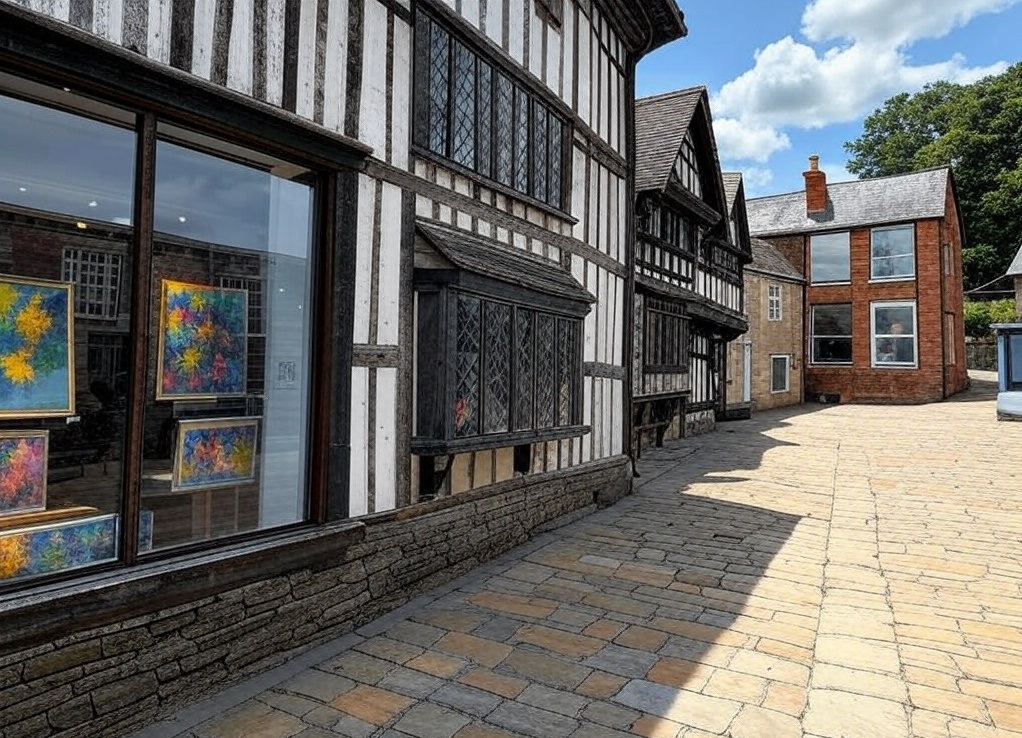
    Nestled in the lush valleys of Denbighshire, Ruthin (Rhuthun in Welsh) emerges as an unassuming yet profound custodian of Welsh heritage. Beyond its cobbled streets and timber-framed façades lies a vibrant nexus where medieval history collides with avant-garde creativity. This market town, often overshadowed by its flashier neighbours, quietly thrives as a sanctuary for art lovers and cultural pilgrims. From restored Tudor mansions to cutting-edge craft studios, Ruthin’s duality—rooted in tradition yet unafraid of reinvention—offers a narrative ripe for exploration.

    Ruthin Craft Centre’s Creative Pulse
    At the heart of Ruthin’s artistic renaissance sits the Ruthin Craft Centre, a beacon for contemporary crafts Wales champions. Housed in a sleek, modern structure that contrasts poetically with the town’s medieval skyline, the centre is more than a gallery—it’s a living laboratory. Here, glassblowers, ceramicists, and textile artists converge, their workshops visible through floor-to-ceiling windows. Recent exhibitions have showcased everything from kinetic sculptures crafted from reclaimed slate to installations questioning Welsh identity post-Brexit. The centre’s café, with its locally sourced menu, mirrors this ethos: tradition reimagined through a modern lens.

    Nantclwyd y Dre’s Timeless Tales
    Step into Nantclwyd y Dre, Wales’ oldest dated townhouse, and time folds in on itself. Restored to reflect seven centuries of domestic life, its rooms whisper stories of Tudor merchants, Georgian gentry, and Victorian reformers. The walled garden, a riot of heritage roses and medicinal herbs, is a living ode to historic architecture Wales. Yet what truly captivates is the house’s refusal to be a static relic. Seasonal exhibitions—like last autumn’s display of 18th-century love letters discovered in the attic—bridge past and present, proving history’s pulse still beats fiercely in Ruthin.

    St. Peter’s Square: Medieval Majesty
    Ruthin’s medieval soul crystallises in St. Peter’s Square, where the 13th-century church tower looms like a stone sentinel. Inside, a 15th-century Jesse Tree fresco—a rare survivor of Cromwell’s iconoclasm—unfolds in vivid blues and golds, its branches heavy with biblical figures. Yet the square is no open-air museum. Every summer, it transforms into a stage for cultural tourism Denbighshire at its finest: the Ruthin Festival. Here, Shakespearean soliloquies echo against street art murals, and harpists duel with indie folk bands—a harmonious clash of epochs.

    Ruthin Gaol’s Cultural Rebirth
    Few sites encapsulate Ruthin’s metamorphosis like its Victorian gaol. Once a symbol of punitive severity, its iron doors now swing open to galleries and performance spaces. The former exercise yard hosts sculpture gardens, where twisted metalworks by local artists dialogue with the bleak brickwork. A recent highlight was Voices from the Cells, an audio-visual project where inmates’ diaries (meticulously archived by the town) were paired with ambient soundscapes. It’s a stark, stirring reminder that even spaces of confinement can become catalysts for Welsh art exhibitions that challenge and inspire.

    Local Festivals and Living Traditions
    Ruthin’s calendar thrums with events that blend pagan roots with contemporary verve. The annual Food Festival, held in the shadow of the castle ruins, sees Michelin-starred chefs riff on recipes from The First Welsh Recipe Book (1520). Meanwhile, the Winter Solstice Parade—a swirl of fire dancers and giant puppets—draws direct lineage from Druidic rites. These aren’t mere tourist spectacles; they’re communal acts of preservation. As local baker Enid Jones remarks while shaping bara brith loaves for the festival, “Every recipe, every dance step—it’s a letter to the future.”

    Artisan Workshops and Welsh Craft
    Beyond the galleries, Ruthin’s artisan workshops Wales thrive in unassuming nooks. On Clwyd Street, Einir Wyn’s pottery studio offers masterclasses where students mould clay beside a 17th-century inglenook. A stone’s throw away, woodturner Gareth Hughes crafts Welsh love spoons—not as trinkets, but as narrative objects engraved with clients’ personal sagas. These craftsmen aren’t mere traditionalists; they’re alchemists, transmuting local materials (Denbighshire oak, River Clwyd silt) into works that straddle function and philosophy.

    Ruthin’s cultural landscape defies easy categorisation. It’s a place where a 14th-century castle hosts digital art projections, where the scent of molten iron from a blacksmith’s forge mingles with espresso from a vegan café. This isn’t stagnation dressed as heritage; it’s a dynamic, sometimes uneasy, dialogue between then and now. For the discerning traveller, Ruthin offers not a postcard, but a palimpsest—a town perpetually rewriting itself while staying indelibly Welsh. To wander its lanes is to witness culture not as a monument, but as a verb: alive, evolving, and defiantly unbroken.

  • Portland Art Museum’s Monet Masterpiece Reborn

    Portland Art Museum’s Monet Masterpiece Reborn

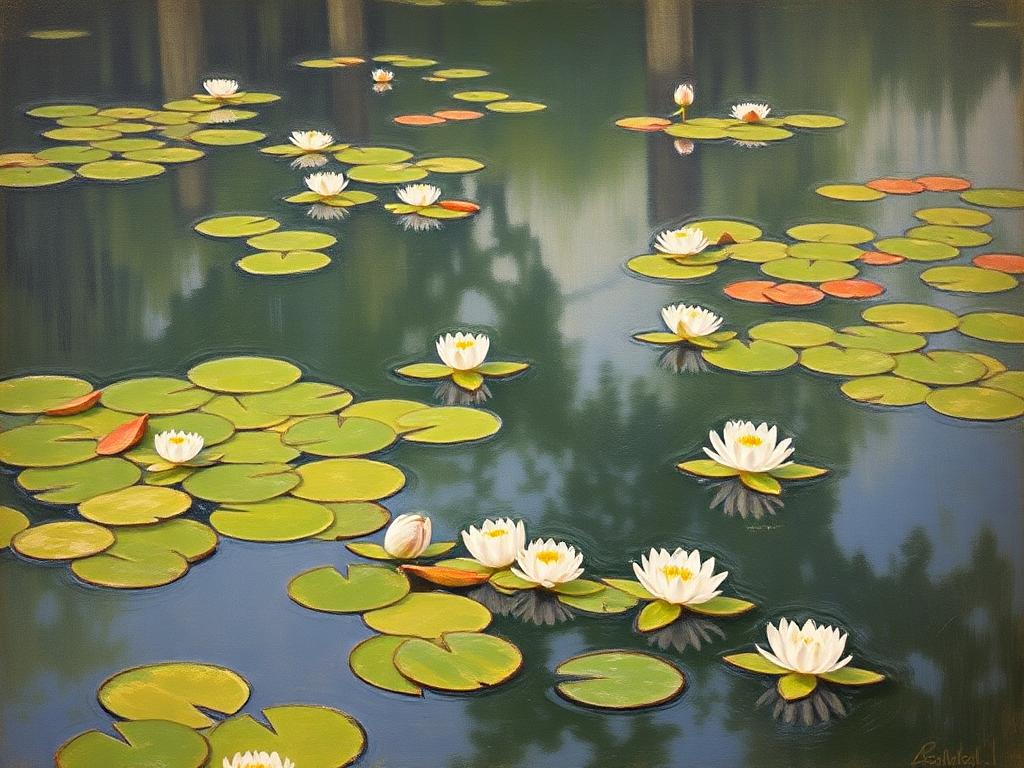
    In an act of artistic resurrection, Claude Monet’s Waterlilies (1914–15) has re-emerged at the Portland Art Museum (PAM) after a meticulous two-year restoration. The project, spearheaded by lead conservator Charlotte Ameringer, stripped decades of discoloured varnish from the canvas, revealing hues and textures unseen since the painting’s creation. This revival not only honours Monet’s original vision but reignites debates about authenticity, ageing, and the ethics of intervening in an artist’s legacy.

    A Century of Obscured Vision
    Monet’s late-career Waterlilies series, painted in his Giverny garden, sought to capture ephemeral light and reflection through unvarnished, matte surfaces. Yet by the mid-20th century, the Portland canvas—like many Impressionist works—had been coated in synthetic varnish, a practice then deemed essential for preservation and market appeal. The result? A flattened, yellowed version of Monet’s luminous pond, its pastel-like delicacy suffocated under resin.

    “Monet intentionally avoided varnish,” Ameringer explained. “He drained oils from his paints for a dry, chalky finish. The added gloss distorted his exploration of atmosphere.” Modern imaging technology confirmed the varnish postdated Monet’s death in 1926, likely applied during a 1959 restoration. Its removal became a mission to reclaim the artist’s radical aesthetic.

    The Science of Subtlety
    Ameringer’s process was both painstaking and perilous. Using solvent-dampened cotton swabs, she rolled away the varnish micron by micron, exploiting its chemical solubility without disturbing Monet’s oil layers. The challenge lay in balancing ambition with restraint: “You can’t erase 65 years of ageing,” she noted. Residual varnish molecules and natural oxidation mean the work will never mirror its 1915 vibrancy, but the transformation remains profound.

    Pre-restoration, the pond’s surface appeared murky, its lilies dulled. Post-treatment, cadmium reds and cobalt blues resurface, while brushstrokes—once blurred—regain their tactile urgency. “Monet built texture like a sculptor,” Ameringer observed. “Thick impasto for lily pads, thin washes for reflections. The varnish had homogenised his genius.”

    Monet’s Defiant Technique
    The restoration illuminates Monet’s subversive material choices. By wringing oils from his paints, he achieved a desiccated finish that mimicked pastels, rejecting the glossy sheen of academic art. This technique, deemed “unfinished” by 20th-century standards, now reads as revolutionary. “He wanted viewers to feel the pond’s humidity, not admire a polished surface,” said art historian Dr. Emily Talbot. “The matte texture pulls you into the scene.”

    Monet’s disdain for varnish was both aesthetic and philosophical. As he aged and cataracts dimmed his sight, his focus shifted to sensory immersion over representation. The Portland Waterlilies, painted when he was 74, exemplifies this evolution: its abstraction anticipates Rothko, its palette whispers of twilight.

    Exhibition as Time Capsule
    Accompanying the restored work in Monet’s Floating Worlds at Giverny are 30 Japanese woodblock prints from Monet’s personal collection, including works by Hiroshige and Toyokuni. These ukiyo-e pieces, which once adorned his Giverny home, reveal how Japanese art’s asymmetry and nature motifs influenced his compositions. A single Hiroshige print, Plum Estate, Kameido (1857), echoes in the Waterlilies’ arched bridge and floral clusters.

    The exhibition also demystifies conservation science. Interactive displays compare pre- and post-restoration details, while timelapse videos document Ameringer’s process. For visitors, it’s a rare glimpse into the symbiosis of art and science—and a rebuttal to critiques that restoration “rewrites history.”

    Ethics of Intervention
    The project sparks broader questions: When does conservation become reinterpretation? Museums increasingly face this dilemma as technologies like AI and spectral imaging redefine possibilities. PAM’s approach, prioritising minimal intervention, aligns with the International Institute for Conservation’s ethics code. Yet as Ameringer acknowledged, “Every choice is subjective. We’re stewards, not psychics.”

    Monet’s own stance complicates matters. He famously repainted earlier works to match his evolving style, suggesting a fluid view of authenticity. Would he have approved the de-varnishing? “He loathed varnish,” Talbot argued. “But he also embraced change. His garden was a living artwork—pruned, replanted, reimagined.”

    A New Lens on Legacy
    The restored Waterlilies challenges perceptions of ageing in art. Its lingering amber shadows and softened edges testify to time’s passage, yet its revitalised hues pulse with contemporary urgency. For Ameringer, the project transcended technical achievement: “It’s about humility. We’re not ‘fixing’ Monet—we’re listening to him.”

    As the painting returns to public view, it invites a dialogue between past and present. In an era of digital replication, the tactile imperfections of Monet’s brushstrokes—now visible for the first time in decades—feel like a quiet rebellion.

    Monet’s Floating Worlds at Giverny runs at Portland Art Museum from 1 March to 10 August 2025. The exhibition pairs the resurrected Waterlilies with archival letters, botanical sketches, and Ameringer’s conservation notes, offering a holistic portrait of an artist who transformed a pond into a portal. In the words of PAM director Brian Ferriso: “This isn’t just a painting restored—it’s a manifesto rediscovered.”

  • David Lynch: The Visionary Who Transformed Cinema Forever

    David Lynch: The Visionary Who Transformed Cinema Forever

    On 16 January, the world bid farewell to David Lynch, the iconic American filmmaker who passed away at the age of 78. Renowned for his profound influence on modern cinema, Lynch’s death leaves an indelible void in the creative landscape. Known as a surrealist auteur, he redefined storytelling with a blend of haunting imagery, psychological depth, and enigmatic narratives. To understand the legacy of Lynch is to delve into the mind of a director who blurred the lines between dreams and reality.

    The Legacy of Experimentation

    David Lynch’s journey began with experimental short films in the 1970s. Works like Six Figures Getting Sick and The Grandmother hinted at his penchant for surrealism. These early projects, created on modest budgets, laid the foundation for what would become a career defined by pushing boundaries. In 1976, his debut feature film Eraserhead introduced audiences to a nightmarish, industrial world filled with bizarre characters and unsettling themes.

    The critical acclaim of Eraserhead caught the attention of Stanley Kubrick, who considered it a masterpiece. This endorsement propelled Lynch into mainstream filmmaking, and soon he was entrusted with larger projects. His second film, The Elephant Man (1980), showcased his ability to blend commercial appeal with artistic depth. The film earned eight Academy Award nominations, establishing Lynch as a force to be reckoned with in Hollywood.

    Cult Status Through Psychedelic Narratives

    By the 1980s, David Lynch had carved a niche for himself as a filmmaker unafraid to challenge convention. Films like Blue Velvet (1986) and Wild at Heart (1990) explored the dark undercurrents of small-town America. Blue Velvet juxtaposed idyllic suburban life with sinister secrets, a theme that would recur throughout his work. Wild at Heart, a psychosexual road movie, won the Palme d’Or at the Cannes Film Festival, cementing Lynch’s reputation as a master of the avant-garde.

    But it was Twin Peaks (1990) that catapulted Lynch into global fame. The television series, which combined murder mystery with supernatural elements, became a cultural phenomenon. Its eccentric characters, eerie score, and open-ended narrative left viewers entranced. Although the show’s ratings waned, its impact on television storytelling was monumental, influencing shows like The X-Files and Stranger Things.

    A Soundtrack of Innovation

    Music played an integral role in David Lynch’s films. Collaborating with composer Angelo Badalamenti, Lynch crafted soundscapes that were as unsettling as his visuals. The haunting Twin Peaks theme remains one of the most recognisable scores in television history. Lynch’s musical ventures extended beyond film, as he recorded industrial blues albums such as BlueBob (2001) and the experimental Crazy Clown Time (2011).

    Lynch’s soundtracks were more than background music—they were emotional conduits that amplified the surreal atmosphere of his films. His collaboration with artists like David Bowie and Julee Cruise added a layer of cultural depth to his projects, making them immersive experiences.

    The Revival of ‘Twin Peaks’ and Final Contributions

    The turn of the millennium marked a new chapter for Lynch. After the experimental masterpiece Mulholland Drive (2001), which won him the Best Director award at Cannes, Lynch took a step back from traditional filmmaking. His 2006 feature Inland Empire was a deeply personal and abstract work, leaving audiences divided but reaffirming his commitment to artistic authenticity.

    In 2017, Lynch stunned fans with the revival of Twin Peaks. Premiering at the Cannes Film Festival, the series was both a nostalgic return and an audacious reimagining. Its 18 episodes defied conventional narrative structures, offering a meditation on time, memory, and the nature of storytelling.

    Beyond filmmaking, Lynch explored new creative avenues. His YouTube channel, where he shared daily weather reports and short films, became a cult sensation. Collaborations with singer Chrysta Bell resulted in two albums, the last of which, Cellophane Memories, was released in 2024.

    The Man Behind the Camera

    David Lynch was more than his work. His personal life reflected the same paradoxes and complexities seen in his films. Diagnosed with emphysema in 2020, Lynch faced health challenges with resilience. He remained tied to his iconic cigarette habit, acknowledging it as an inseparable part of his life and public image.

    Despite his struggles, Lynch never lost his creative spark. Until his final days, he championed transcendental meditation, crediting it as a source of inspiration and calm amidst his chaotic artistic pursuits.

    An Unparalleled Impact

    The death of David Lynch marks the end of an era, but his influence will endure. Filmmakers like Christopher Nolan, Denis Villeneuve, and Ari Aster continue to draw inspiration from Lynch’s pioneering work. His films remain subjects of academic study, celebrated for their complexity and innovation.

    Lynch’s ability to evoke emotion, challenge perception, and redefine storytelling ensured his place as one of the greatest auteurs in cinematic history. His work serves as a reminder that art is not bound by rules but thrives in exploration and audacity.

    David Lynch may no longer be with us, but his legacy will continue to haunt and inspire. To borrow his own words, “Keep your eye on the doughnut, not on the hole.” In Lynch’s absence, the world feels the void, but his vision will forever illuminate the shadows.

  • Festive Feast for Art Lovers

    Festive Feast for Art Lovers

    The holiday season often conjures images of twinkling lights, carol singers, and family gatherings. Yet for those who find solace in the quiet corners of galleries or the vibrant strokes of a masterful canvas, Christmas offers an opportunity to immerse oneself in London’s thriving art scene. While many commercial galleries shutter their doors during this period, the city’s major institutions remain open, providing a haven for art enthusiasts eager to escape the festive frenzy. From the haunting works of Francis Bacon to the swirling brilliance of Van Gogh, here is your guide to the best exhibitions still welcoming visitors over the 2024 Christmas season.

    Monet’s Masterpieces at The Courtauld
    Nestled in the heart of Somerset House, The Courtauld Gallery stands as a beacon for lovers of impressionist and post-impressionist art. Though its blockbuster Monet exhibition has sold out, the gallery’s permanent collection remains a treasure trove of artistic brilliance. Visitors can marvel at Cézanne’s still lifes, Gauguin’s vivid explorations of colour, and the ethereal beauty of Seurat’s pointillism. With closures only on Christmas Day and Boxing Day, The Courtauld provides a serene retreat from the chaos of the holidays. For those yearning to bask in the glow of timeless artistry, this institution promises an unforgettable experience.

    Tate Modern: A Contemporary Wonderland
    At Tate Modern , the cutting edge of contemporary art takes centre stage. This winter, the gallery hosts two standout exhibitions: Anthony McCall’s mesmerising light installations and Zanele Muholi’s powerful photographic narratives. Meanwhile, Mike Kelley’s retrospective serves as a poignant reminder of his enduring influence on modern art. Across the river, Tate Britain offers a compelling look at British photography from the 1980s, alongside the ever-controversial Turner Prize. Both venues are closed only on December 24th to 26th, ensuring ample opportunity to explore these thought-provoking displays. Whether you’re drawn to abstraction or social commentary, Tate’s offerings cater to diverse tastes.

    Francis Bacon: Portraits of Pain
    Few artists capture the raw intensity of human emotion quite like Francis Bacon, whose work dominates the current exhibition at the National Portrait Gallery . Known for his visceral depictions of flesh and anguish, Bacon’s portraits resonate deeply with themes of existential struggle—a fitting counterpoint to the saccharine cheer of the season. Adding to the intrigue is the gallery’s infamous portrait of Ed Sheeran, which has sparked both admiration and derision. Closed on December 24th to 26th, the National Portrait Gallery invites visitors to confront the darker facets of humanity through its unparalleled collection.

    Renaissance Reverie at the Royal Academy
    Though the Royal Academy of Arts lacks a marquee exhibition in its main galleries this season, its upstairs show dedicated to Michelangelo, Leonardo, and Raphael offers a fascinating glimpse into the Renaissance masters. Despite some curatorial shortcomings, the display exudes charm and historical significance. Additionally, the free Collection gallery provides a chance to admire lesser-known gems without the crowds. Closed on December 24th to 26th, the Royal Academy remains a must-visit destination for those seeking intellectual stimulation amidst the holiday merriment.

    Haegue Yang: An Afternoon Escape
    For something entirely different, head to the Hayward Gallery , where Haegue Yang’s enigmatic installation awaits. While not universally acclaimed, her work creates an immersive environment that invites contemplation. As daylight fades earlier in winter, Yang’s intricate arrangements of materials and textures offer a sensory reprieve from the cold. Though opinions may vary, the exhibition undeniably provides a unique way to spend a chilly afternoon. The Hayward Gallery is also closed on December 24th to 26th, so plan accordingly if you wish to experience this unconventional showcase.

    Van Gogh’s Starry Night Shines On
    No list of London’s cultural highlights would be complete without mentioning the National Gallery , home to one of the world’s most revered collections of historical art. Currently, the gallery features a free display of Parmigianino’s sinuous psychedelia alongside the final weeks of its Van Gogh blockbuster. With Starry Night drawing admirers until January 19th, there’s no better time to witness the Dutch master’s luminous genius. Closed on December 24th to 26th and New Year’s Day, the National Gallery ensures that even the busiest holiday schedules can accommodate a visit.

    India’s Imaginary Institution at the Barbican
    The Barbican continues to shine with its critically acclaimed exhibition, The Imaginary Institution of India . Celebrated as one of the year’s standout shows, it delves into themes of identity, memory, and colonial legacy through multimedia works by Indian artists. Nalini Malani’s evocative installations and other thought-provoking pieces make this a must-see before it concludes in early January. Closed from December 23rd to 26th, the Barbican encourages reflection on global histories while offering respite from seasonal festivities.

    Political Provocations at Whitechapel Gallery
    Finally, the Whitechapel Gallery presents a mix of mixed reviews and undeniable highlights. While Lygia Clark and Sonia Boyce’s contributions may leave some underwhelmed, Peter Kennard’s politically charged photomontages deliver a jolt of righteous indignation. His iconic Thatcher Unmasked piece encapsulates the spirit of dissent, making it a perfect antidote to forced holiday cheer. Note that the gallery observes extended closures, including December 23rd to 26th and December 30th to January 1st, so plan your visit carefully.

    Art Amidst the Festivities
    As the streets of London glisten with festive decorations, its galleries and museums offer a sanctuary for those seeking intellectual nourishment and aesthetic delight. Whether you’re captivated by the impressionist dreamscapes of Monet, the haunting depths of Bacon, or the avant-garde experiments of contemporary creators, the capital’s cultural landscape brims with possibilities. So, swap the tinsel for a ticket stub and embrace the magic of art this Christmas. After all, what could be more wonderful than spending the holidays surrounded by beauty, history, and innovation?

  • “The World As My Kingdom” Exhibition Challenges the Limits of Influence

    “The World As My Kingdom” Exhibition Challenges the Limits of Influence

    By Sarah Johnson

    In the bustling heart of Mayfair, as London hosts the annual Frieze Week, an exhibition opens that grapples with one of the most complex and pervasive aspects of human experience: power. “The World As My Kingdom,” running from 8th to 12th October 2024 at the Gallery Marquess, presents a vivid exploration of the dynamics of dominance in modern society. This bold collective exhibition by Gabriel Fine Arts assembles a distinguished roster of artists, each peeling back the layers of influence, authority, and control to reveal the intricate mechanisms that shape our world. Featured Artists: Maria Akopova, Cayla Birk, Katerina Bogina, Petra Gruiters. Howard Harris, K. K. Hebbar, Ranbir Kaleka, Veera Romanoff, Maya Schulz and Natrix Vibakari.

    From the Political Stage to the Private Sphere

    This exhibition offers a broad and profound inquiry into power’s manifestations, from the overt structures of politics and economics to the more subtle dynamics within personal relationships. With works spanning a variety of media—including painting, sculpture, digital art, and installations—each piece invites viewers to reflect on how power operates and influences daily life. Howard Harris takes the lead on political commentary, using multi-layered digital collages to depict the overwhelming presence of propaganda and media manipulation. Harris’s work captures the almost intangible control exercised by information systems and the powerful institutions that wield them.

    In contrast, Petra Gruiters provides a searing look at the economic forces that underlie society’s hierarchies. Her textural compositions offer a haunting portrayal of financial disparity and the way wealth dictates social mobility. Gruiters’s work suggests that power often lies not in what we see, but in what remains hidden beneath the surface. Her pieces, rich with tactile depth, are a stark reminder of the elusive yet omnipresent forces that dictate our lives from behind the scenes.

    Exploring Gender and Control

    Power in the personal realm is explored in the evocative works of Veera Romanoff and Cayla Birk. Romanoff’s art is an intimate commentary on gender dynamics, presenting vulnerable, introspective pieces that examine how control is negotiated within relationships. Her muted palette and delicate brushstrokes portray the nuances of connection and the ways in which individuals assert, resist, or yield to power in the most personal spheres of life. Birk, on the other hand, takes a more vivid approach. Her vibrant, flowing forms symbolise the resilience and strength that individuals harness to reclaim autonomy and break free from oppressive forces.

    Together, these artists offer a dual perspective on the theme of empowerment, underscoring the tension between vulnerability and defiance. Romanoff and Birk’s works serve as a powerful reminder that while some forms of control are overt, others are deeply ingrained in the fabric of personal relationships. They prompt the viewer to reflect on the complexities of power—both when it is given and when it is taken.

    Social Structures and the Question of Identity

    Furthering this exploration is Maya Schulz, whose dreamlike landscapes examine the social hierarchies that shape our understanding of self. Schulz’s work tackles class divides, questioning how societal expectations limit individual potential. Her surreal compositions serve as a metaphor for the invisible barriers that dictate who we become. In Schulz’s world, each piece speaks to the viewer on a personal level, asking: who would you be if the rules were different?

    Meanwhile, Natrix Vibakari’s installation work creates a visceral experience of confinement, allowing audiences to physically engage with his exploration of social pressures. Vibakari’s immersive installations evoke a sense of enclosure and introspection, mirroring the ways in which society places restrictions on individual identity. By moving through his art, viewers become part of the narrative, physically experiencing the limitations that we often unconsciously accept. His work is a powerful reminder of the subtle yet insidious nature of societal norms.

    Art as Resistance and Unity

    The exhibition also provides a narrative of collective strength and the power of community in the face of oppression. Ranbir Kaleka’s multimedia installations celebrate solidarity, focusing on the potential of collective action to disrupt and dismantle power structures. His installations blend sound, video, and physical space to create a multi-sensory experience, highlighting the ways in which individuals can unite to challenge dominant forces. Kaleka’s art serves as a testament to resilience and a rallying cry for those who seek to create change.

    As visitors move through the exhibition, they are presented with a multifaceted view of power—one that transcends traditional notions and encourages a broader reflection on its role in society. “The World As My Kingdom” is more than an art show; it is a meditation on how influence pervades our lives and how we, as individuals, engage with or resist it. In a world increasingly aware of social and political influence, Gabriel Fine Arts has curated an exhibition that speaks directly to these contemporary concerns, offering a platform for dialogue and introspection.

    Exhibition Details

    “The World As My Kingdom” is open to the public from 8th to 12th October 2024 at the Gallery Marquess, located at 14 Sheperd Market, Mayfair, London W1J 7QG. The exhibition features a private viewing on 8th October from 7:00 PM to 9:30 PM (RSVP required) and is open from 11:00 AM to 8:00 PM on the following days, closing early on 12th October at 4:00 PM. Art lovers and curious minds alike are invited to experience this thought-provoking journey through the realms of power and dominance. For further information, visit www.gabrielfinearts.com.

    Whether you’re an art enthusiast, a social observer, or simply curious about the dynamics of power, “The World As My Kingdom” offers an enlightening experience that is sure to resonate long after the visit. It’s a rare chance to witness art that not only reflects the world we live in but challenges us to question it.